20 years of Dateline Bangkok...

filmpoliticscensorshipbooksartmediamusictheatre

film — Apichatpong Weerasethakul Stanley Kubrick lists
politics — 6th OctoberThaksin ShinawatraPrayut Chan-o-cha
censorship — libellèse-majestéthe c-word
featured posts — Tiny TechThai Political Milestones


11 September 2026

Benjamin Netanyahu:
“This is an absolute lie…”


Haaretz

Israeli Prime Minister Benjamin Netanyahu has filed a defamation lawsuit against Haaretz (הָאָרֶץ), one of the country’s leading newspapers, after it claimed that he had received and ignored an advance warning about the 7th October 2023 Hamas terrorist attacks. Haaretz reported that United Arab Emirates President Mohammed bin Zayed Al Nahyan had informed Netanyahu of an impending Hamas operation in a telephone call at the end of September 2023, and that Netanyahu told none of his security or military officials about the conversation.


The severely damaging allegation appeared in the newspaper’s Hebrew edition on 8th September, and in its English edition today, in a report written by Shlomi Eldar and Ruth Yuval adapted from their forthcoming book חטופים — 843 ימים של הפקרה (‘hostages — 843 days of abandonment’). The article included a categorical denial by Netanyahu (“This is an absolute lie”), though it was based on multiple sources and its central allegation has not been refuted by the UAE.

There have been previous claims that Netanyahu ignored intelligence reports about potential unspecified Hamas operations, though the allegation in Haaretz is more damning, as it accuses him of disregarding and concealing a specific warning less than two weeks before the attack took place. Netanyahu is also on trial for corruption, with his next court appearance scheduled for April 2027.

09 September 2026

Utopia of the Mind


Utopia of the Mind

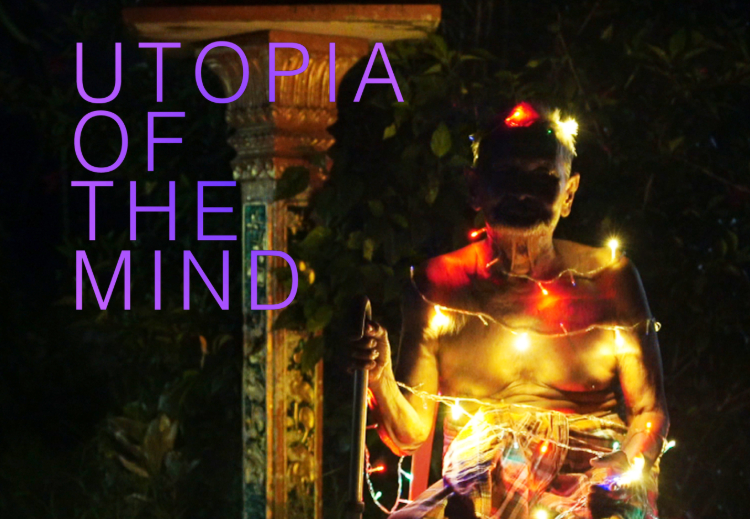
Vichart Somkaew’s new documentary Utopia of the Mind (แดนสวรรค์) was filmed at an abandoned prison in Phatthalung. As Vichart’s camera lingers on the crumbling brickwork and rusting bars, a voiceover by a former inmate recalls the prison’s rules and routines.

We see photographs of political prisoners from different generations. Khrong Chandawong, a pro-democracy politician, was executed on the orders of Sarit Thanarat. The ‘four tigers’ of Isan were MPs killed by the police for their opposition to Plaek Phibunsongkhram. Recent protesters such as Arnon Nampa and Netiporn Sanesangkhom were convicted of lèse-majesté.

Utopia of the Mind

What they have in common, aside from their jail sentences, is their commitment to political change. As the film’s title suggests, even when deprived of their freedom, their spirits weren’t broken.

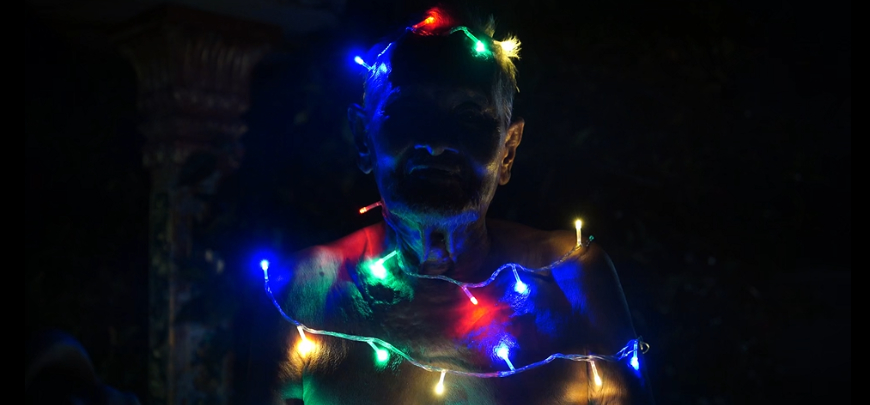
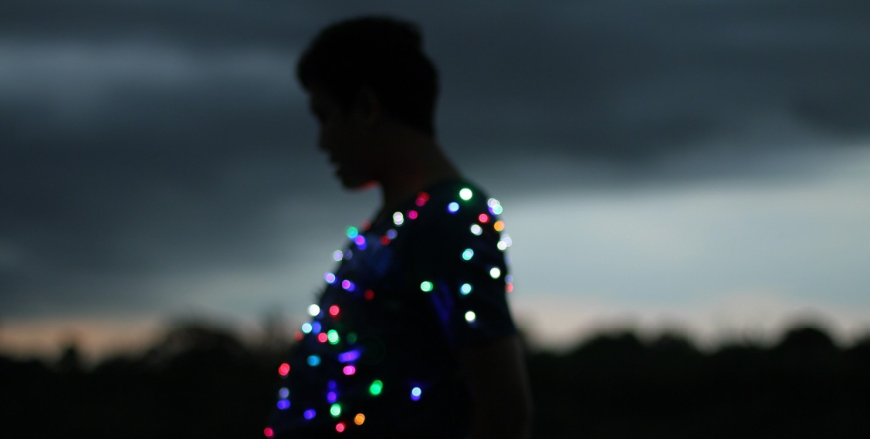
This sense of light in the darkness is reflected by a surreal moment in Vichart’s film: an elderly man who has wrapped a strip of multicoloured lights around himself. Apichatpong Weerasethakul’s Power Boy photographs have a similar concept, as does a sequence in Phuttiphong Aroonpheng’s film Manta Ray (กระเบนราหู).

Utopia of the Mind
Power Boy

Utopia of the Mind also reminds me of a quote from Yuthlert Sippapak. When I interviewed him for Thai Cinema Uncensored, he spoke about the contrast between mental and physical freedom: “We are in a jail of imagination. We are like painting in prison. Yes, we can paint, but painting in prison.”

Vichart’s previous short films include Cremation Ceremony (ประวัติย่อของบางสิ่งที่หายไป), 112 News from Heaven, The Letter from Silence (จดหมายจากความเงียบ), Antipsychotics, The Poem of the River, Sleeping Together (ราตรีวิไล), and The Southern Echo. He has also directed the portmanteau film Contemporary Thai Political Trilogy (ไตรภาคการเมืองร่วมสมัยไทย) and the feature-length documentary When My Father Was a Communist (เมื่อพ่อผมเป็นคอมมิวนิสต์).

08 September 2026

Images of Fire


Images of Fire

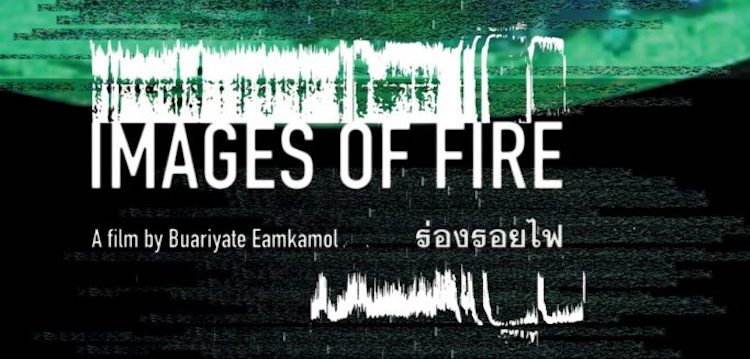
Buariyate Eamkamol’s short film Images of Fire (ร่องรอยไฟ) premiered yesterday at the What the Doc! 2 film festival. It will also be shown at Doc Club and Friends on 12th September.

The documentary, which examines the military crackdown on red-shirt protesters in April and May 2010, is both personal and political, forensic and philosophical. It begins self-reflexively, with Buariyate describing his research for the project: “I traveled to different locations in Bangkok. I searched for the spots where protesters were shot and the origin of the bullets.”

Many of the demonstrators were shot by snipers at long range, and Buariyate revisits the locations where several victims died, to determine where the armed soldiers were positioned. He locates the spot on Ratchaprarop Road where Samaphan Srithep was killed on 15th May 2010, and the entrance to Soi Sala Daeng where Chatchai Chalau died two days earlier.

Other recent short films have also returned to locations associated with the red-shirt crackdown: Weerapat Sakolvaree’s Nostalgia includes a sequence filmed at Lumpini Park, and Warat Bureephakdee’s Secret Among Wings (ความลับในฝูงนก) features shots of Ratchaprasong and Wat Pathum Wanaram. The Dutch artist Armando coined the phrase ‘guilty landscapes’ to describe spaces such as these, that bore silent witness to past violence. In both films, as in Images of Fire, the sounds of gunfire are heard on the soundtrack, a reminder of the events that took place at these guilty landscapes.

Images of Fire

As a child, Buariyate was taken to the protests by his father. Sixteen years later, as a filmmaker, he became especially interested in the case of Chatchai, who was recording a video when he was killed. Images of Fire considers the parallels between gunsights and camera viewfinders, and the link between proximity and empathy. As Buariyate says in the film: “Distance became a shield.” (Famously, in The Third Man, Harry Lime says that when seen from a distance, other people are just dots: “Would you really feel any pity if one of those dots stopped moving forever?”)

A viewfinder is a distancing device, just as a sniper operates at a literal distance from his target, and both guns and cameras can ‘shoot’ people. Thunska Pansittivorakul made that point in an interview for Thai Cinema Uncensored, discussing his experience of filming the crackdown on Soi Rangnam in May 2010: “they were shooting guns at the people... But at that time, I needed to keep shooting, I must keep shooting.”

Images of Fire also analyses audio clips of the gunfire, using the soundwaves to determine the types of bullets and their trajectories. One example is from 15th May 2010, when a man was shot in his car and his head slumped on the steering wheel, setting off the car horn. (The same recording is heard on Pisitakun Kuantalaeng’s album Kongkraphan, and Pisitakun also documented the locations at which other victims died for his Ten Year art project.)

With this investigative research — tracking down precise locations and sound clips — Buariyate questions the dominant narratives about 2010 told by the state, the media, and the red-shirts themselves. He includes TV news reports repeating government propaganda about “terrorists in the crowd”, showing how the protesters were demonised. In a voiceover, he notes that armed agitators (so-called ‘men in black’) were present at the demonstrations, despite the protesters’ insistence that they were peaceful. He even encourages skepticism about his own reliability as a narrator, by making a claim about his family that he later admits was false.

Images of Fire is Buariyate’s fourth film that touches on the 2010 violence, after A Fire 9 Kilometers Away, Isekai (อิเซไก), and Red Is the Orangest Colour. (Thai Cinema Uncensored discusses the representation of the April–May 2010 events by Thai filmmakers in more detail.)

07 September 2026

Sunak at Ten:
The Last Conservative Prime Minister?


Sunak at Ten

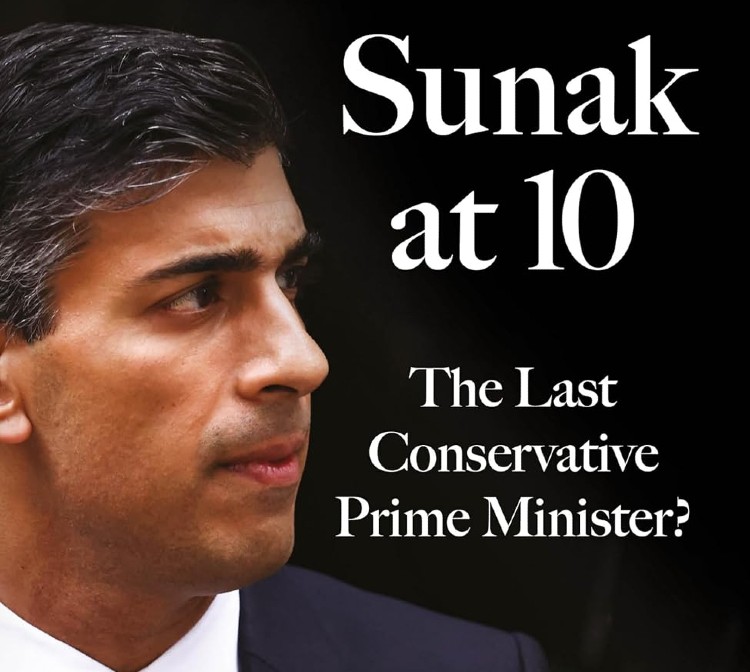
Anthony Seldon has written political biographies of every British prime minister since John Major. (His books on David Cameron, Boris Johnson, and Liz Truss have also been reviewed here.) His latest, Sunak at Ten, deals with Rishi Sunak’s premiership from 2022 to 2024 and is based on interviews with Sunak and many of his former cabinet ministers.

The Tories suffered their worst ever election defeat under Sunak, though this came after fourteen years of increasingly chaotic Conservative governments, as covered by Ben Riley-Smith in The Right to Rule. If judged purely on the election result, Seldon and his co-author Tom Egerton admit that Sunak “failed miserably”, though they acknowledge that another Conservative victory was almost impossible regardless of who was PM.

Seldon and Egerton cite four criteria by which UK prime ministers should be judged — the national economy, Britain’s international reputation, the strength of the union, and public trust in politics — arguing that Sunak’s leadership improved all except the last. But again, after the disasters of Sunak’s immediate predecessors, public confidence in politics at that point was unrecoverable.

Their final assessment of Sunak is nuanced and ambivalent: “he left his country stronger and more secure than he found it, if still divided and beset by chronic problems.” In Out, which also covered Sunak’s government, Tim Shipman was more critical: “the lack of a driving political vision gave him no political cover from failures of delivery.”

Sunak at Ten’s subtitle is The Last Conservative Prime Minister? This rhetorical device — posing a question to which the answer is almost certainly ‘no’ — is more suited to tabloid headlines than political biographies, and unsurprisingly, in their final sentence, the authors conclude that “we believe it unlikely that Sunak will have been the last Tory prime minister.”

06 September 2026

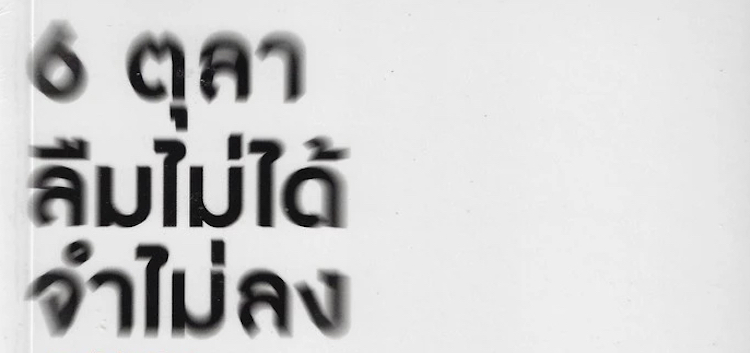
6 ตุลา ลืมไม่ได้ จำไม่ลง
(‘6th Oct. unforgettable, yet impossible to remember’)


This year marks the fiftieth anniversary of the violent and tragic events that took place on 6th October 1976 at Thammasat University, when forty-six people, most of whom were students, were killed by right-wing militia groups and vigilantes. The incident remains one of the most shocking moments in Thailand’s modern history.

To commemorate this year’s anniversary, the Thai Film Archive at Salaya will host a discussion on 22nd September about the representation of 6th October in Thai films. (There are more than seventy films and videos that refer to 6th October, all of which are discussed in detail in Thai Cinema Uncensored.)

The archive will also be screening several films related to the incident, including Ing K.’s Shakespeare Must Die (เชคสเปียร์ต้องตาย) on 7th October, Anocha Suwichakornpong’s By the Time It Gets Dark (ดาวคะนอง) on 24th October, and Pundhevanop Dhewakul’s Whatever, I Don’t Care (ช่างมันฉันไม่แคร์) on 28th October. The season’s title, 6 ตุลา ลืมไม่ได้ จำไม่ลง (‘6th Oct. unforgettable, yet impossible to remember’), is a phrase coined by historian Thongchai Winichakul, whose book Moments of Silence is about the “Unforgetting” of the massacre.
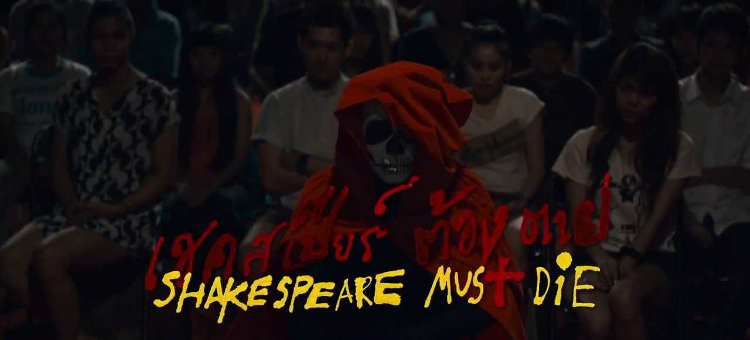
Shakespeare Must Die

Shakespeare Must Die


Shakespeare Must Die is a Thai adaptation of William Shakespeare’s Macbeth. The film’s climax, a recreation of the Thammasat massacre, is its most controversial sequence, and one of the reasons why it was banned in 2012. A photograph by Neal Ulevich, taken during the massacre, shows a vigilante preparing to hit a corpse with a chair, and Shakespeare Must Die restages the incident. A hanging body (symbolising Shakespeare himself) is repeatedly hit with a chair, though rather than dwelling on the violence, Ing cuts to reaction shots of the crowd, which (as in 1976) resembles a baying mob.

When I interviewed her for Thai Cinema Uncensored, Ing didn’t mince her words, describing the censors as “a bunch of trembling morons with the power of life and death over our films.” Thai Cinema Uncensored also includes an insider’s account from a member of the appeals committee, who said he was obliged by his department head to vote against releasing the film: “I had to vote no, because it was an instruction from my director. But if I could have voted freely, I would have voted yes.”

The ban on Shakespeare Must Die was finally lifted by the Supreme Court in 2024, and its theatrical release came a few months later. It has since been shown at Burapha University, at Chiang Mai University, at Phimailongweek (พิมายฬองวีค), and at The 33rd Bangkok Critics Assembly Awards.

By the Time It Gets Dark

By the Time It Gets Dark


In By the Time It Gets Dark, a young director (Ann, a surrogate for Anocha herself) is making a biopic about a 6th October survivor, who describes the attackers “dragging the dead bodies out to burn them.” Some scenes are replayed, to suggest history repeating itself: Ann’s first session with the massacre survivor is later restaged, with the two women played by different actresses.

Anocha self-reflexively questions the motivations of a director in tackling such a politically loaded event, as Ann confesses to her interviewee: “Your life is meaningful. A life worth living. Whereas me, I appropriate someone’s life and turn it into a film.” She also challenges the ethics of such appropriation, as another character advises Ann to let the film’s subject write the script herself: “You should give it to her. She’s a writer. And it’s about her life, so it’s her story.” The film therefore acknowledges the inherent limitations involved in representing historical events in works of fiction.

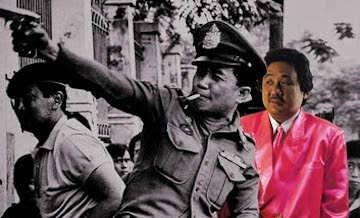
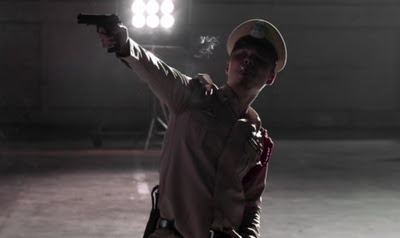
By the Time It Gets Dark begins by subverting the audience’s expectations. Students are shown lying on the ground, watched over by armed soldiers, though what initially appears to be a flashback to 6th October is, in fact, taking place on a movie soundstage. The sense of verisimilitude is further confounded when an off-screen voice (Ann, the director) instructs the soldiers to kick the students and point guns at them. The film also recreates a news photograph (taken by Kraipit Phanvut) from 6th October, of police colonel Watcharin Niamvanichkul aiming his pistol while nonchalantly smoking a cigarette.
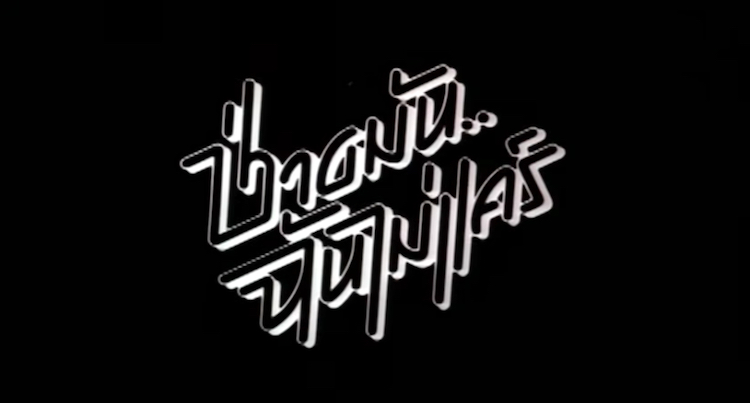
Whatever, I Don't Care

Whatever, I Don’t Care


Whatever, I Don’t Care includes a black-and-white flashback to 6th October, though it sanitises the horror of the event. Although non-diegetic gunshots are heard repeatedly on the soundtrack, the violence depicted is limited to hand-to-hand combat.

On 31st October, the Archive will show a programme of short films about 6th October. These include Patporn Phoothong and Teerawat Rujenatham’s The Two Brothers (สองพี่น้อง), Padcha Ithijarukul’s Mom Yong Benjawan, Ooka Ryuuchi’s They Will Never Forget, Chalida Uabumrungjit’s ฉันนั่งอยู่ริมสนามฟุตบอล (‘I was sitting beside the football pitch’), Suchart Sawadsri’s “Red” at Last (มนัส เศียรสิงห์), Manussak Dokmai’s Don’t Forget Me, Anocha Suwichakornpong’s 3–0, and Chulayarnnon Siriphol’s ชวนอ่านภาพ 6 ตุลา (‘invitation to read images of 6th Oct.’).

The Two Brothers

The Two Brothers


The Two Brothers features interviews with relatives of two young men who were hanged by police for campaigning against the return of former dictator Thanom Kittikachorn from exile. It has previously been screened at Thammasat University in 2025, 2020, and 2017. It was shown at Hope Space in 2024 and 2025.

Mom Yong Benjawan

Mom Yong Benjawan


Mom Yong Benjawan is a documentary about the director’s mother, Benjawan, who was a student at Thammasat in 1976 and survived the massacre. It was previously shown at the 24th Short Film and Video Festival (เทศกาลภาพยนตร์สั้นครั้งที่ 24), and at Wildtype Middleclass 2023.

They Will Never Forget


They Will Never Forget documents a strike by female workers at the Hara factory in Bangkok. Following the 1976 coup, state censorship increased dramatically, though post-production of They Will Never Forget was completed in Japan, giving the filmmakers more freedom in their political commentary. It was previously shown at the Archive in 2017.

The film condemns military dictator Thanom Kittikachorn, “whose hands were stained with the blood of at least seventy-six patriots,” and its assessment of the coup is equally honest and unrestrained: “The reign of violence and injustice was back.” It also includes a surprisingly direct reference to student actors whose mock hanging led to the 6th October massacre. The film mentions media reports that an actor playing a hanging corpse “resembled the Crown Prince,” an issue that remains unspoken in Thailand even today.

ฉันนั่งอยู่ริมสนามฟุตบอล
(‘I was sitting beside the football pitch’)


ฉันนั่งอยู่ริมสนามฟุตบอล is a static, out-of-focus shot of Thammasat’s football field, one of the sites associated with the 1976 massacre. It was filmed at 5:30am on 6th October 2006, exactly thirty years after the campus was invaded. The film was first shown at the Pridi Banomyong Institute’s Nothing to Say, a programme of silent short films with political themes organised by ThaiIndie in 2008.

“Red” at Last


The documentary “Red” at Last is told from the first-person perspective of one 6th October victim, Manus Siansing. The film begins and ends with a fictitious voiceover from the dead man, and a survivor of the attack narrates flickering archive footage of the events of that day.

Don’t Forget Me


Don’t Forget Me is a multilayered documentary featuring archive footage of 6th October and scathing political captions, accompanied by the plaintive title song and a narration appropriated from an ethnographic documentary on the nomadic Mlabri tribe. The voiceover describes the tribe’s elaborate ceremonies and rituals, its tone and content providing an intentionally ironic counterpoint to the massacre footage.

The voiceover comes from the 1962 documentary ผีตองเหลือง (‘yellow-leaf ghost’). Don’t Forget Me was shown at Thammasat in 2024. It was part of the Histoire(s) du thai cinéma [sic] (‘histories of Thai cinema’) programme of short films at Dam’n Cineclub in 2018, and the Chiang Mai Now! (เชียงใหม่นาว!) exhibition at Bangkok Art and Culture Centre in 2011. It can currently be seen at MAIIAM in Chiang Mai, as part of that museum’s Old Path in the Deep Dark Forest (รอยทางเก่าในป่าลึก) screening programme.

3–0


3–0 contains several political allusions, though they are somewhat oblique. The film intercuts between a woman trying to cross the road, another woman exercising, and a boy’s physiotherapy session, and ends with a peaceful demonstration against the 2006 coup.

The film was made shortly after the coup, and was first shown in the Spoken Silence programme at the 11th Thai Short Film and Video Festival (เทศกาลภาพยนตร์สั้น ครั้งที่ 11). The festival provided a timely opportunity for filmmakers to comment on the coup, less than a year after it had taken place.

The boy’s physical disability is a metaphor for political paralysis. The film’s title refers to Anocha’s age at the time — she was 30 in 2006 — and to the thirtieth anniversary of the 1976 massacre.

ชวนอ่านภาพ 6 ตุลา
(‘invitation to read images of 6th Oct.’)


In ชวนอ่านภาพ 6 ตุลา (‘invitation to read images of 6th Oct.’), viewers from different generations interpret a series of photographs of the events at Thammasat. The images, many of which were previously unpublished, were shown at the Facing Demons (เผชิญหน้าปิศาจ) exhibition at Kinjai Contemporary in 2022.

The documentary was originally commissioned for Facing Demons. It has since been shown at the Doc Club Festival and Doc Club Festival Selections in 2024, and at Chulayarnnon’s I a Pixel, We the People (ข้าพเจ้าคือพิกเซล, พวกเราคือประชาชน) exhibition at Bangkok CityCity last year. It is also currently on show as part of Old Path in the Deep Dark Forest.
04 September 2026

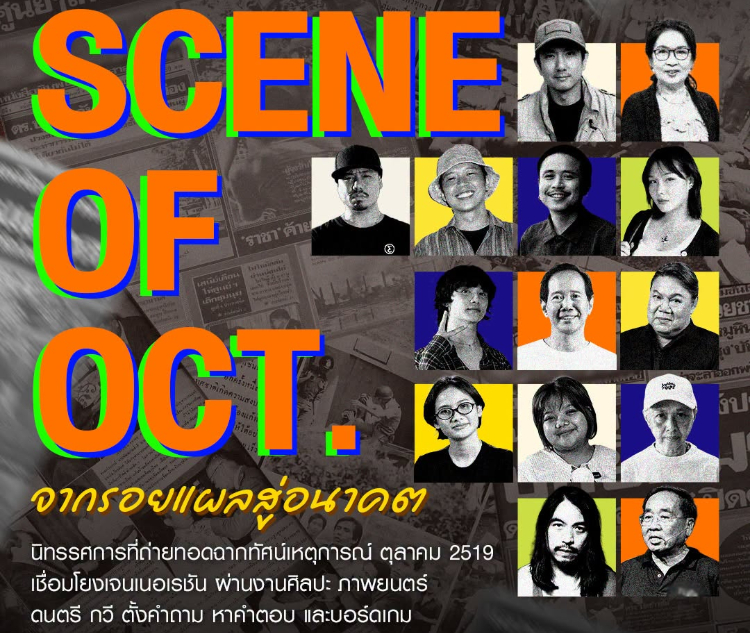
Scene of Oct.
จากรอยแผลสู่อนาคต


Scene of Oct.

This year marks the fiftieth anniversary of the violent and tragic events that took place on 6th October 1976 at Thammasat University, when forty-six people, most of whom were students, were killed by right-wing militia groups and vigilantes. An exhibition organised by Thai PBS, Scene of Oct. จากรอยแผลสู่อนาคต (‘from scars to the future’), will examine the incident from multiple perspectives.

Scene of Oct. will feature poetry, music, and art inspired by 1976, and quotes from films that depict the events at Thammasat. It will even include a board game based on the incident.

VIFF

The exhibition is part of the VIPA International Film Festival 2026. VIFF runs from 11th to 25th September, and Scene of Oct. is on show from 21st September to 16th October, at the Thai PBS offices in Bangkok.

VIFF’s closing film, on 25th September, is The Unforgetting Wednesday (เช้านั้นวันพุธ), a new documentary about 1976 by Kowit Phothisan, the editor of the Isaan Record (เดอะอีสานเรคคอร์ด) news website. The festival will also screen Alfred Hitchcock’s Rope on 12th September. (Rope was previously shown at the Pridi Banomyong Institute in 2015, and at Bangkok Screening Room in 2018.)

03 September 2026

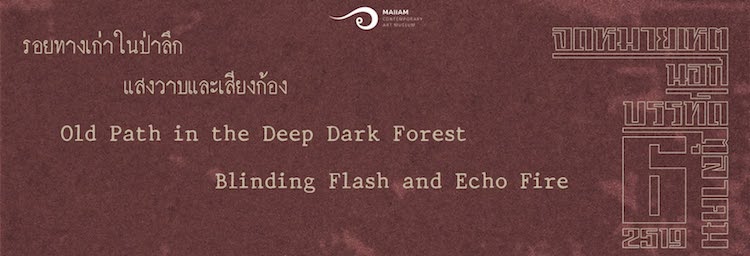
Old Path in the Deep Dark Forest:
Blinding Flash and Echo Fire


Old Path in the Deep Dark Forest

This year marks the fiftieth anniversary of the violent and tragic events that took place on 6th October 1976 at Thammasat University, when forty-six people, most of whom were students, were killed by right-wing militia groups and vigilantes. The incident remains one of the most shocking moments in Thailand’s modern history.

There are more than seventy films and videos that refer to 6th October. To commemorate this year’s anniversary, MAIIAM in Chiang Mai will show a trio of these films every weekend this month.

The screening programme, Old Path in the Deep Dark Forest: Blinding Flash and Echo Fire (รอยทางเก่าในป่าลึก: แสงวาบและเสียงก้อง), features a documentary, a short film, and a music video. The screenings are part of MAIIAM’s exhibition A Reconfigured Archive (จดหมายเหตุนอกบรรทัด).

ชวนอ่านภาพ 6 ตุลา
(‘invitation to read images of 6th Oct.’)


In Chulayarnnon Siriphon’s documentary ชวนอ่านภาพ 6 ตุลา (‘invitation to read images of 6th Oct.’), viewers from different generations interpret a series of photographs of the incident. The images, many of which were previously unpublished, were shown at the Facing Demons (เผชิญหน้าปิศาจ) exhibition at Kinjai Contemporary in 2022.

The documentary was originally commissioned for Facing Demons. It has since been shown at the Doc Club Festival and Doc Club Festival Selections in 2024, and at Chulayarnnon’s I a Pixel, We the People (ข้าพเจ้าคือพิกเซล, พวกเราคือประชาชน) exhibition at Bangkok CityCity last year.

Don’t Forget Me


In Manussak Dokmai’s short film Don’t Forget Me (อย่าลืมฉัน), archive footage of 6th October is accompanied by narration from a documentary on the Mlabri tribe. The narrator describes the tribe’s traditional rituals and customs, providing a blackly comic counterpoint to the violent imagery from 1976.

Don’t Forget Me has been screened numerous times since its original release in 2003, and was shown most recently at Thammasat in 2024. It was part of the Histoire(s) du thai cinéma [sic] (‘histories of Thai cinema’) programme of short films at Dam’n Cineclub in 2018, and the Chiang Mai Now! (เชียงใหม่นาว!) exhibition at Bangkok Art and Culture Centre in 2011.

ยูงทอง 6 ตุลา
(‘golden peacock 6th Oct.’)


The music video ยูงทอง 6 ตุลา (‘golden peacock 6th Oct.’) features photographs of the 1976 massacre and right-wing newspaper reports demonising the students. These brutal images are accompanied by ยูงทอง (‘golden peacock’), a song written by King Rama IX in 1962 that became Thammasat’s official anthem.

As in Don’t Forget Me, the visuals and soundtrack are a deliberate and bitterly ironic contrast: the anthem’s lyrics espouse love, unity, and serenity, while the images on screen depict extreme intolerance, hatred, and division. The video was produced by United Front of Thammasat and Demonstration, one of the key protest groups that instigated the student-led rallies calling for institutional reform in 2020.

01 September 2026

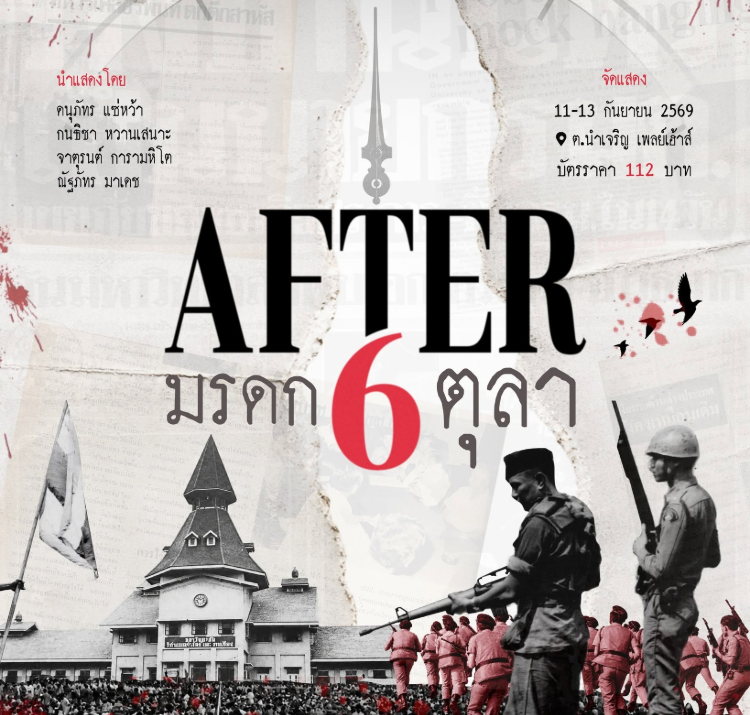
After 6
มรดก 6 ตุลา


After 6

After 6 มรดก 6 ตุลา (‘the legacy of 6th Oct.’), a new play by Natthapat Mardech, will be staged at T.Nam Charoen Playhouse in Bangkok later this month. Performances will take place on 11th, 12th, and 13th September.

The play is set in 1980, four years after the 6th October 1976 coup, a time when military rule had become the new normal. The drama’s six characters are lawyers who meet (at 6pm) to discuss how to eradicate the legacy of the coup.

After 6 is Natthapat’s second play about the events of 1976. Last year, he directed Rashomon 6 ตุลา (‘Rashomon 6th Oct.’), which was also set four years after the coup.

Tickets for After 6 cost ฿112, a reference to the lèse-majesté law, which is article 112 of the Thai criminal code. Last year, advance tickets for Prapassorn Konmuang’s play The Ordinary (คนธรรมดา) also cost ฿112, for the same symbolic reason.

The Deconstruct(ed)

Another play, The Deconstruct(ed) (รื้อ), also marking the 6th October anniversary, will be staged at the Thammasat Playhouse next month. In The Deconstruct(ed), directed by Sineenadh Keitprapai, a group of actors rehearsing a production of Ariel Dofman’s Death and the Maiden (La muerte y la doncella) on 6th October discuss the similarities between Dofman’s account of a violent coup in an unspecified Latin American country and the events at Thammasat in 1976. Performances of The Deconstruct(ed) will be held on 2nd, 3rd, 4th, 9th, 10th, and 11th October. It was first staged in 2016.

The Trial

A third play about 6th October, The Trial (ห้องพิจารณาคดีที่ 4), will also open in the near future. This is a recreation, based on court transcripts, of the trial of eighteen Thammasat students arrested after the massacre. The play, directed by Teerawat Mulvilai, features actors portraying both the defendants and the officers who gave evidence against them; it will be staged in a mock courtroom at Thammasat’s Faculty of Law on 4th–6th October, with the audience sitting in the public gallery.

29 August 2026

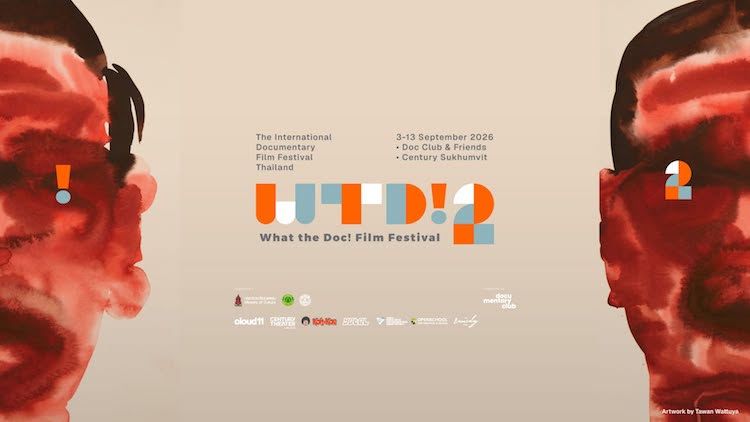
What the Doc! 2


What the Doc! 2

What the Doc! 2 — The International Documentary Film Festival Thailand (เทศกาลภาพยนตร์ สารคดีนานาชาติ แห่งประเทศไทย) — will take place in Bangkok from 3rd to 13th September, a year after the first What the Doc! festival. Screenings will be held at Century Sukhumvit, and at the new Doc Club and Friends cinema that’s due to open this month at Cloud 11. (After the closure of Doc Club and Pub in 2024, the venue has relocated to Cloud 11 under the new name Doc Club and Friends.)

Images of Fire

What the Doc! 2 will include the premiere of Buariyate Eamkamol’s Images of Fire (ร่องรอยไฟ), a self-reflexive short film in which he revisits the circumstances surrounding the killing of protesters by military snipers in April and May 2010. Buariyate’s film will be screened at Century on 7th September (followed by a Q&A with the director), and at Doc Club and Friends on 12th September.

The Dutch artist Armando coined the phrase ‘guilty landscapes’ to describe spaces that bore silent witness to past violence. Buariyate and other Thai directors have returned to these politically and emotionally charged locations as part of a reckoning with the unresolved trauma of 2010.

Images of Fire

Images of Fire is Buariyate’s fourth film that touches on the 2010 violence, after A Fire 9 Kilometers Away, Isekai (อิเซไก), and Red Is the Orangest Colour. (Thai Cinema Uncensored discusses the representation of the April–May 2010 events by Thai filmmakers in more detail.)

What the Doc! 2’s poster also refers to the 2010 military crackdown: it features a portrait of one of those who died on 10th April 2010 (Maew), painted by Tawan Wattuya. (The image also appears on a What the Doc! 2 tote bag.) The painting is from Tawan’s Red Faces series, shown at the Khon Kaen Manifesto (ขอนแก่น แมนิเฟสโต้) and Amnesia exhibitions in 2019.

25 August 2026

8:
The Silence of the Goats


8

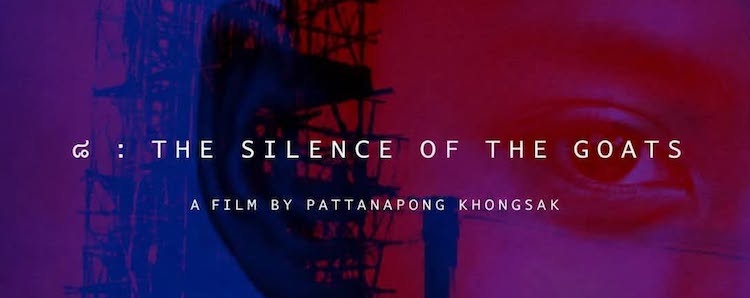
Pattanapong Khongsak’s new short film 8: The Silence of the Goats combines historical material with modern technology, using generative AI to visualise the past. This hybrid documentary has no narration, so key events are explained using written captions.

Photos of major political milestones — 6th October 1976, the yellow-shirt and red-shirt protests, the ‘Shutdown Bangkok’ campaign, and the 2006 and 2014 coup announcements — are solarised and rendered as 3D images. Pattanapong also uses bright red and blue tinting, as he did in Bad Taste (โอรส).

8
8

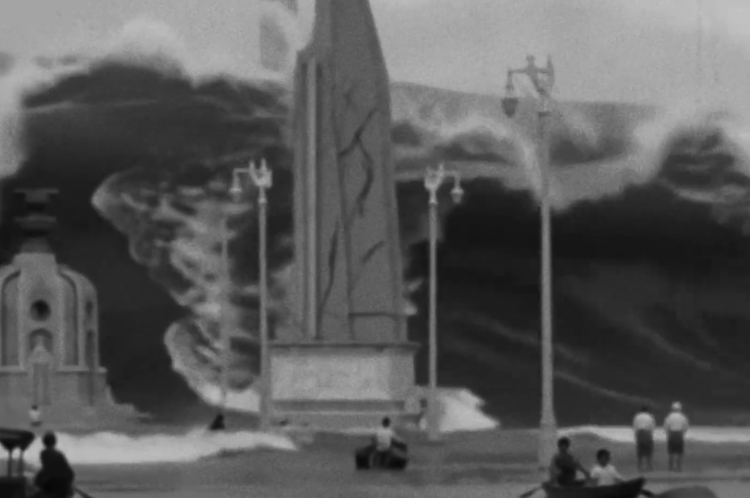
The AI manipulation makes the familiar images even more impactful, and dramatic reconstructions help to clarify the details. One sequence strays into deepfake territory: a newsreel-style scene of Democracy Monument engulfed by a tsunami, like a silent disaster movie.

The main focus is on the unexplained death or assassination of Rama VIII, the subsequent smear campaign against Pridi Banomyong, and the wrongful conviction of three men for conspiracy to murder. A caption tells us that the men were executed “8 years, 8 months, 8 days since the King’s death” — hence the 8 (๘) in the film’s title.

23 August 2026

“紫禁城中静悄悄...”
(‘all is quiet in the Forbidden City...’)


Chinese comic actor Guo Degang is under investigation after he altered the lyrics of a song he performed as part of the opera 濟公活佛 (‘Ji Gong, living Buddha’) at the Zhongnan Theatre in Wuhan on 24th July. Guo sang 弹起我心爱的土琵琶 (‘playing my beloved pipa’) and changed the original lyric “微山湖上静悄悄” (‘all is quiet on Weishan Lake’) to “紫禁城中静悄悄” (‘all is quiet in the Forbidden City’). Mocking patriotic symbols can lead to prosecution in China: in 2023, a talent agency was fined the equivalent of $2 million for a comedian’s joke about a military slogan.

01 August 2026

Pirab


Before October Come

Pasit Promnampol’s short film Pirab (พิราบ) will be shown at Hope Space in Bangkok on 9th August, as part of a series of events titled Before October Come [sic] (ก่อนจะถึงเดือนตุลา). Pirab has previously been screened at Bangkok Art and Culture Centre, Thammasat University, Future Fest 2023, and the Thai Film Archive.

27 July 2026

Hearing the Voice of the Absence


Hearing the Voice of Absence

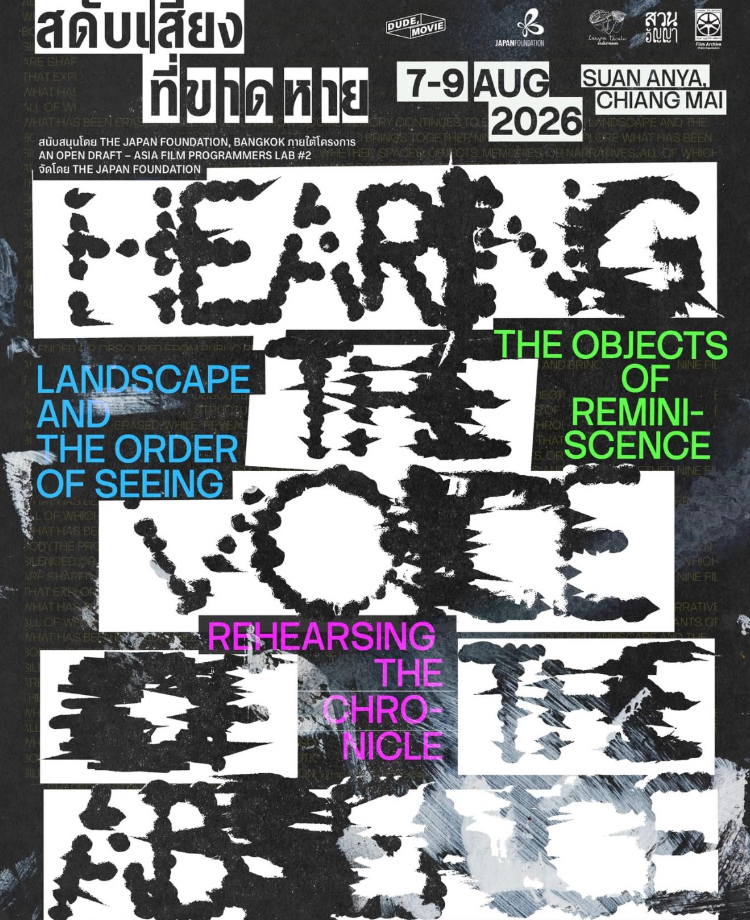
Hearing the Voice of the Absence (สดับเสียงที่ขาดหาย), a three-day programme of open-air film screenings, will take place in Chiang Mai next month. Highlights include the classic Tongpan (ทองปาน) and two recent short films, Apichatpong Weerasethakul’s Night Colonies and Anocha Suwichakornpong’s Narrative.

Tongpan and Night Colonies will be shown in the first session, titled Landscape and the Order of Seeing, on 7th August. Narrative will be shown during the third session, Rehearsing the Chronicle, on 9th August.

Hearing the Voice of the Absence is the second in a series of events, An Open Draft — Asian Film Programmers Lab, set up by the Japan Foundation. The screenings will be held at Suan Anya in Chiang Mai from 7th to 9th August, and are organised by Dude, Movie.

Night Colonies

Night Colonies


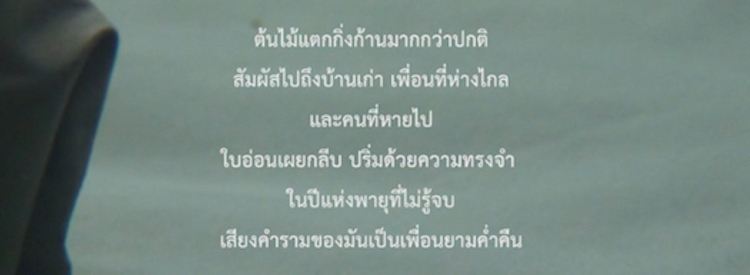
Night Colonies, originally shown as part of the anthology film The Year of the Everlasting Storm, combines two of Apichatpong’s consistent themes — light and the natural world — as it features insects buzzing around neon lights. The film begins with a poem paying tribute to “distant friends, and those who had disappeared”, a reference to pro-democracy campaigners self-exiled or abducted following lèse-majesté charges.

The poem continues: “The young leaves unfold, flushed with memories in the year of the everlasting storm.” In addition to giving the portmanteau film its title, these lines are also a metaphor for the student protesters campaigning for political reform. In fact, the film’s soundtrack includes audio recorded at protests in Bangkok on 27th July and 20th August 2020.

Narrative

Narrative


Narrative is a prelude to Anocha’s forthcoming film Fiction, in which she will stage a fictional trial of those accused of sanctioning the military crackdown on red-shirt protesters in 2010. Witnesses and relatives of the victims take part in a workshop about their memories of the event, in three guided discussion sessions.

As in Anocha’s By the Time It Gets Dark, the process of making a film about a traumatic episode of state violence self-reflexively becomes part of the film itself. Anocha and her crew are shown filming the workshop, and this acts as a distancing device, to the extent that the speakers’ words are sometimes drowned out.

Tongpan

Tongpan


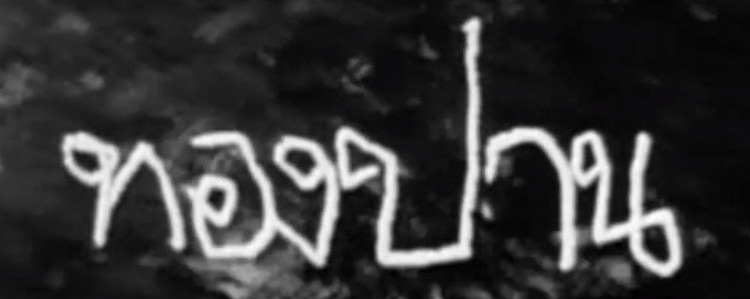
Tongpan is a realistic dramatisation of a seminar that took place in 1975, which was organised to debate the construction of the Pa Mong dam on the Mekong river. The eponymous central character is a farmer who lost his land due to a previous dam.

In the film, Sulak Sivaraksa makes an impassioned speech against the proposed dam: “Development only serves a few people in Bangkok... And what about the destruction of our country? The whole province of Loei will be flooded by this Pa Mong Dam.” Ultimately, the Pa Mong project was abandoned, though this was a Pyrrhic victory for environmental campaigners, as dozens of hydroelectric dams are currently under construction.

Tongpan was made during the brief period of political freedom after the collapse of a military dictatorship in 1973, though by the time filming had been completed in 1977, the military had seized power again, and the film was banned. Its prologue captures the optimism of 1973 (“A military junta fled into exile, and the students from the city went into the countryside to tell the farmers”), though this is contrasted by an epilogue that describes the return of military rule (“shortly after the shooting of this film, a violent coup d’etat of a magnitude never before seen in Thailand brought an end to Thailand’s three-year experiment with democracy”).

Tongpan has previously been shown at Noir Row Art Space, Cinema Oasis, Bangkok Art and Culture Centre, and the Thai Film Archive (most recently in 2024). It was also screened last year in Khon Kaen.

20 July 2026

Sarit Thanarat


Sarit Thanarat

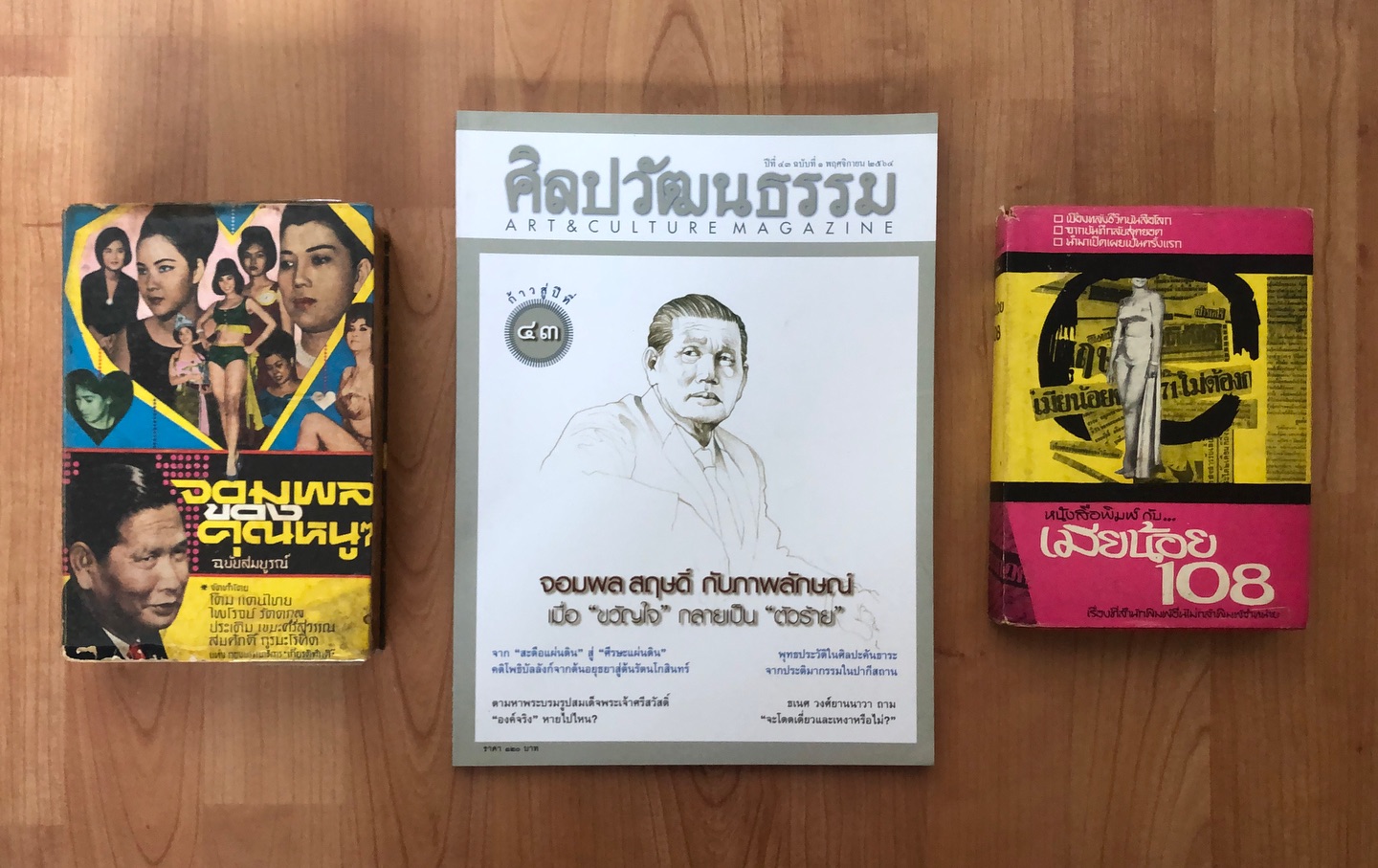
Sarit Thanarat, military prime minister during the Cold War, died in December 1963. After his death, the floodgates opened, and exposés of his love life were rushed into print. His lovenest was a private residence nicknamed the ‘pink palace’ (วิมานสีชมพู; also the title of an unauthorised posthumous Sarit biography), and เมียน้อย 108 (‘108 mistresses’) printed a list of the concubines he entertained there.

Several other books — including อัลบั้มภาพชุดสีชมพู (‘pink album’), วิมานสวาท หลังกองพล ๑ (‘the palace of love behind the 1st infantry regiment’) and the similarly titled รังสวาทหลังพล 1, จอมพลของคุณหนูๆ (‘young ladies of the general’), แม่ม่ายผ้าขะม้าแดง (‘the widow in the red sarong’), and สาวม่ายในวิมานสีชมพู (‘widows in the pink palace’) — featured dossiers of photographs of his alleged lovers. The Daily News (เดลินิวส์) cartoon booklet การ์ตูนชุดแม่ม่ายผ้าขาวม้าแดง (‘the widows in the red sarong cartoon series’) also featured thinly-veiled portrayals of Sarit’s mistresses.

Almost fifty years later, the phrase ‘pink palace’ was censored by Channel 3 when it broadcast the lakorn คุณชายพุฒิภัทร (‘khun Chai Puttipat’) on 5th May 2013. In the third episode, a former military general played by Montree Jenuksorn (who slightly resembles Sarit) discussed his ‘pink palace’, though the sound was muted, presumably to avoid any possibility of a libel suit from Sarit’s descendents. (The novel on which the drama was based refers to Sarit more obliquely.)

Potential defamation also prevented director Banjong Kosallawat from making a semi-fictionalised Sarit biopic in 2002, which was to have been titled จอมพล (‘marshal’). Sarit did feature briefly in the horror movie Zee Oui (ซี-อุย), ordering the swift execution of the murderous title character for political expediency. And Sarit’s statue looms ominously over the characters in Song of the City, Apichatpong Weerasethakul’s segment of the portmanteau film Ten Years Thailand.


The newsreel การปฏิบัติหน้าที่เพื่อประเทศชาติในตำแหน่งหัวหน้ารัฐบาลและผู้นำทางทหาร จนถึงล้มป่วยและอสัญกรรมของ ฯพณฯ จอมพลสฤษดิ์ ธนะรัชต์ (‘Field Marshal Sarit Thanarat performing duties for the country as the head of government and military leader until his illness and death’) is a fascinating example of Cold War state propaganda. Screened shortly after Sarit’s death, it provided a counter-narrative to the books that exposed his decadence and corruption. The film depicts Sarit as a tireless and selfless leader, to the extent that he became ill through overwork. Thunska Pansittivorakul’s recent documentary Isan Odyssey (อีสานอำพราง) gives the other side of the story, in a voiceover describing how suspected communists were “brutally murdered” during Sarit’s regime.


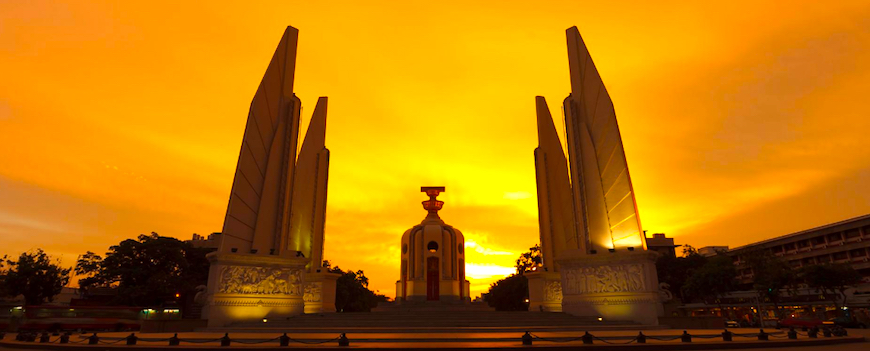
After Sarit led a coup in 1957, he was portrayed as a hero by pliant newspaper cartoonists. One example of such propaganda showed Sarit cradling a rescued child in his arms, returning the boy (who represents the Thai people) to his grateful mother. In contrast, a July 1958 cartoon in the liberal ประชาชน (‘people’) newspaper depicted Sarit as a monkey wrapping his tail possessively around Democracy Monument.

In the wake of the 2014 coup, Sarit satire was too sensitive, and the Guerrilla Boys self-censored their mural Junta Connection (วิ่งผลัดเผด็จการ), which originally depicted Sarit passing his (literal) baton of dictatorship to Prayut Chan-o-cha. Junta Connection was shown in 2018 as part of Khon Kaen Manifesto (ขอนแก่น แมนิเฟสโต้), a group exhibition that directly addressed Sarit’s contested legacy.

Art and Culture (ศิลปวัฒนธรรม) magazine analysed cartoonists’ caricatures of Sarit (vol. 43, no. 1), and the journal Same Sky (ฟ้าเดียวกัน) examined the lurid books published shortly after his death (vol. 20, no. 2). Thai Cinema Uncensored discusses the portrayal of Sarit in Thai films.

15 July 2026

October 6th:
A Reconfigured Archive


October 6th

This year marks the fiftieth anniversary of the violent and tragic events that took place on 6th October 1976 at Thammasat University, when forty-six people, most of whom were students, were killed by right-wing militia groups and vigilantes. The bodies of the victims were desecrated by baying mobs, and the incident remains one of the most shocking moments in Thailand’s modern history.

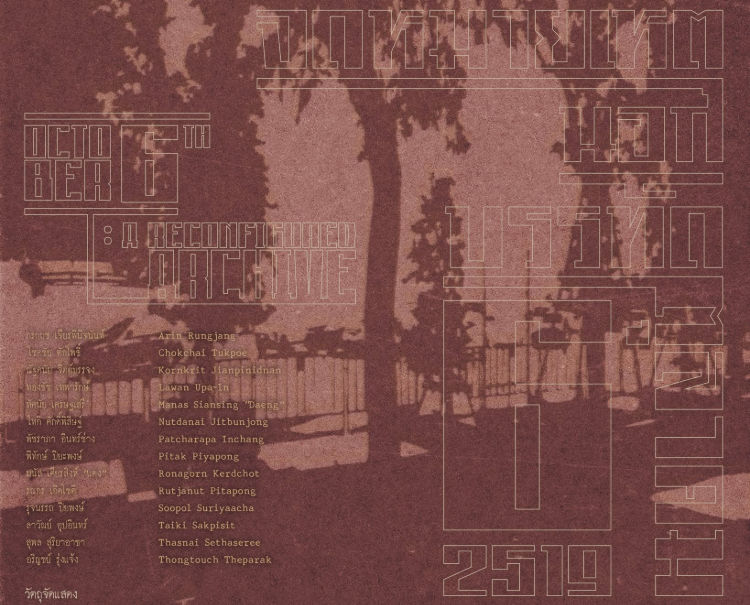
MAIIAM in Chiang Mai is commemorating the anniversary with a group exhibition devoted to the incident, October 6th: A Reconfigured Archive (จดหมายเหตุนอกบรรทัด 6 ตุลาคม 2519), which opened on 10th July and runs until 30th November. The exhibition features artworks commenting on the Thammasat massacre alongside books and other archival materials documenting the event.

The exhibition includes Nutdanai Jitbunjong’s installation A Massacre: a folding chair suspended from the ceiling. The chair is an iconic signifier of the massacre, thanks to Neal Ulevich’s photograph of a man preparing to hit a corpse with a folding chair. Nutdanai’s chair is made from tamarind wood, as the dead man in Ulevich’s photo was hanged from a tamarind tree. A Massacre was previously shown in the Status in Statu (รัฐพิลึก) and Khon Kaen Manifesto (ขอนแก่น แมนิเฟสโต้) exhibitions.

Several works from Taiki Sakpisit’s exhibition Dark Was the Night (ผีพุ่งไต้) are included, notably his video installation of the same title and his photograph Half Day Closing, an image of the notorious ‘red elevator’, which — according to legend — is haunted by victims of the 1976 attack. The lift was discussed in the documentary Ghosts, and it inspired the horror film Haunted Universities (มหาลัยสยองขวัญ).

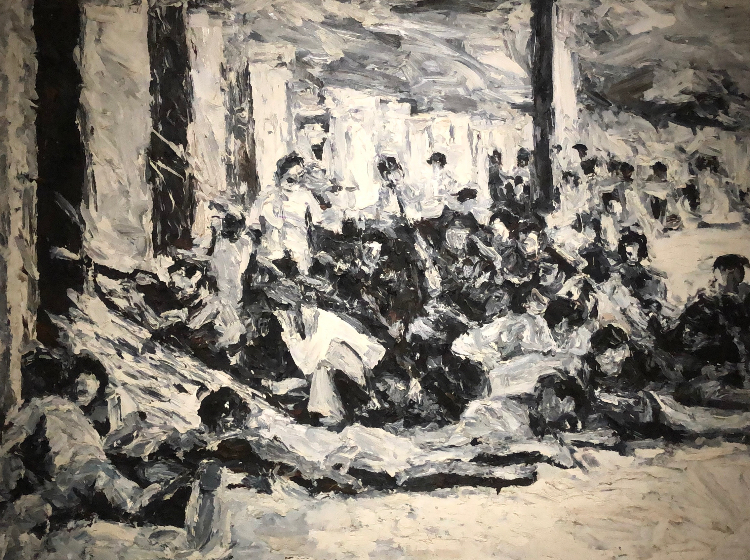
Thasnai Sethaseree has produced numerous paintings that refer to 1976. The exhibition features three of his untitled collages: news photos of the incident heavily obscured by colourful overpainting. They were also shown in a previous MAIIAM exhibition, Errata.

16 19 35

Other paintings in the exhbition include Patcharapa Inchang’s Father, Lawan Upa-In’s ก่อน ๖ ตุลา ๒๕๑๙ (‘before 6th Oct. 1976’), and Ronagorn Kerdchot’s 16 19 35 (๑๖ ๑๙ ๓๕). The title of Ronagorn’s work refers to the years 1973, 1976, and 1992 according to the Buddhist Era calendar, and all three periods are associated with episodes of state violence.

Thanavi Chotpradit and Kornkrit Jianpinidnan’s book Prism of Photography is on display, alongside a photograph from Kornkrit’s Damage series. The book is a visual archive of the massacre, featuring dozens of Thai newspaper front pages and news photographs. ฟ้าใหม่ ใกล้มา (‘dawn of victory’), a ‘museum in a box’ featuring meticulously reproduced artefacts from 1976, is also on show.

To contextualise the events of 1976, the exhibition also features Arin Rungjang’s And Then There Were None, a series of paintings based on news photographs from 14th October 1973, a date almost as infamous as 6th October 1976, when a mass protest led to the (temporary) collapse of a military dictatorship. Her video of the same title, an interview with singer Boonchuang Denduang that begins with archive footage from 1973, is also included. Arin’s paintings were shown alongside Thasnai’s in Errata.

13 July 2026

Songs of Angry People


Songs of Angry People

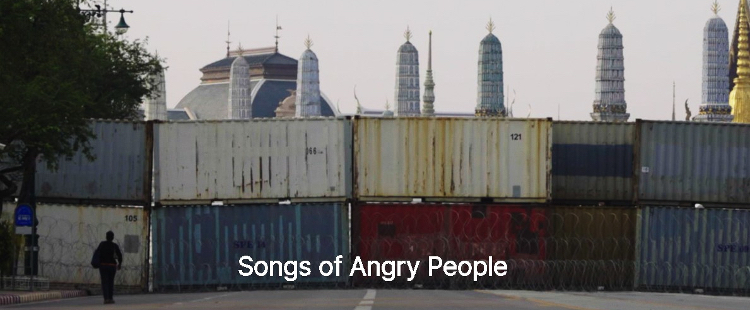
Uruphong Raksasad has directed a trilogy of documentaries about the recent student protest movement: Songs of Angry People, Paradox Democracy, and Cut of Speech. All have been shown at the Thai Film Archive in Salaya, though Songs of Angry People was deemed so sensitive that its screening — as part of To Commune, the 69th Flaherty Film Seminar programme in 2024 — wasn’t advertised in advance. Songs of Angry People was also shown in the Wildtype Middleclass programme this year, though the screenings were equally surreptitious, and it was listed as a ‘surprise film’ in the schedule.

In Paradox Democracy, speeches by protest leaders are intercut with extracts from The Revolutionist (คือผู้อภิวัฒน์), a play about Pridi Banomyong staged by the Crescent Moon theatre group in 2020. The film also includes footage shot at the 6th October 1976 commemorative exhibition at Thammasat University in 2020.

Cut of Speech concentrates almost exclusively on the protesters’ speeches. It features clips of forty-four speakers, in reference to article 44 of the interim constitution drafted after the 2014 coup.

Songs of Angry People does include short extracts from speeches by protest leaders — it begins with a fiery speech by Parit Chirawak outside the Crown Property Bureau offices — though it focuses more on the atmosphere of the protests. These include demonstrations at Democracy Monument, Din Daeng, and Nang Loeng in Bangkok, and at the smaller Democracy Monument in Khon Kaen.

Songs of Angry People

Songs of Angry People’s title comes from a comment by a protester to a phalanx of riot police: “Don’t make the people angry.” It also refers to the numerous protest songs performed at the demonstrations: Uruphong films Chaiamorn Kaewwiboonpan and the Bottom Blues performing 12345 I Love You, and The Commoner singing You Know Who (คนที่คุณก็รู้ว่าใคร) at Democracy Monument.

During the chorus of 12345 I Love You, demonstrators shout “ai hia Tu” instead of the original lyrics. (Ai hia is a strong insult, and Tu is Prayut Chan-o-cha’s nickname.) While Uruphong was filming Chaiamorn perform the song, his camera also caught sight of another director, Yuthlert Sippapak, who was coincidentally also filming the same performance. (Yuthlert was filming 1410, a project he announced with Chaiamorn in 2021.)

You Know Who

You Know Who was released as a single in 2021. Its lyrics refer to “He Who Must Not Be Named”, which is a description of Voldemort from the Harry Potter franchise. (The link between Harry Potter and the protest movement goes back to one of the first demonstrations in 2020, organised by Arnon Nampa at Democracy Monument.) The music video ends with brief footage of the student protests, though its main theme is the discovery of the bodies of dissidents in the Mekong river.

12 July 2026

Gentle Ghosts with Eyes as Fair


Gentle Ghosts with Eyes as Fair

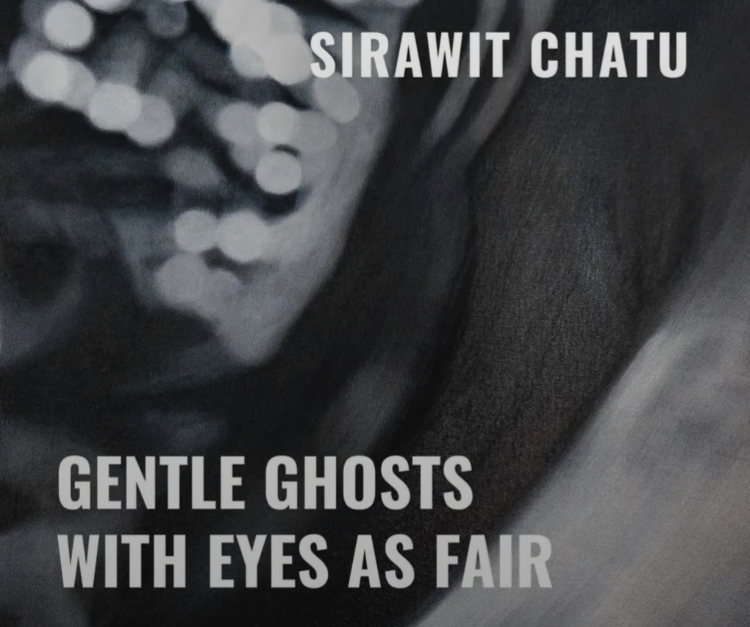
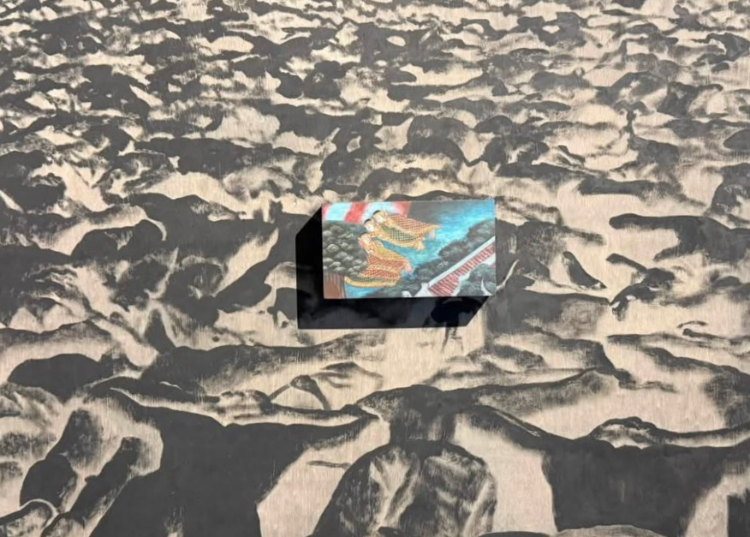
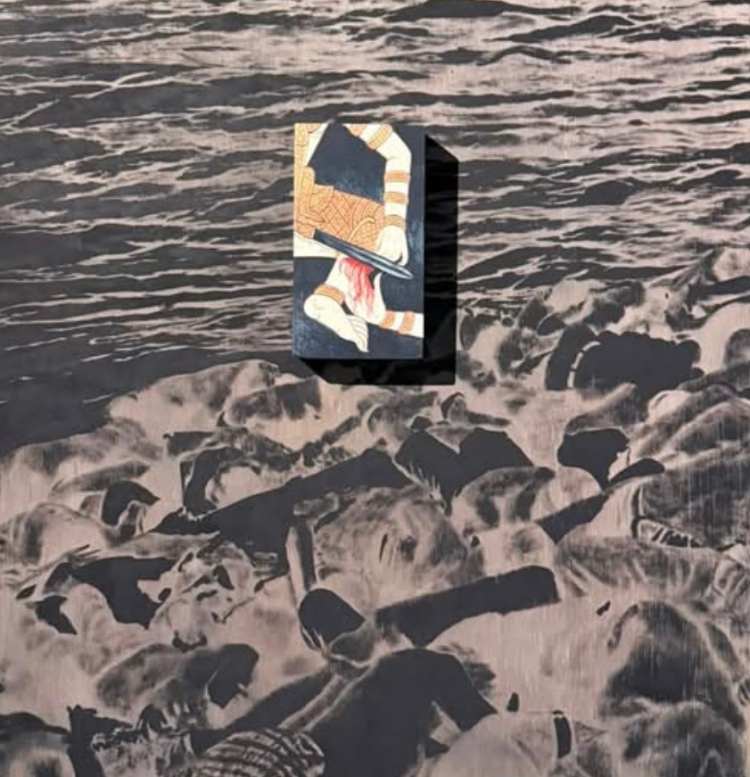
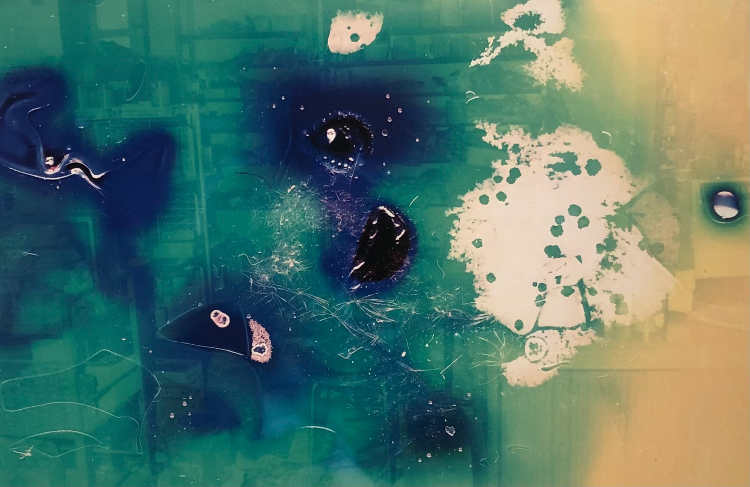
Sirawit Chatu’s exhbition Gentle Ghosts with Eyes as Fair opens on 25th July at Fazal Unlimited in Bangkok, and runs until 6th September. The exhibition includes photographs from 6th October 1976 and the 2004 Tak Bai tragedy, converted to negatives and overlaid with small details from classical Thai artworks.

08 July 2026

Thailand’s Democracy


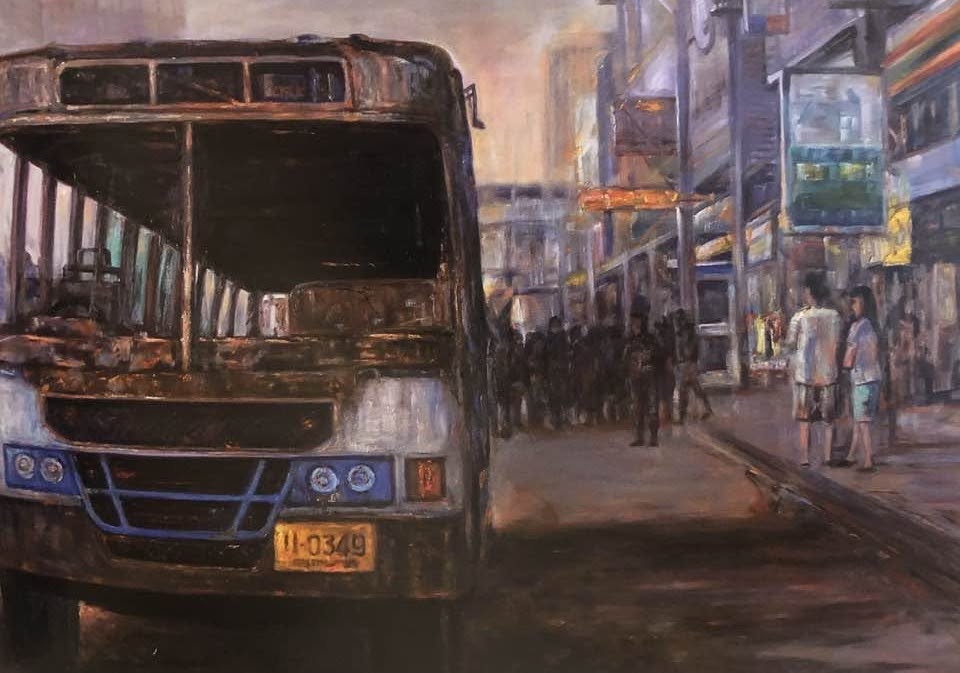
Event at Ratchaprasong Who Did Burn Thai Bus?

Almost 100 people were killed in 2010 when the government authorised the military to use live ammunition against red-shirt protesters. Nevertheless, artists such as Somsak Raksuwan focus only on the destruction of buildings and property, ignoring the suffering of the casualties and even demonising the victims themselves.

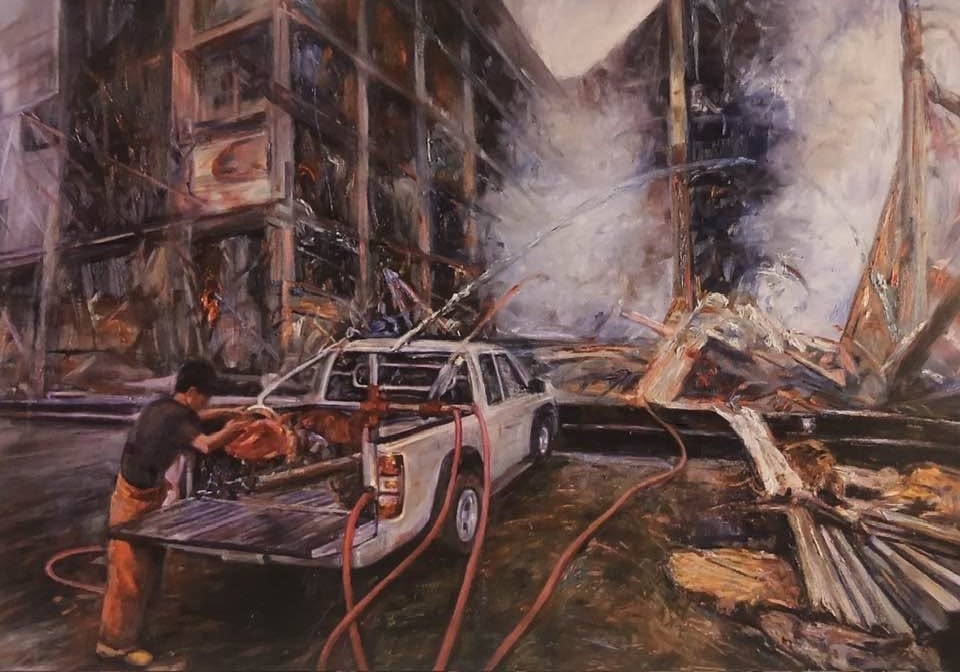
Somsak’s painting Event at Ratchaprasong (เหตุเกิดที่ราชประสงค์) has a euphemistic title that minimises the magnitude of the massacre that took place there. The painting depicts a firefighter in front of the ruins of the Zen department store, which was burnt on the evening of the army’s final crackdown against the protesters. Somsak seems to suggest that Zen was the real victim of the tragic event.

Similarly, another of his paintings, Who Did Burn Thai Bus? (รถเมล์ไทย ใครเผา), shows the burnt chassis of a public bus in Bangkok, and the title explicitly seeks to apportion blame for this act of arson. While, of course, setting fire to a bus is a crime, a more pertinent question might be: who did kill the protesters?

Somsak’s paintings were shown at his Thailand’s Democracy (ประชาธิปไตย ไทยแลนด์) exhibition at the PSG Gallery in Bangkok. Significantly, the exhibition was held from 20th November to 16th December 2013, coinciding with the start of the disruptive street protests against Yingluck Shinawatra’s government.

Somsak is not the only artist whose work in response to the 2010 massacre focuses only on the arson and property damage. The Rupture (หมายเหตุ ๕/๒๕๕๓) exhibition featured photographs by Olivier Pin-Fat, Wolfgang Bellwinkel, Piyatat Hemmatat, and Manit Sriwanichpoom showing burnt buildings, plumes of smoke, and barricades of tyres. This created the false impression that the event had been a destructive riot perpetrated by the red-shirts. (All images of red-shirt victims, taken by Agnes Dherbeys, were removed from the exhibition by Bangkok Art and Culture Centre management.)

Right-wing publications have also whitewashed the deaths of the victims. For example, พฤษภาอำมหิต (‘savage May’), published by Kom Chad Luek (คมชัดลึก), focused almost entirely on the arson committed after the massacre. Likewise, the subtitle of a book by Suthep Thaugsuban, อย่าให้ใครเผาอีก (‘don’t let anyone burn [Thailand] down again’), presents the red-shirts as arsonists and terrorists.

Damage

Kornkrit Jianpinidan’s 2024 photographic series Damage features photos of buildings looted and vandalised after a previous massacre on 6th October 1976, though the damage was caused by the perpetrators of the violence, not by the victims. (Damage will be shown at MAIIAM in Chiang Mai later this month, as part of an exhibition about the 1976 massacre.)

04 July 2026

Parodical Exhibition


Parodical Exhibition

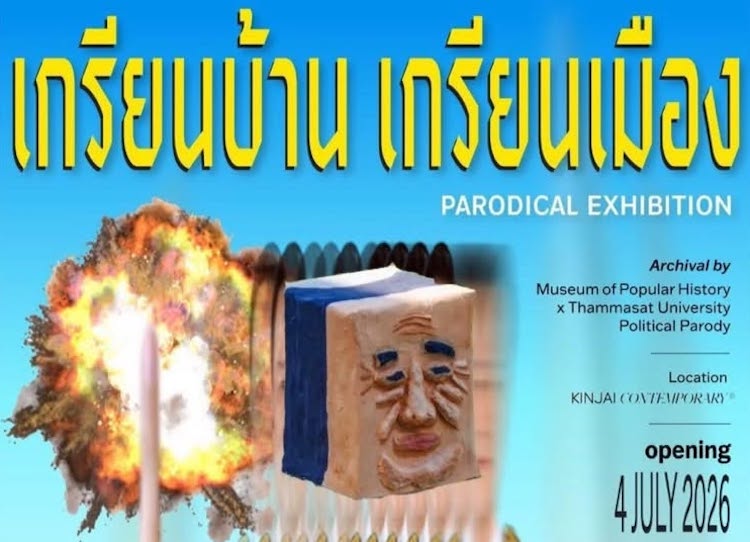
Parodical Exhibition (เกรียนบ้าน เกรียนเมือง), an exhibition of satirical political art organised by the Museum of Popular History, opened today at Kinjai Contemporary in Bangkok. It runs until 26th July (extended from the original closing date, 19th July).

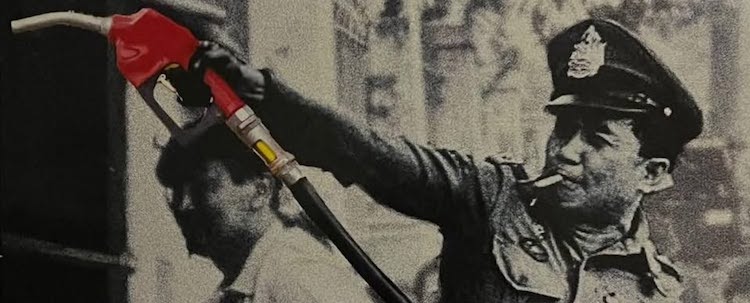
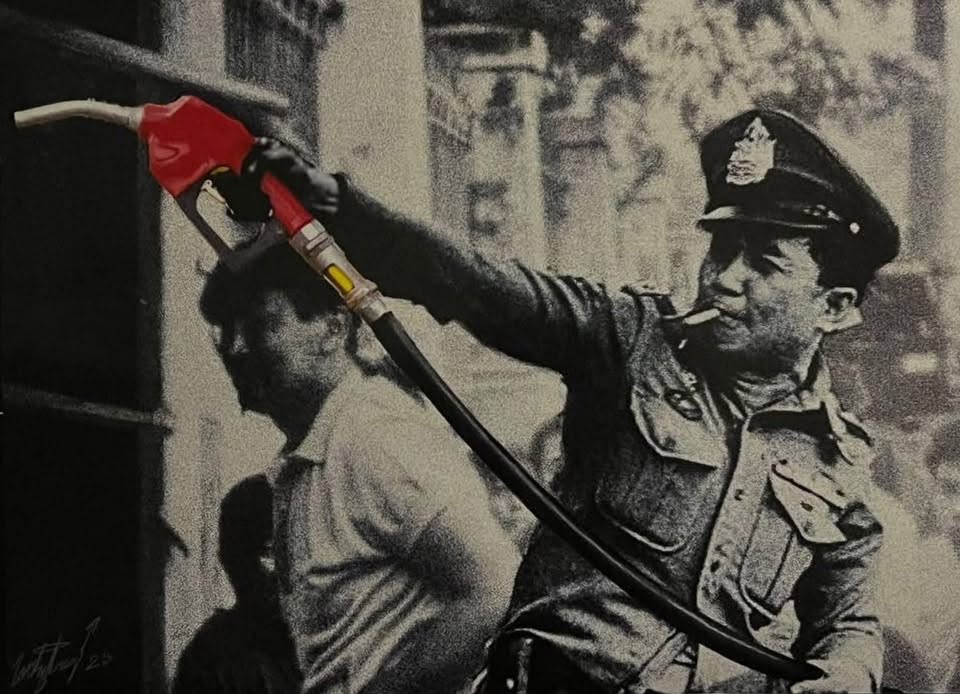
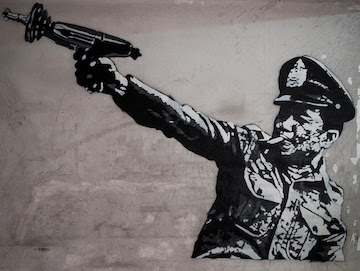
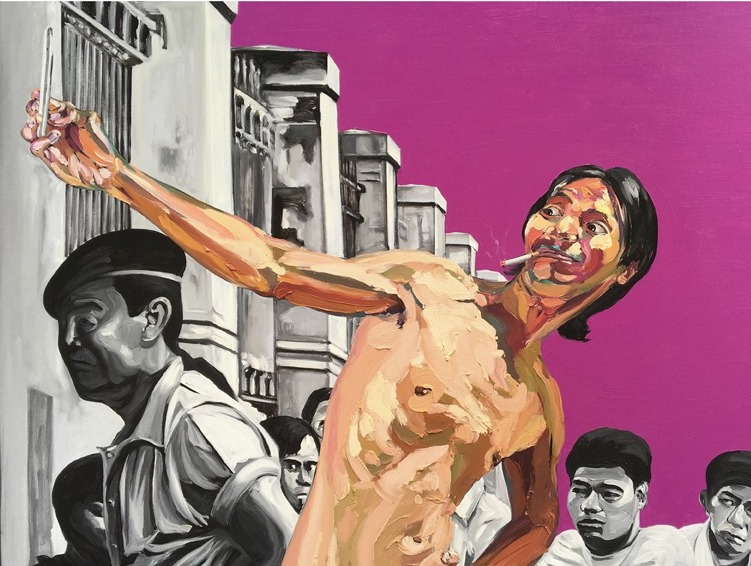
There are several iconic photographs of the events at Thammasat University that led to the 6th October 1976 coup, including a photo taken by Kraipit Phanvut that shows police colonel Watcharin Niamvanichkul aiming his pistol while nonchalantly smoking a cigarette. Parodical Exhibition features a 2023 image by Lucky Leg that manipulates Kraipat’s photo, replacing the pistol with a petrol pump nozzle.

Lucky Leg

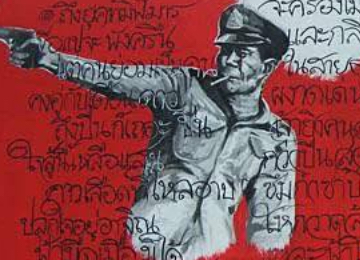
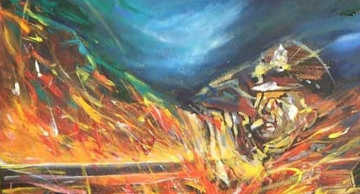
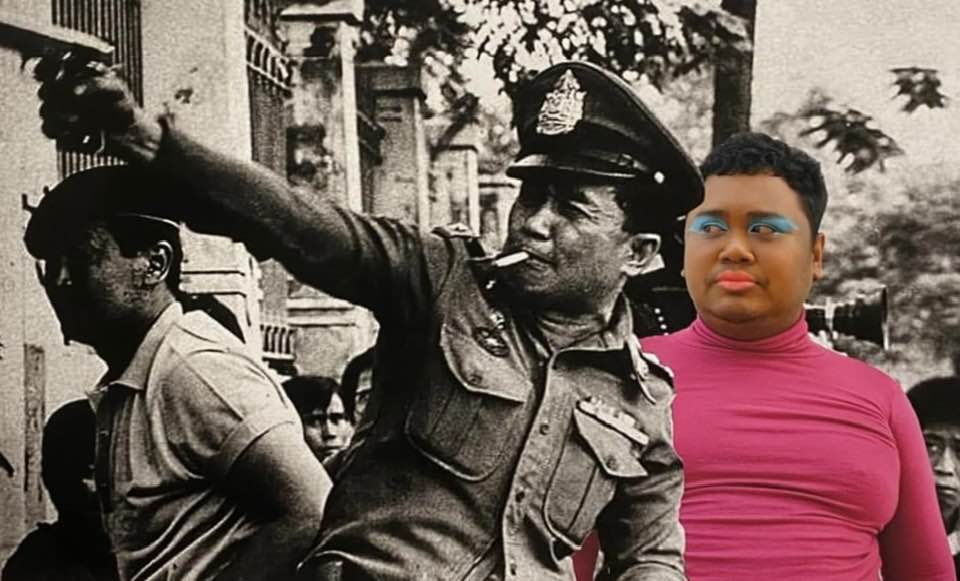
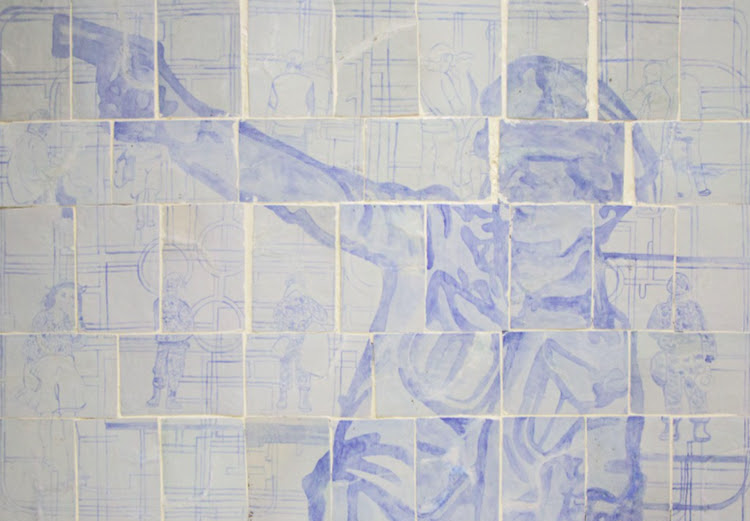
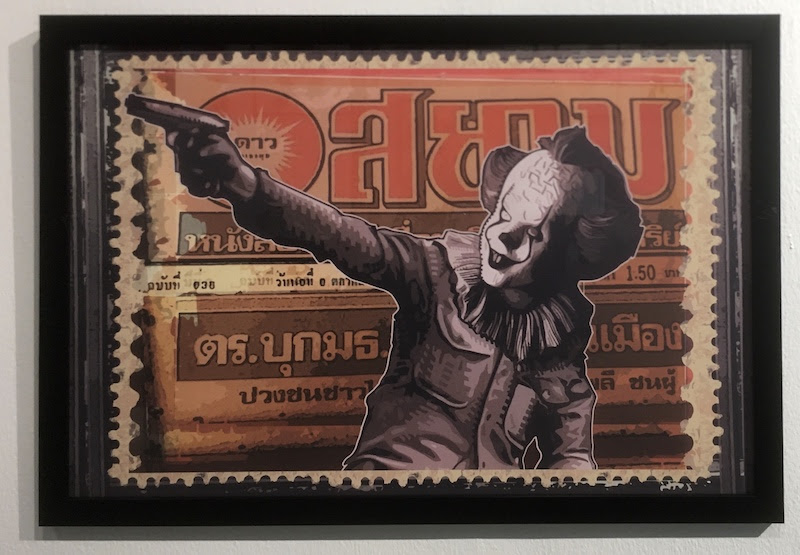
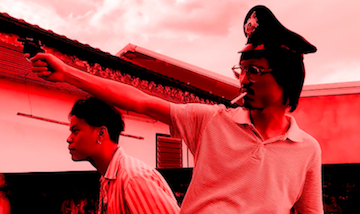
Kraipat’s photograph has been parodied by numerous other Thai artists over the years, and — including Lucky Leg’s petrol pump — there are at least a dozen different versions of it. These include photomontages, paintings, and recreations in films and videos.

Lucky Leg
A Sleepless Entity Gate of Hell
BangLee Everything Everywhere Horror in Pink No. 2
Hidden Agenda No. 5 Spanky Studio
Sun Rises When Day Breaks By the Time It Gets Dark
Deja vu Selfie Series

Manit Sriwanichpoom inserted his Pink Man character into the image for Horror in Pink (ปีศาจสีชมพู), a technique parodied by Anuwat Apimukmongkon. Spanky Studio superimposed a clown’s head over Watcharin’s face. In Déjà vu (เดจาวู), Headache Stencil replaced the pistol with a futuristic ray gun. For his Selfie Series (เซลฟี่ ซีรีย์), Chumpol Kamwanna depicted himself taking a selfie while adopting the same pose as Watcharin. The pose was also restaged in Anocha Suwichakornpong’s film By the Time It Gets Dark (ดาวคะนอง), Naphat Khunlam’s short film A Sleepless Entity, and View from the Bus Tour’s music video Sun Rises When Day Breaks (ลิ่วล้อ). Pornpimon Pokha’s Hidden Agenda No. 5 (วาระซ่อนเร้น หมายเลข 5) recreated the image in watercolour. The image also featured, alongside a drawing of a hanged student, on a large banner first displayed at red-shirt protests in 2010. Wana Wanlayongkoon’s painting The Gate of Hell (นรก 6 ตุลา) depicts the scene surrounded by flames.

Parodical Exhibition also features two posters that refer to Thammasat, both of which were previously shown at the Bangkok Through Poster exhibition. One is for a spoof horror film titled Cursed Siam (สาปสยาม) by Canyouhearcloud from 2024, and the other is The End of Pinocchio and His Friends from last year.

The exhibition also includes a timeline charting the history of political satire, and a selection of newspaper cartoons depicting the ‘three tyrants’ who fled the country after 14th October 1973. Its centrepiece is a room dedicated to online memes relating to recent Thai prime ministers.