


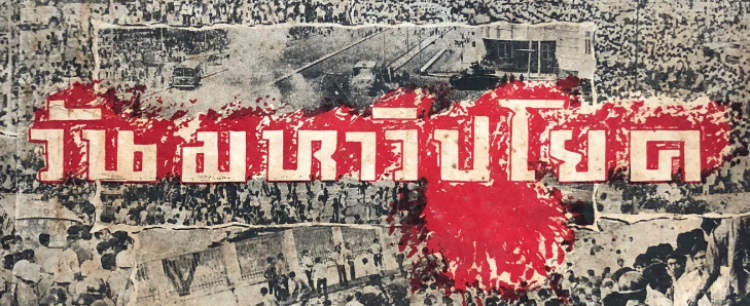
The events of 14th October 1973 led to the collapse of a dictatorship, followed by three years of democratic government in Thailand. The roots of the revolution can be traced back six months earlier, when a helicopter crashed in the Thung Yai wildlife sanctuary. The crash caused a national scandal, as the helicopter was part of an illegal poaching expedition organised by senior military figures.
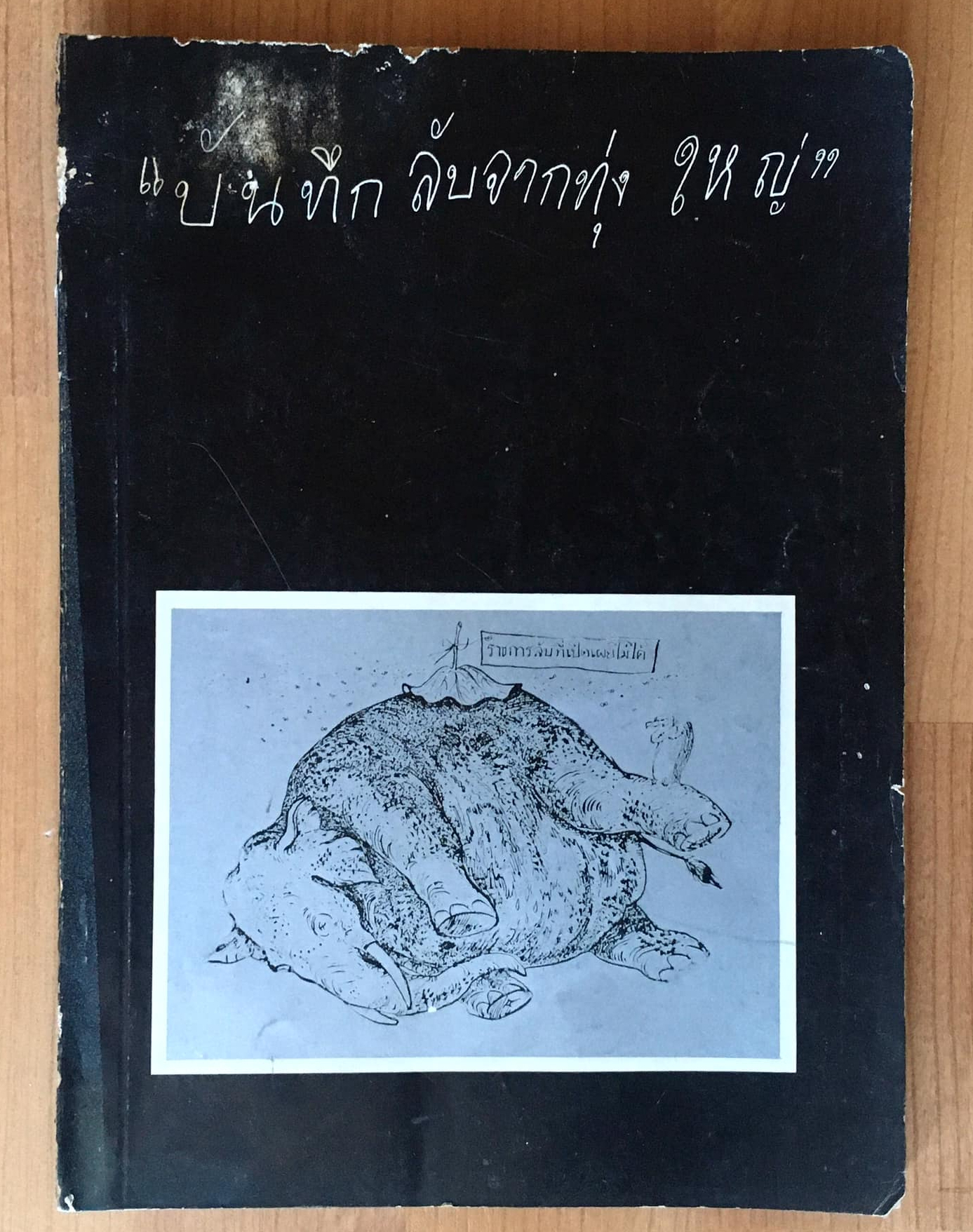
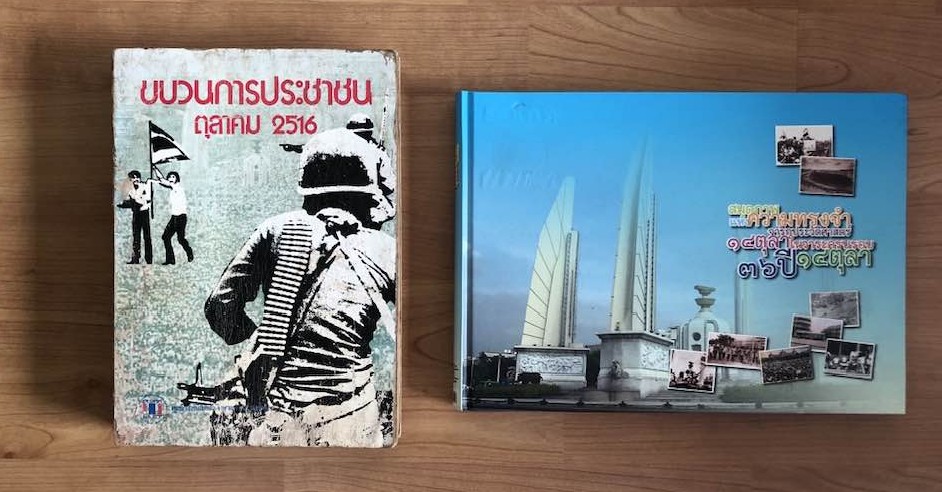
Students from Ramkhanhaeng University published a dossier about the controversy, บันทึกลับจากทุ่งใหญ่ (‘secret notes on Thung Yai’). They were suspended from their courses, triggering protests at Democracy Monument calling for their reinstatement. Student activism increased, developing into a wider campaign against the military government led by Thanom Kittikachorn.
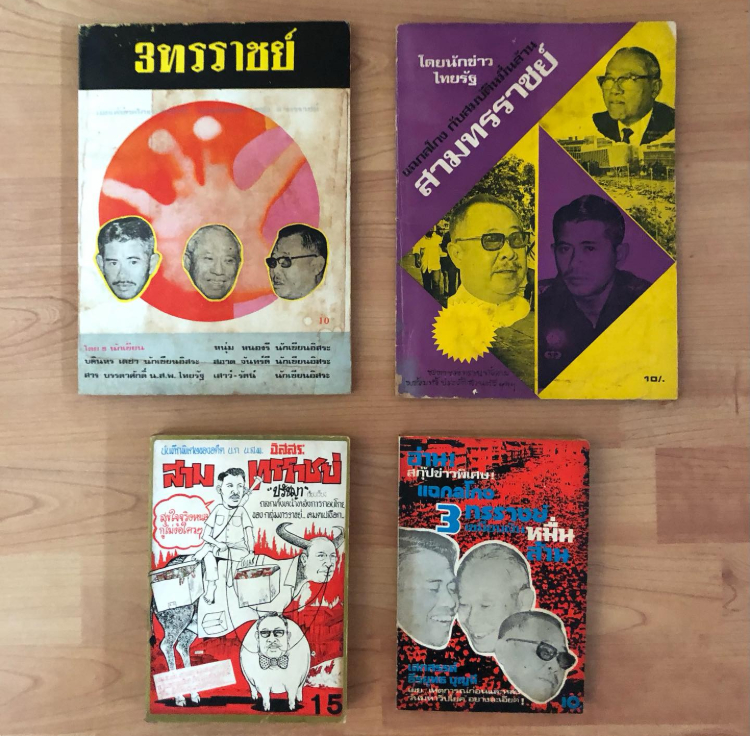
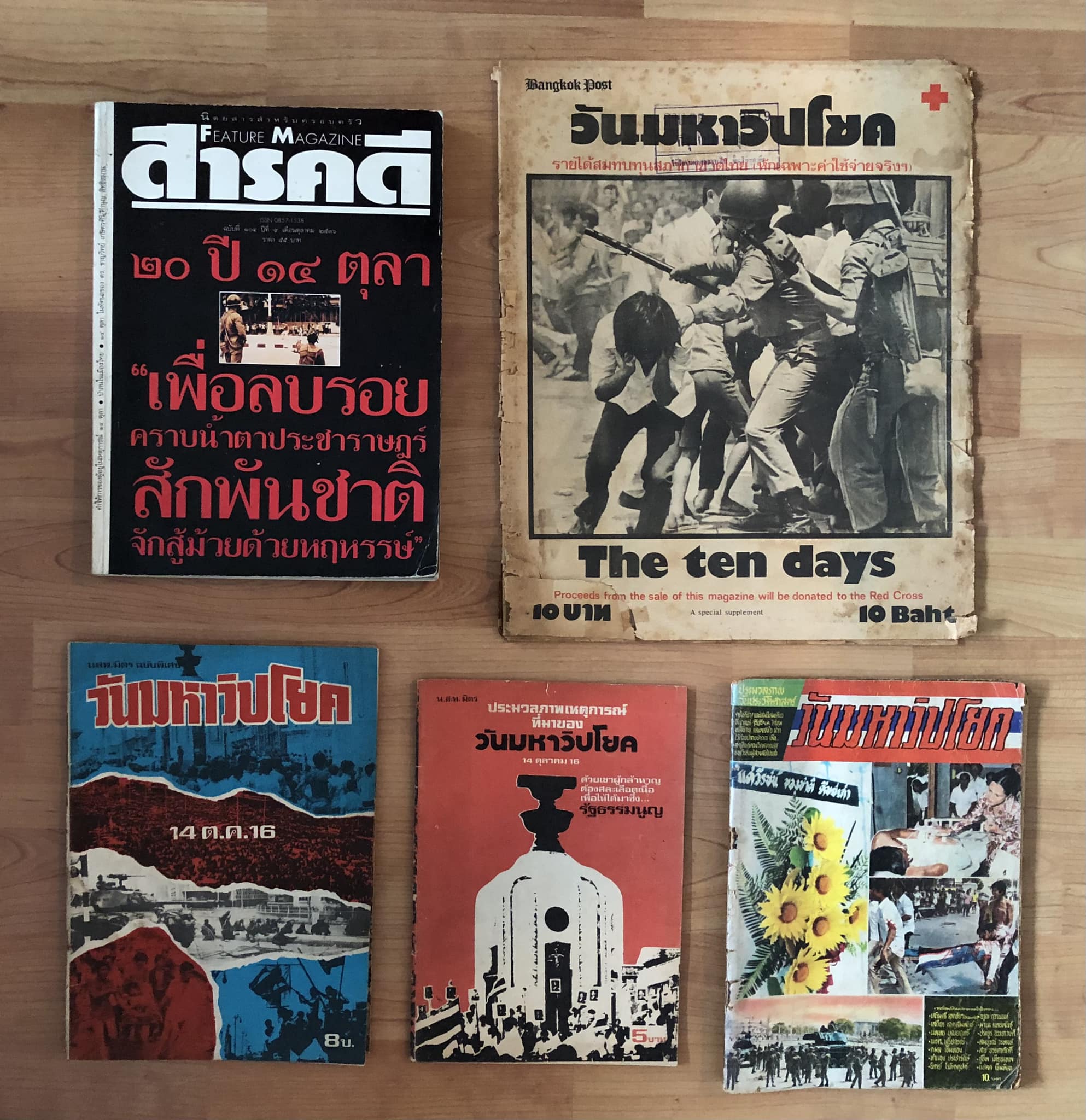
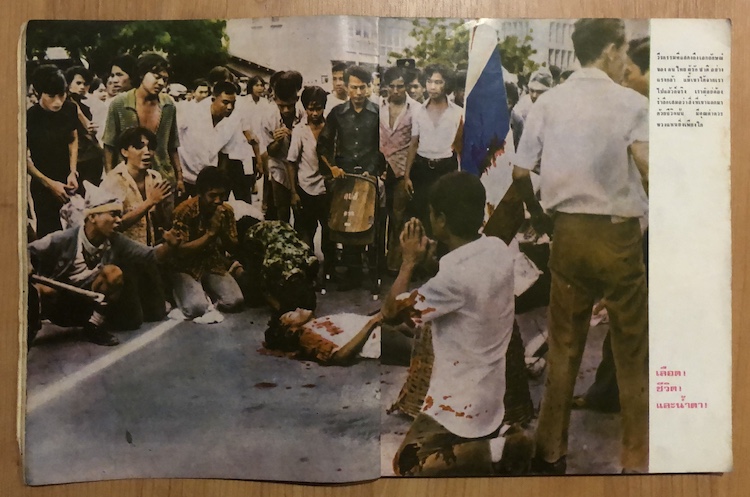
By 11th October 1973, around 50,000 protesters demonstrated at Thammasat University. Two days later, they marched to Democracy Monument, and the number of demonstrators swelled to 500,000. On 14th October 1973, the military opened fire on the students — killing seventy-seven people — and there were rumours that Thanom’s son Narong shot protesters from a military helicopter.
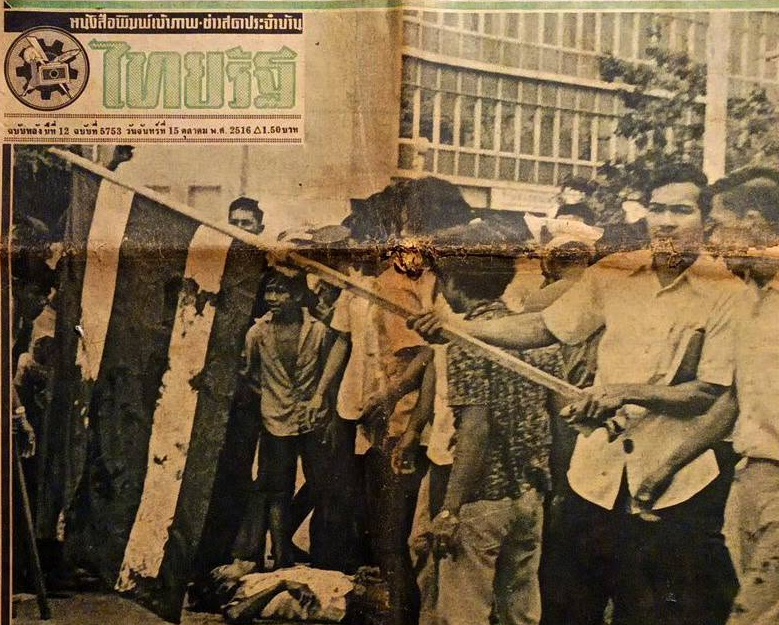
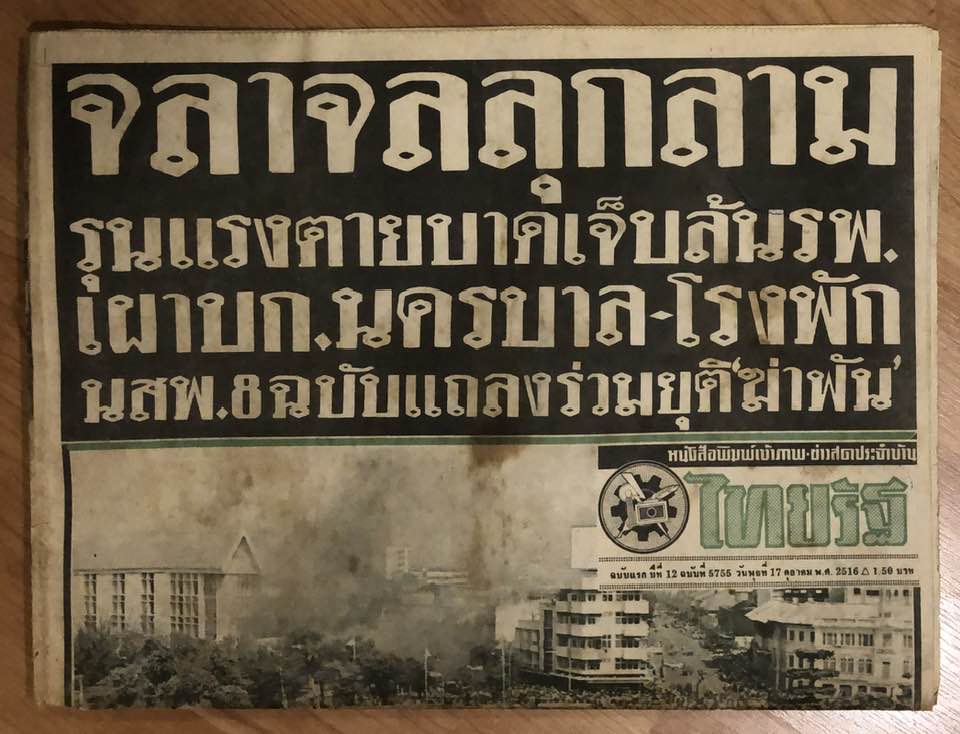
The next day’s Thai Rath (ไทยรัฐ) front page featured one of the defining images of the incident: a photograph of a man waving a bloodied Thai flag, standing alongside the body of Jira Boonmak, the first casualty of 14th October. The headline quoted Rama IX’s description of that day as “วันมหาวิปโยค” (‘the day of great sorrow’).
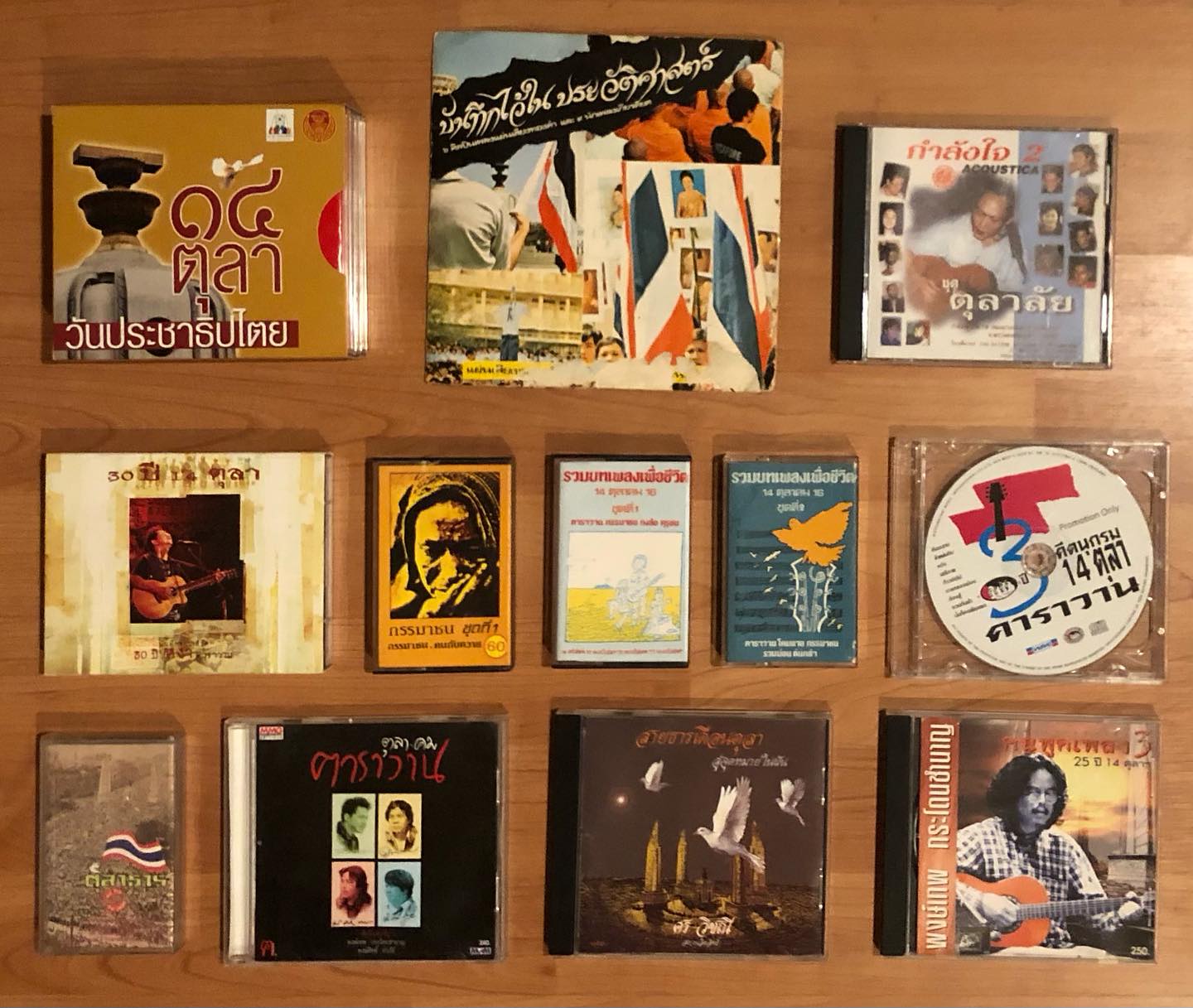
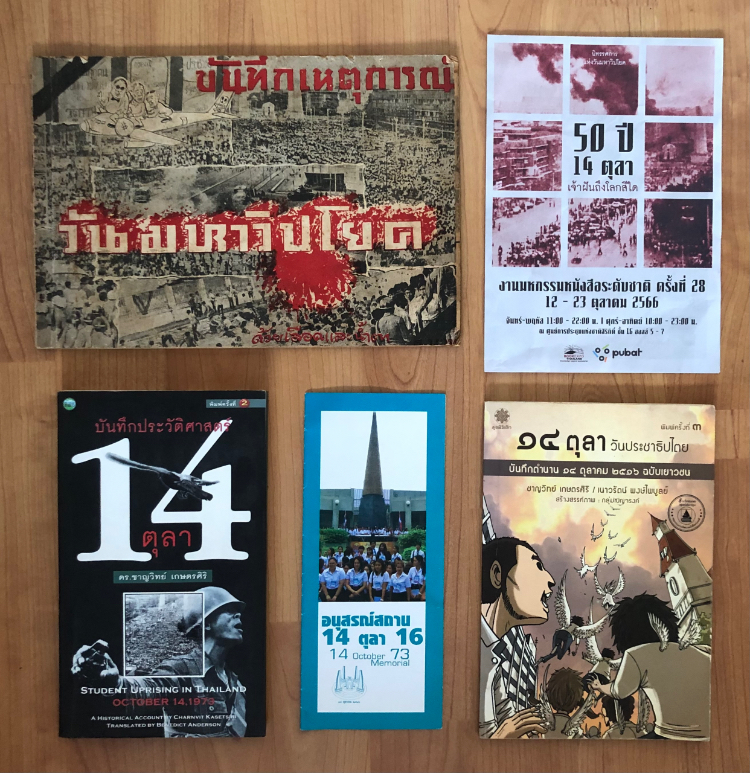
To appease the protesters, the government agreed to begin drafting a new constitution, and protest leader Seksan Prasertkul sought assurances from King Rama IX that this promise would be kept. Just as in May 1992, Bhumibol’s actions resolved the conflict, sending Thanom, Narong, and Praphas Charusathien (known as the three tyrants or สามทรราชย์) into exile.
A brief period of civilian democratic rule followed, though Thanom returned to the country three years later. Protests against his presence led to a violent coup that took place on 6th October 1976, which became another political milestone.
Political Milestones:
- no. 1: ‘Black May’