

The 29th Thai Short Film and Video Festival (เทศกาลภาพยนตร์สั้น ครั้งที่ 29) runs from 13th to 21st December at the Thai Film Archive in Salaya. Eighty-eight films will be shown, selected from more than 600 submissions. Most of the submitted films were screened in the online Short Film Marathon (หนังสั้นมาราธอน), which concluded yesterday.
The highlights of this year’s festival include Buariyate Eamkamol’s A Fire 9 Kilometers Away on 14th December, Uruphong Raksasad’s Cut of Speech on 20th December, and Vichart Somkaew’s When My Father Was a Communist (เมื่อพ่อผมเป็นคอมมิวนิสต์) on 21st December. (The politically sensitive Cut of Speech was not shown in the Short Film Marathon.)
The highlights of this year’s festival include Buariyate Eamkamol’s A Fire 9 Kilometers Away on 14th December, Uruphong Raksasad’s Cut of Speech on 20th December, and Vichart Somkaew’s When My Father Was a Communist (เมื่อพ่อผมเป็นคอมมิวนิสต์) on 21st December. (The politically sensitive Cut of Speech was not shown in the Short Film Marathon.)

The feature-length Cut of Speech is the final film in which Uruphong documents the recent student protest movement. It features clips of forty-four speakers, in reference to article 44 of the interim constitution drafted after the 2014 coup. (Whereas other documentaries on the protests focus on their atmosphere, Cut of Speech concentrates almost exclusively on the protesters’ speeches.)


Uruphong’s previous films in the series are Songs of Angry People (which premiered in South Korea) and Paradox Democracy (shown at last year’s Short Film and Video Festival). (He was commissioned to make a TV programme on the subject, You Fucked with the Wrong Generation, though the project wasn’t completed.)


Uruphong also appears, as an actor, in Chaiyapol Kokiartcajon’s short drama Another Side of the Sun (ดวงใจอารี), about a young girl whose father goes missing on the day of the 2014 coup. (The junta’s announcement is heard on television.) Another Side of the Sun will be screened at the Film Archive on 14th December. (Like Cut of Speech, it was not shown in the Short Film Marathon.)
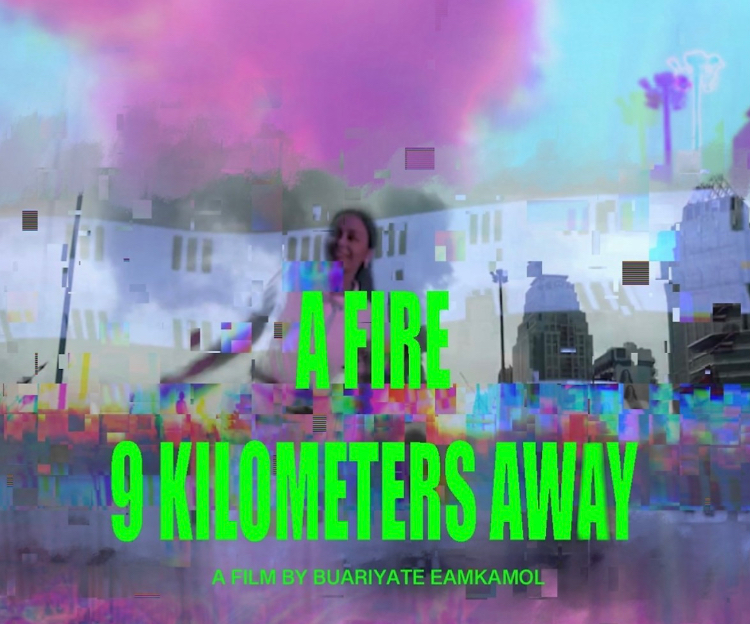
A Fire 9 Kilometers Away
Buariyate’s A Fire 9 Kilometers Away is a blend of documentary and fiction, and features a poem dedicated to Samaphan Srithep, one of the youngest victims of the crackdown on protesters in Bangkok in 2010. Projected as a diptych, the film makes ironic juxtapositions, showing military snipers on 10th April 2010 alongside footage of revellers firing water pistols during the April Songkran festival. It was previously shown at Wildtype 2025 and the Media Arts and Design Festival 2025 (บึงเบ๊ง).

When My Father Was a Communist
For When My Father Was a Communist, Vichart interviewed his father, Sawang, and other former members of the Communist Party of Thailand. The film is a valuable social history, as the veterans explain their decisions to join the CPT, and describe their experiences in the forests of Phatthalung.
When My Father Was a Communist is also a record of the state’s violent suppression of communist insurgents, hundreds (potentially thousands) of whom were burned in oil drums in 1972. These so-called ‘red barrel’ deaths were most prevalent in Phatthalung, and have never been officially investigated. (The names of the victims are listed before the film’s end credits.) There have been other documentaries about the red barrels, but When My Father Was a Communist stands out for Vichart’s close connections to the subject: this is a deeply personal project, as he was born in Phatthalung, and he is documenting the memories of his elderly father.
The film has been screened around the country, including at Phimailongweek (พิมายฬองวีค) in Korat. Its most recent screening was in Phetchaburi last week.
When My Father Was a Communist is also a record of the state’s violent suppression of communist insurgents, hundreds (potentially thousands) of whom were burned in oil drums in 1972. These so-called ‘red barrel’ deaths were most prevalent in Phatthalung, and have never been officially investigated. (The names of the victims are listed before the film’s end credits.) There have been other documentaries about the red barrels, but When My Father Was a Communist stands out for Vichart’s close connections to the subject: this is a deeply personal project, as he was born in Phatthalung, and he is documenting the memories of his elderly father.
The film has been screened around the country, including at Phimailongweek (พิมายฬองวีค) in Korat. Its most recent screening was in Phetchaburi last week.