



This year marks the fiftieth anniversary of the violent and tragic events that took place on 6th October 1976 at Thammasat University, when forty-six people, most of whom were students, were killed by right-wing militia groups and vigilantes. The bodies of the victims were desecrated by baying mobs, and the incident remains one of the most shocking moments in Thailand’s modern history.
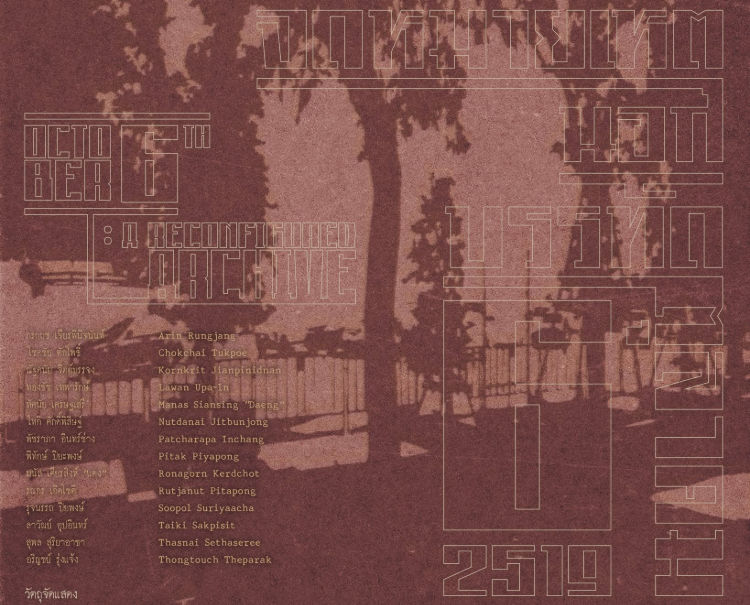
MAIIAM in Chiang Mai is commemorating the anniversary with a group exhibition devoted to the incident, October 6th: A Reconfigured Archive (จดหมายเหตุนอกบรรทัด 6 ตุลาคม 2519), which opened on 10th July and runs until 30th November. The exhibition features artworks commenting on the Thammasat massacre alongside books and other archival materials documenting the event.
The exhibition includes Nutdanai Jitbunjong’s installation A Massacre: a folding chair suspended from the ceiling. The chair is an iconic signifier of the massacre, thanks to Neal Ulevich’s photograph of a man preparing to hit a corpse with a folding chair. Nutdanai’s chair is made from tamarind wood, as the dead man in Ulevich’s photo was hanged from a tamarind tree. A Massacre was previously shown in the Status in Statu (รัฐพิลึก) and Khon Kaen Manifesto (ขอนแก่น แมนิเฟสโต้) exhibitions.
Several works from Taiki Sakpisit’s exhibition Dark Was the Night (ผีพุ่งไต้) are included, notably his video installation of the same title and his photograph Half Day Closing, an image of the notorious ‘red elevator’, which — according to legend — is haunted by victims of the 1976 attack. The lift was discussed in the documentary Ghosts, and it inspired the horror film Haunted Universities (มหาลัยสยองขวัญ).
Thasnai Sethaseree has produced numerous paintings that refer to 1976. The exhibition features three of his untitled collages: news photos of the incident heavily obscured by colourful overpainting. They were also shown in a previous MAIIAM exhibition, Errata.
MAIIAM in Chiang Mai is commemorating the anniversary with a group exhibition devoted to the incident, October 6th: A Reconfigured Archive (จดหมายเหตุนอกบรรทัด 6 ตุลาคม 2519), which opened on 10th July and runs until 30th November. The exhibition features artworks commenting on the Thammasat massacre alongside books and other archival materials documenting the event.
The exhibition includes Nutdanai Jitbunjong’s installation A Massacre: a folding chair suspended from the ceiling. The chair is an iconic signifier of the massacre, thanks to Neal Ulevich’s photograph of a man preparing to hit a corpse with a folding chair. Nutdanai’s chair is made from tamarind wood, as the dead man in Ulevich’s photo was hanged from a tamarind tree. A Massacre was previously shown in the Status in Statu (รัฐพิลึก) and Khon Kaen Manifesto (ขอนแก่น แมนิเฟสโต้) exhibitions.
Several works from Taiki Sakpisit’s exhibition Dark Was the Night (ผีพุ่งไต้) are included, notably his video installation of the same title and his photograph Half Day Closing, an image of the notorious ‘red elevator’, which — according to legend — is haunted by victims of the 1976 attack. The lift was discussed in the documentary Ghosts, and it inspired the horror film Haunted Universities (มหาลัยสยองขวัญ).
Thasnai Sethaseree has produced numerous paintings that refer to 1976. The exhibition features three of his untitled collages: news photos of the incident heavily obscured by colourful overpainting. They were also shown in a previous MAIIAM exhibition, Errata.
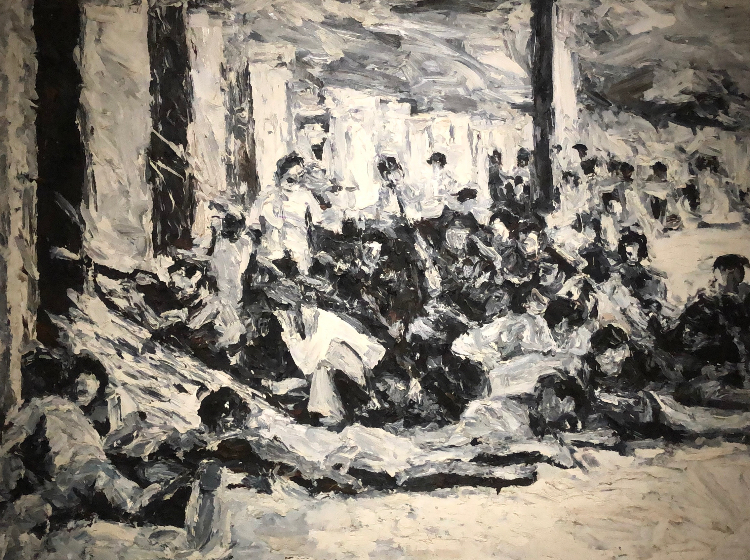
Other paintings in the exhbition include Patcharapa Inchang’s Father, Lawan Upa-In’s ก่อน ๖ ตุลา ๒๕๑๙ (‘before 6th Oct. 1976’), and Ronagorn Kerdchot’s 16 19 35 (๑๖ ๑๙ ๓๕). The title of Ronagorn’s work refers to the years 1973, 1976, and 1992 according to the Buddhist Era calendar, and all three periods are associated with episodes of state violence.
Thanavi Chotpradit and Kornkrit Jianpinidnan’s book Prism of Photography is on display, alongside a photograph from Kornkrit’s Damage series. The book is a visual archive of the massacre, featuring dozens of Thai newspaper front pages and news photographs. ฟ้าใหม่ ใกล้มา (‘dawn of victory’), a ‘museum in a box’ featuring meticulously reproduced artefacts from 1976, is also on show.
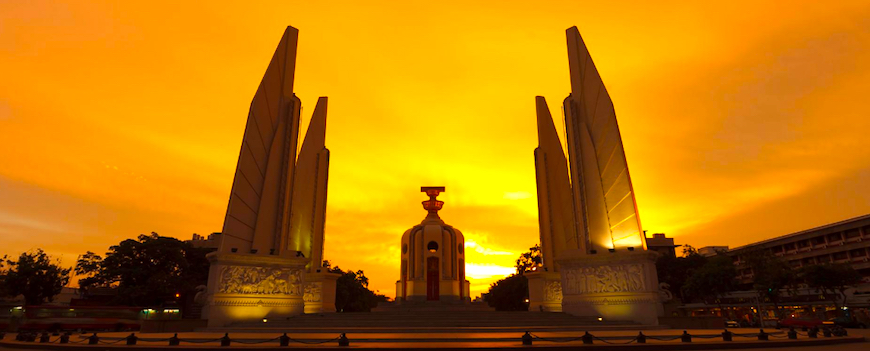
To contextualise the events of 1976, the exhibition also features Arin Rungjang’s And Then There Were None, a series of paintings based on news photographs from 14th October 1973, a date almost as infamous as 6th October 1976, when a mass protest led to the (temporary) collapse of a military dictatorship. Her video of the same title, an interview with singer Boonchuang Denduang that begins with archive footage from 1973, is also included. Arin’s paintings were shown alongside Thasnai’s in Errata.
Thanavi Chotpradit and Kornkrit Jianpinidnan’s book Prism of Photography is on display, alongside a photograph from Kornkrit’s Damage series. The book is a visual archive of the massacre, featuring dozens of Thai newspaper front pages and news photographs. ฟ้าใหม่ ใกล้มา (‘dawn of victory’), a ‘museum in a box’ featuring meticulously reproduced artefacts from 1976, is also on show.
To contextualise the events of 1976, the exhibition also features Arin Rungjang’s And Then There Were None, a series of paintings based on news photographs from 14th October 1973, a date almost as infamous as 6th October 1976, when a mass protest led to the (temporary) collapse of a military dictatorship. Her video of the same title, an interview with singer Boonchuang Denduang that begins with archive footage from 1973, is also included. Arin’s paintings were shown alongside Thasnai’s in Errata.