


For his new documentary When My Father Was a Communist (เมื่อพ่อผมเป็นคอมมิวนิสต์), Vichart Somkaew interviewed his father, Sawang, and other former members of the Communist Party of Thailand. The film is a valuable social history, as the veterans explain their decisions to join the CPT, and describe their experiences in the forests of Phatthalung.
When My Father Was a Communist is also a record of the state’s violent suppression of communist insurgents, hundreds (potentially thousands) of whom were burned in oil drums in 1972. These so-called ‘red barrel’ deaths were most prevalent in Phatthalung, and have never been officially investigated. (The names of the victims are listed before the film’s end credits.)
There have been other documentaries about the red barrels, including หยดน้ำตาแห่งลำสินธุ์ (‘tears of Lam Sin’) in 2014, หมู่บ้านถังแดง (‘red barrel village’) in 2019, and a 1997 episode of the iTV series ย้อนรอย (‘retracing steps’). But When My Father Was a Communist stands out for Vichart’s close connections to the subject: this is a deeply personal project, as he was born in Phatthalung, and he is documenting the memories of his elderly father.
When My Father Was a Communist is also a record of the state’s violent suppression of communist insurgents, hundreds (potentially thousands) of whom were burned in oil drums in 1972. These so-called ‘red barrel’ deaths were most prevalent in Phatthalung, and have never been officially investigated. (The names of the victims are listed before the film’s end credits.)
There have been other documentaries about the red barrels, including หยดน้ำตาแห่งลำสินธุ์ (‘tears of Lam Sin’) in 2014, หมู่บ้านถังแดง (‘red barrel village’) in 2019, and a 1997 episode of the iTV series ย้อนรอย (‘retracing steps’). But When My Father Was a Communist stands out for Vichart’s close connections to the subject: this is a deeply personal project, as he was born in Phatthalung, and he is documenting the memories of his elderly father.

The film notes that the repressive atmosphere of the 1970s has not disappeared. One speaker says that the political system has barely changed since the military dictatorship after the 1976 coup. Another makes a direct comparison between the suppression of political opponents then and now: “dissolving political parties, slapping people with Article 112 charges... It’s like arresting them and throwing them in red barrels, but they do it in a different way now.”
This link between past and present is also found in Chatchawan Thongchan’s short film From Forest to City (อรัญนคร) and Thanaphon Accawatanyu’s play Wilderness (รักดงดิบ), both of which compare the persecution of communists after 1976 to the recent student protest movement. Like When My Father Was a Communist, Pasit Promnampol’s short film Pirab (พีเจ้น) and Sunisa Manning’s novel A Good True Thai also focus on the lives of communist insurgents.
The protagonists of three films — Apichatpong Weerasethakul’s Uncle Boonmee Who Can Recall His Past Lives (ลุงบุญมีระลึกชาติ), Taiki Sakpisit’s The Edge of Daybreak (พญาโศกพิโยคค่ำ), and Jakrawal Nilthamrong’s Anatomy of Time (เวลา) — are all former military officers who fought against the communist insurgency. Taiki’s Seeing in the Dark, Thunska Pansittivorakul’s Santikhiri Sonata (สันติคีรี โซนาตา), and Apichatpong’s A Letter to Uncle Boonmee (จดหมายถงลงบญม) were filmed in Khao Kho, Santikhiri, and Nabua, respectively, all of which are associated with anti-communist violence.
This link between past and present is also found in Chatchawan Thongchan’s short film From Forest to City (อรัญนคร) and Thanaphon Accawatanyu’s play Wilderness (รักดงดิบ), both of which compare the persecution of communists after 1976 to the recent student protest movement. Like When My Father Was a Communist, Pasit Promnampol’s short film Pirab (พีเจ้น) and Sunisa Manning’s novel A Good True Thai also focus on the lives of communist insurgents.
The protagonists of three films — Apichatpong Weerasethakul’s Uncle Boonmee Who Can Recall His Past Lives (ลุงบุญมีระลึกชาติ), Taiki Sakpisit’s The Edge of Daybreak (พญาโศกพิโยคค่ำ), and Jakrawal Nilthamrong’s Anatomy of Time (เวลา) — are all former military officers who fought against the communist insurgency. Taiki’s Seeing in the Dark, Thunska Pansittivorakul’s Santikhiri Sonata (สันติคีรี โซนาตา), and Apichatpong’s A Letter to Uncle Boonmee (จดหมายถงลงบญม) were filmed in Khao Kho, Santikhiri, and Nabua, respectively, all of which are associated with anti-communist violence.

There have been references to the notorious red barrels in a variety of art forms. Anocha Suwichakornpong’s film By the Time It Gets Dark (ดาวคะนอง) explains that communists were “set on fire in oil barrels.” Veerapong Soontornchattrawat’s novel อนุสรณ์สถาน (‘monument’) describes the need to memorialise the red barrel victims.
Nontawat Machai and Jakkraphan Sriwichai’s short film The Circle’s Circumference (เส้นรอบวง) was made in memory of the murdered human-rights activist Porlajee Rakchongcharoen, whose body was found in an oil drum at the bottom of a reservoir in 2019, five years after he went missing. Pin Sasao’s installation ถังแดง (‘red barrel’) also honoured Porlajee’s memory.
Nontawat Machai and Jakkraphan Sriwichai’s short film The Circle’s Circumference (เส้นรอบวง) was made in memory of the murdered human-rights activist Porlajee Rakchongcharoen, whose body was found in an oil drum at the bottom of a reservoir in 2019, five years after he went missing. Pin Sasao’s installation ถังแดง (‘red barrel’) also honoured Porlajee’s memory.
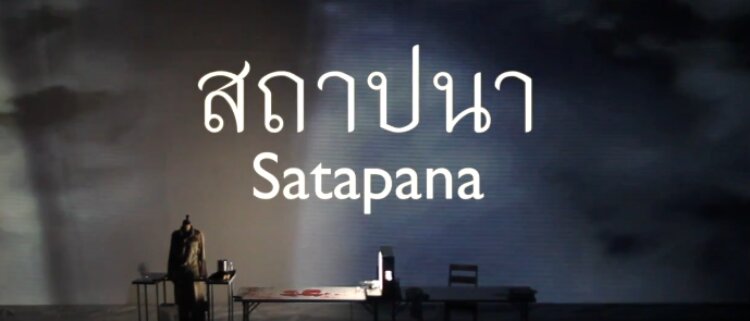
Red Tank (ถังแดง), the first installment of Teerawat Mulvilai’s solo dance performance Satapana (สถาปนา), featured Teerawat interacting with red oil drums on stage, in an unspoken reference to the anti-communist purge. Red Tank was performed from 10th–12th October 2014 at the Pridi Banomyong Institute. The second Satapana installment, Iceberg (ภูเขาน้ำแข็ง), was even more provocative, as Teerawat played an LP of the soundtrack to The King and I, including the song Shall I Tell You What I Think of You?, whose lyrics criticise prostration and other royal protocol. (Iceberg also featured props including a People’s Democratic Reform Committee whistle in a jar and a pig’s heart. It was performed from 30th October to 1st November at Chulalongkorn University’s Sodsai Pantoomkomol Center for Dramatic Arts.)
When My Father Was a Communist was first shown at the Us coffee shop in Phatthalung on 10th July. It will be screened at Vongchavalitkul University’s Faculty of Communication Arts in Korat on 23rd July, in a double bill with Cremation Ceremony (ประวัติย่อของบางสิ่งที่หายไป). It will be shown at four locations on 10th August — at the Chinese Martyrs Memorial Museum in Chiang Rai, Suan Anya in Chiang Mai, the Faculty of Humanities and Social Sciences at Sakon Nakhon Rajabhat University, and Samaki Chumnum in Nakhon Phanom — as part of the nationwide ความฝันประชาชน (‘people’s dream’) arts event. Other screenings will take place at AEY Space in Songkla on 26th July, Lorem Ipsum in Hat Yai on 27th July, Phattalung’s red barrel memorial building on 7th August, Hope Space in Bangkok on 16th August (followed by a Q&A with the director), at Walailak University in Nakhon Si Thammarat on 27th August, and at Bookhemian in Phuket on 19th September (followed by a Cinema Talk Q&A with the director).
When My Father Was a Communist was first shown at the Us coffee shop in Phatthalung on 10th July. It will be screened at Vongchavalitkul University’s Faculty of Communication Arts in Korat on 23rd July, in a double bill with Cremation Ceremony (ประวัติย่อของบางสิ่งที่หายไป). It will be shown at four locations on 10th August — at the Chinese Martyrs Memorial Museum in Chiang Rai, Suan Anya in Chiang Mai, the Faculty of Humanities and Social Sciences at Sakon Nakhon Rajabhat University, and Samaki Chumnum in Nakhon Phanom — as part of the nationwide ความฝันประชาชน (‘people’s dream’) arts event. Other screenings will take place at AEY Space in Songkla on 26th July, Lorem Ipsum in Hat Yai on 27th July, Phattalung’s red barrel memorial building on 7th August, Hope Space in Bangkok on 16th August (followed by a Q&A with the director), at Walailak University in Nakhon Si Thammarat on 27th August, and at Bookhemian in Phuket on 19th September (followed by a Cinema Talk Q&A with the director).