
film • politics • censorship • books • art • media • music
highlights — Tiny Tech • Six Political Milestones


08 October 2026

Wildtype 2026
Politix


Wildtype 2026


Wildtype, the annual season of short films programmed by Chayanin Tiangpitayagorn, Wiwat Lertwiwatwongsa, and Sasawat Boonsri, returns for its seventeenth year. After being held largely online in 2021 due to the coronavirus pandemic, the event has been expanding during the past few years, with screenings around the country in 2022, 2023, 2024, and 2025.

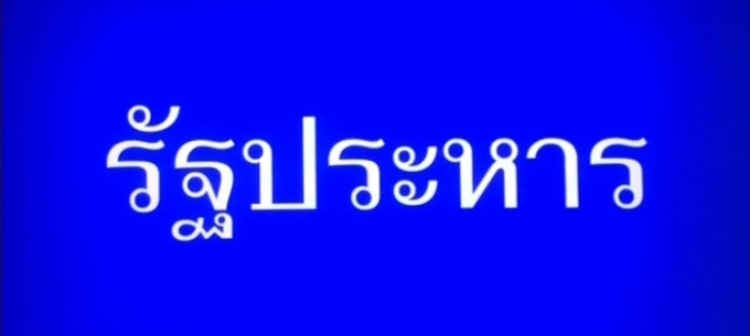
2026 is no exception, with screenings at a dozen locations around Thailand in October and November. More than fifty films will be shown, though the highlight is the Politix strand, which includes Long Live the Sin, Letter from Congo (จดหมายจากคองโก), A Pigeon’s Journey on the Birth of a Nation (ย้ายรัง), Self-Portrait (อัตภาพ), 8 (๘), and Soundtrack to a Coup d’État 2.

Politix screenings:
  • 4th October at Buffalo Bridge in Bangkok
  • 4th October at PYE Space in Phayao
  • 4th October at Fair Boy in Lopburi
  • 4th October at Loftster in Korat
  • 10th October at Noir Row Art Space in Udon Thani
  • 11th October at Bliss Project in Chanthaburi
  • 17th October at Alien Artspace in Khon Kaen
  • 18th October at Lorem Ipsum in Hat Yai
  • 18th October at Us in Phatthalung
  • 23rd October in Ranong
  • 23rd October at 23 December (!) in Phitsanulok
  • 25th October at Suan Anya in Chiang Mai
  • 8th November at Dirty Cups in Kanchanaburi
  • 17th November at Bangkok University
Some of the venue names are potentially confusing. The Ranong screenings will be held at a cafe that has no name, though it has a drawing of a drunken cat as its logo. 23 December is the name of a coffee bar in Phitsanulok, it’s not the date of the screening.


Long Live the Sin


Long Live the Sin


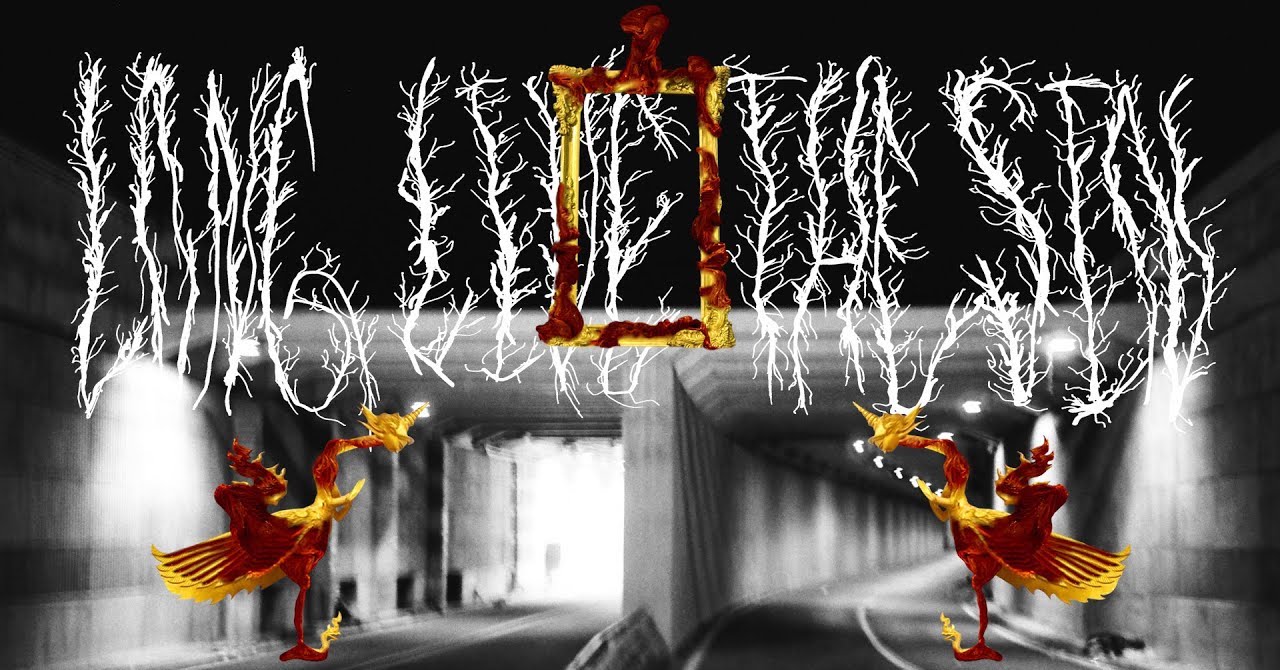
Beam Wong’s music video Long Live the Sin, a short burst of rage, features imagery associated with the three-finger protest movement. It was shown earlier this year at the Goethe-Institut.

8


8


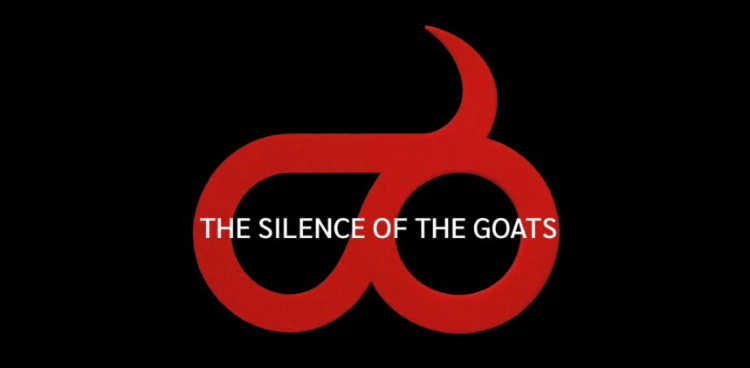
Pattanapong Khongsak’s short film 8 combines historical material with modern technology, using generative AI to visualise the past. This hybrid documentary has no narration, so key events are explained using written captions.

Photos of major political milestones — 6th October 1976, the yellow-shirt and red-shirt protests, the ‘Shutdown Bangkok’ campaign, and the 2006 and 2014 coup announcements — are solarised and rendered as 3D images. Pattanapong also uses bright red and blue tinting, as he did in Bad Taste (โอรส).

The AI manipulation makes the familiar images even more impactful, and dramatic reconstructions help to clarify the details. One sequence strays into deepfake territory: a newsreel-style scene of Democracy Monument engulfed by a tsunami, like a silent disaster movie.

The main focus is on the unexplained death or assassination of Rama VIII, the subsequent smear campaign against Pridi Banomyong, and the wrongful conviction of three men for conspiracy to murder. A caption tells us that the men were executed “8 years, 8 months, 8 days since the King’s death” — hence the 8 (๘) in the film’s title. (Its subtitle, The Silence of the Goats, is a pun on The Silence of the Lambs.)

Soundtrack to a Coup d'Etat 2


Soundtrack to a Coup d’État 2


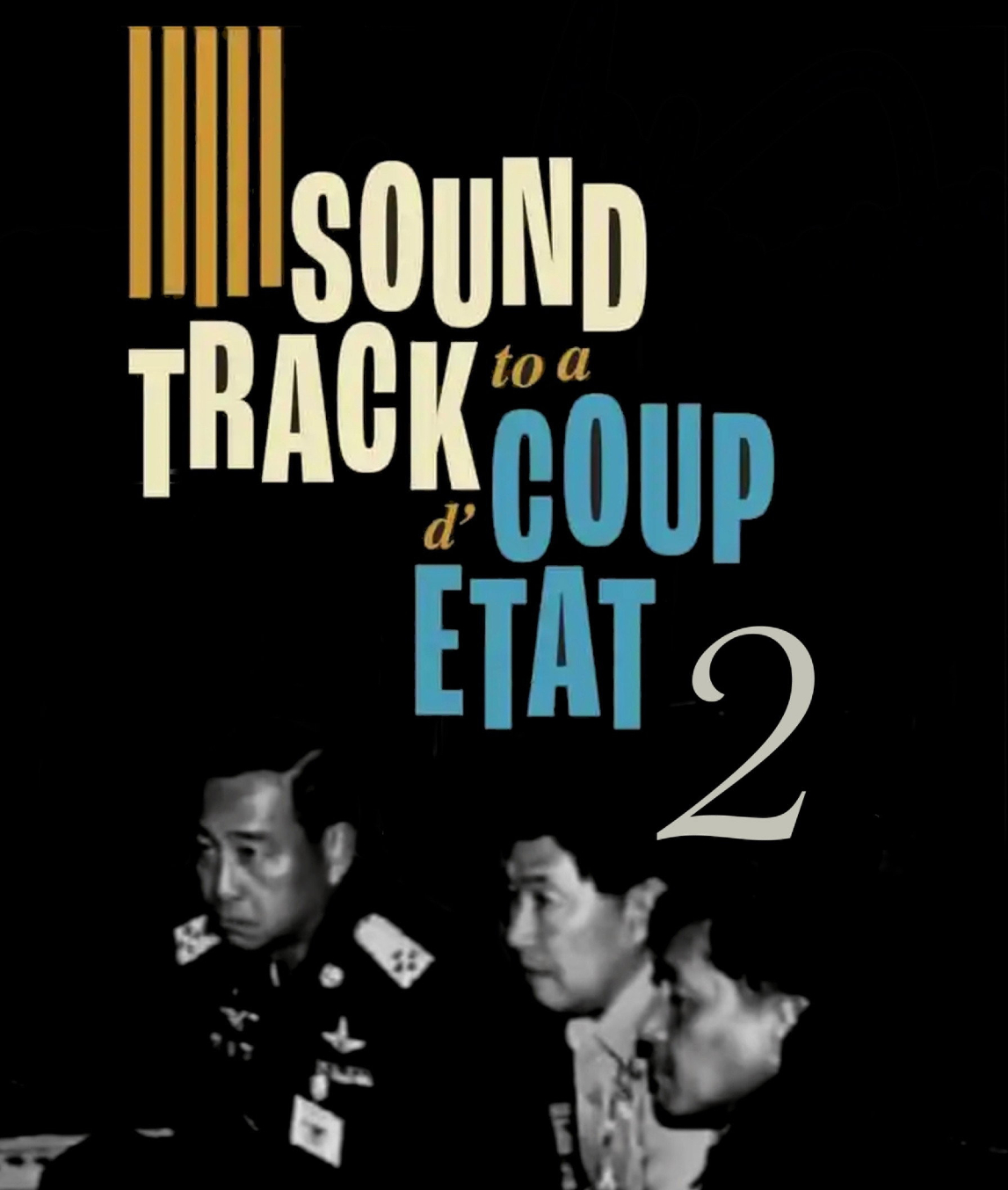
The director of Soundtrack to a Coup d’État 2 is anonymous, and I’m sworn to secrecy. The film is credited to a pseudonym, Johan Liebert. (It’s an unofficial sequel to the 2024 Cold War documentary of the same title.)

This satirical (and hilarious) film features a collage of clips from TV news reports about the 2006 coup, set to a jazz soundtrack. (The film links the musician to the events it depicts.) It also highlights the kerfuffle in 2008 when Thaksin Shinawatra accused an unnamed octogenarian of being behind the coup, and finally revealed that he was referring to Prem Tinsulanonda.

Letter from Congo


Letter from Congo


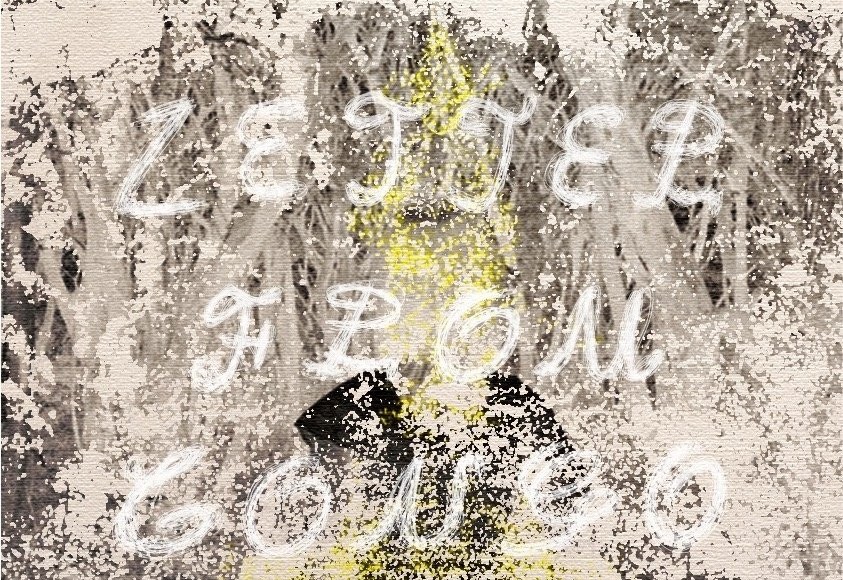
In Buariyate Eamkamol’s Letter from Congo, a narrator reads a letter from a woman in colonial-era Belgium describing a cruel monarch. The film also features solarised footage of red-shirt protesters travelling from Chiang Mai to Bangkok.

The final image is a statue of King Kawila, a former ruler of Chiang Mai, and the effect is similar to the ending of the short film Re-presentation (ผีมะขาม ไพร่ฟ้า ประชาธิปไตย ในคืนที่ลมพัดหวน) by Chai Chaiyachit and Chisanucha Kongwailap. Letter from Congo was previously shown at The New Narrative: Moving Image Showcase, from 1st to 29th July, at TCDC Commons in Srinakarin.

A Pigeon's Journey on the Birth of a Nation


A Pigeon’s Journey on the Birth of a Nation


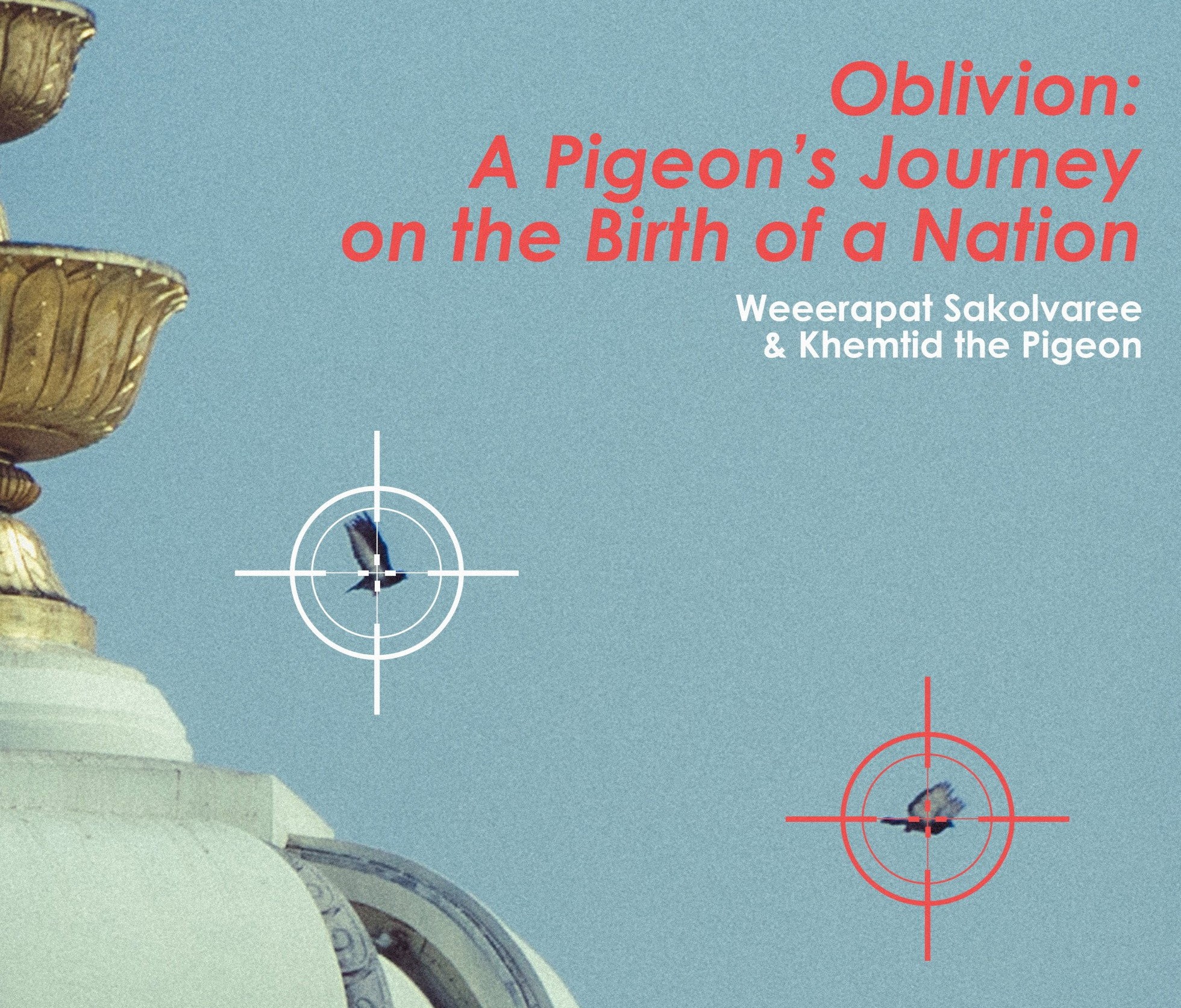
A Pigeon’s Journey on the Birth of a Nation is part of Weerapat Sakolvaree’s Oblivion (เลือน) series, the first of which was The Original Texts (บทประพันธ์ดั้งเดิม). A voiceover narrates the circumstances of three key milestones in Thai political history — the 1932 revolution, 14th October 1973, and 6th October 1976 — though they are told as a fable involving wild animals.

A pigeon flies between various Bangkok buildings, as if witnessing the historic events described in the narration. The effect is similar to Panya Zhu’s short film White Bird (นกตัวนั้นยังสบายดีไหม), in which an origami bird is also seen at historically significant locations around Bangkok.

When the pigeon lands on Democracy Monument, the voiceover describes “one October morning” (14th October 1973) when “Mad Dogs” attacked thousands of student protesters. The pigeon then flies to Thammasat University, where “the Wild Tigers came out to hunt.”

A Pigeon’s Journey on the Birth of a Nation was previously shown at The Wayward Travelers, a Weerapat retrospective. It was also shown at the group exhibition Spacing the Inherent (การเว้นระยะห่างโดยธรรมชาติ) from 6th to 29th May at Art4C in Bangkok.

Self-Portrait


Self-Portrait


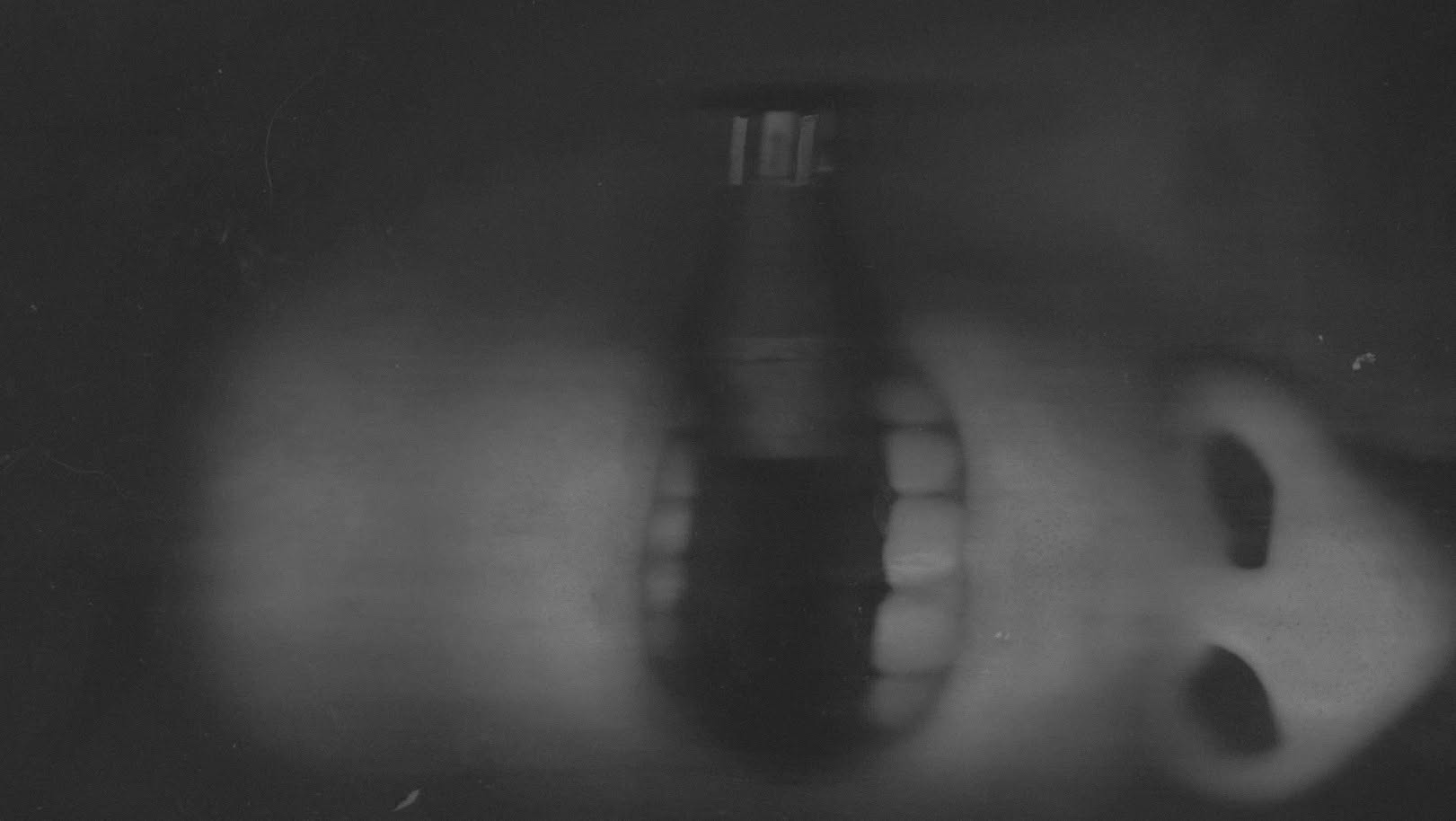
For the black-and-white Self-Portrait, Nawapol Peachpolshep scanned his body with a photocopier, posing with a bullet in his mouth, to express his anger at the suppression of student demonstrators in 2020 and 2021. His film includes footage of riot police with shields, water cannon being fired, and protesters washing tear gas out of their eyes.
Your Ash and My Bone


Your Ash and My Bone


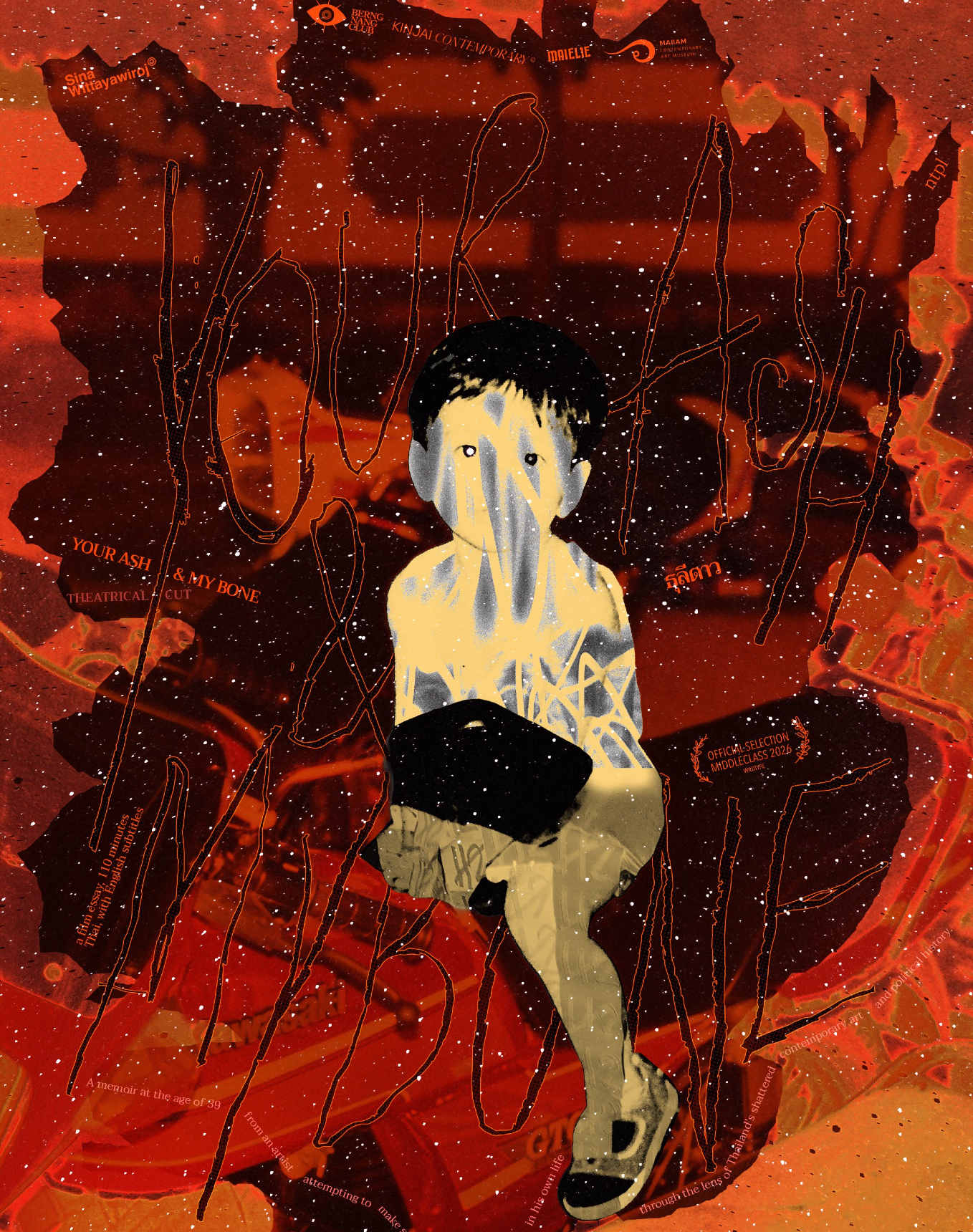
Sina Wittayawiroj’s Your Ash and My Bone (ธุลีดาว) will be shown at the Us coffee shop in Phatthalung on 11th October. The venue is the new permanent home of Phatthalung Micro Cinema.

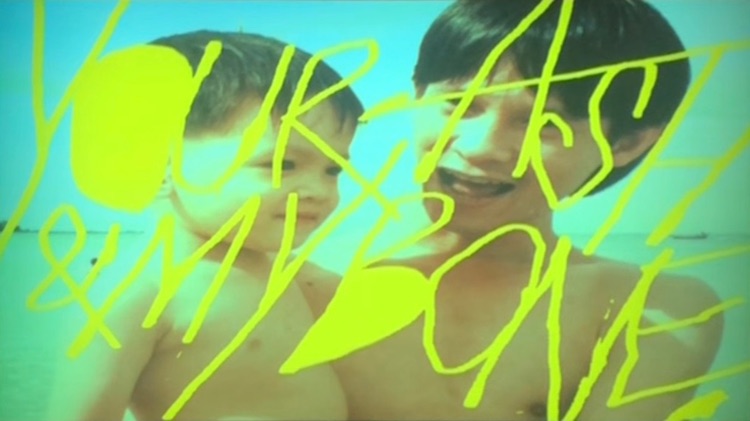
Your Ash and My Bone (ธุลีดาว) is a documentary collage film that’s personal and politicla in equal measure. The artist narrates his life story from birth to the present, describing his family, his childhood, and his career.


Your Ash and My Bone


The film was originally part of Sina’s exhibition Can’t We Recant? (เราจะถอนคำพูดไม่ได้เลยหรือ?) at Kinjai Contemporary in Bangkok and at MAIELIE in Khon Kaen. It has also been shown at Doc Club and Friends, and as part of Wildtype Middleclass 2026.

The autobiographical narration is juxtaposed with an account of Thailand’s political turmoil over the same period. There is archive footage of ‘Black May’, the 2006 coup (which Sina describes as “this poisonous tree attempting to root itself deepest into society”), the 2010 red-shirt crackdown, the whistle-blower protests, the 2014 coup, and the student protest movement of 2020–2021.


Your Ash and My Bone


Coloured filters are used to add political commentary to some of the events: blue for 2006, red for 2010, and yellow for 2014. Music is also a key element: a montage of scenes showing the arrest of Arnon Nampa and water cannon being used in Siam Square is accompanied by Caravan’s song Jit Phumisak (จิตร ภูมิศักดิ์), linking today’s student protesters to the revolutionary young writer who was killed in 1966.


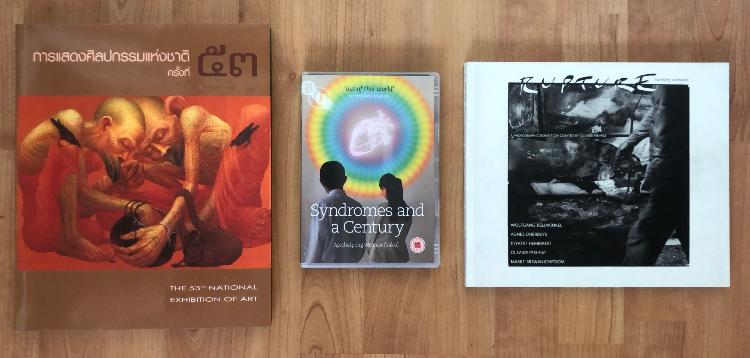
Your Ash and My Bone also highlights some of Thailand’s artistic controversies over the past two decades: the banning of Apichatpong Weerasethakul’s Syndromes and a Century (แสงศตวรรษ), protests against Anupong Chantorn’s painting Perceptless (ภิกษุสันดานกา), and the censorship of the Rupture (หมายเหตุ ๕/๒๕๕๓) exhibition. The film shows how political repression and artistic censorship are equally corrosive.


Your Ash and My Bone


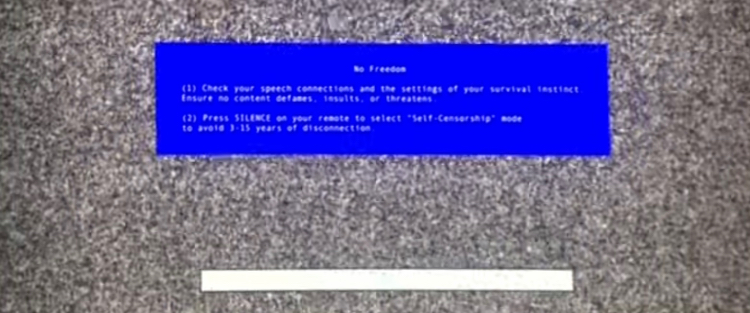
Some self-censorship was necessary, and Sina draws attention to this by periodically displaying a spoof computer error screen (“No Freedom”) and obscuring certain words in the English subtitles. Abhichon Rattanabhayon used a similar tactic in his short film The Six Principles (สัญญาของผู้มาก่อนกาล), as did Pen-ek Ratanaruang in Paradoxocracy (ประชาธิป'ไทย).

07 October 2026

Happy Boy


Happy Boy


Yesterday was the fiftieth anniversary of the bloodbath at Thammasat University on 6th October 1976. An iconic photograph, taken by Neal Ulevich, has come to represent the entire event, and this single image has been analysed and reproduced so much that even its background details have inspired dozens of artists.

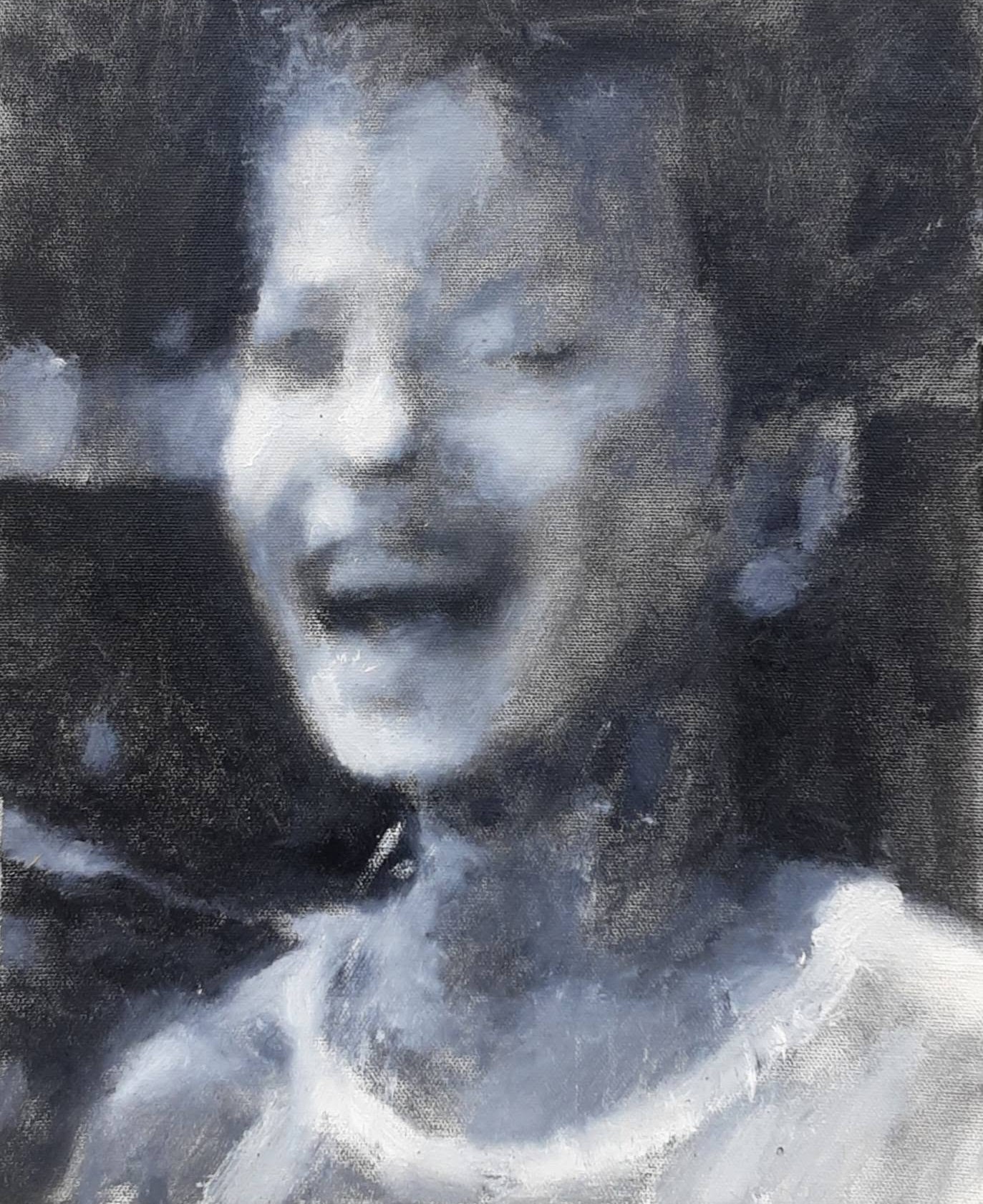
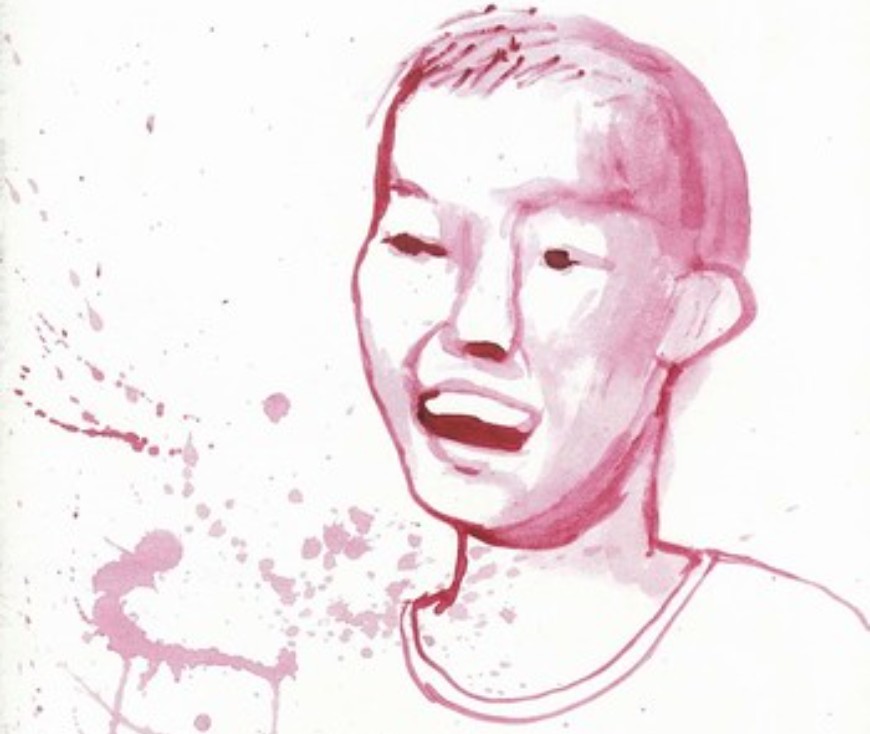
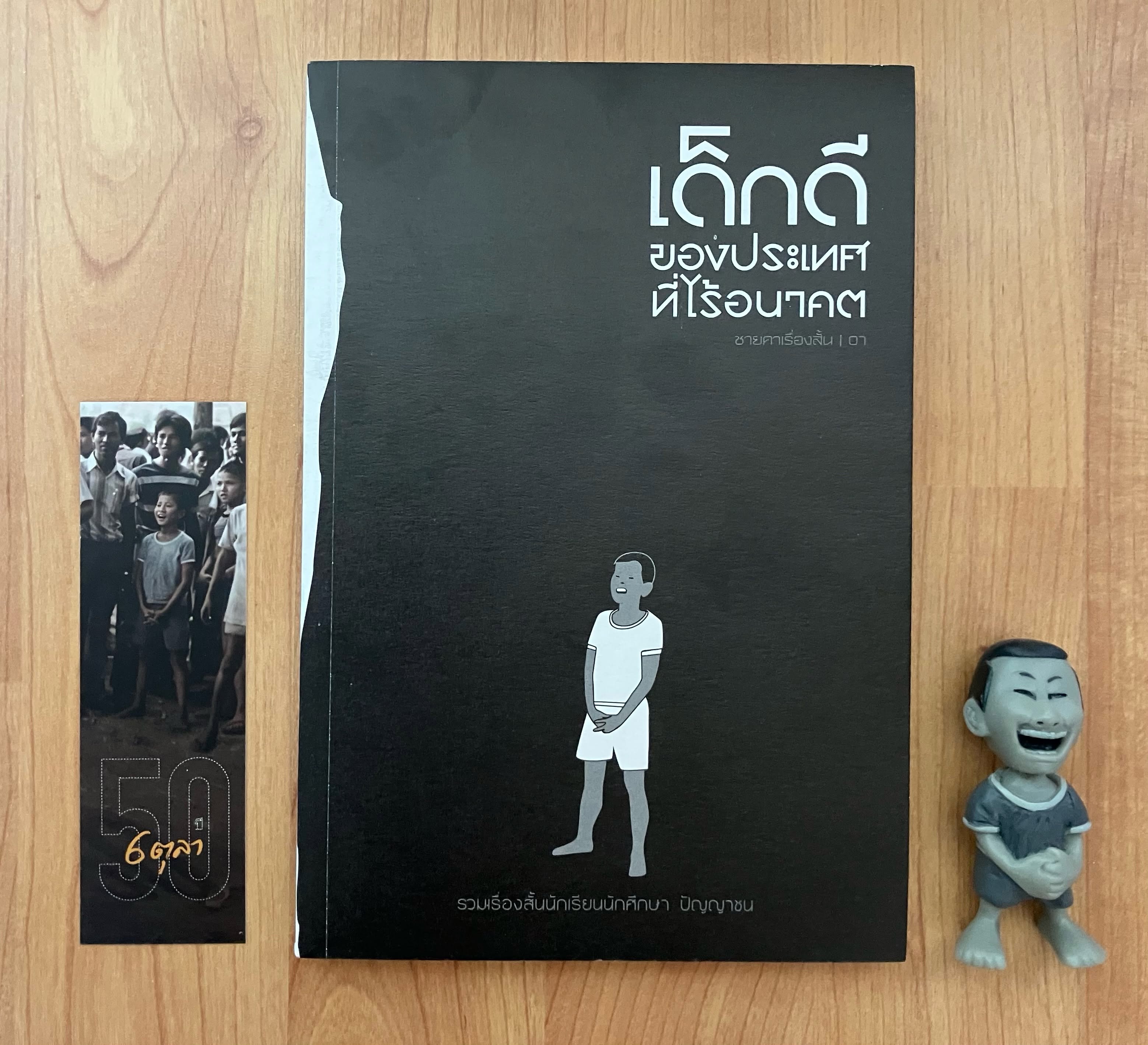
Amongst the goulish onlookers captured by Ulevich, a young boy with a broad smile stands out from the crowd. This child, who would now be a middle-aged man, has never been identified, though he has been portrayed in paintings, graphics, films, and even as a mini sculpture. Krit Chantranet’s recent painting Smile is an etereal portrait of the boy. A colourised version of the boy appears on a bookmark sold with a new book marking the fiftieth anniversary, edited by Kasidit Ananthanathorn.


Smile


Matichon Weekly


Where Are They Now?


The Forest of Recurrence


Taklee Genesis


Khai Maew created a miniature plastic model of the child, called Happy Boy, in 2016. A drawing of the boy appears on the cover of เด็กดีของประเทศที่ไร้อนาคต (‘good children in a country with no future’), vol. 7 of the journal ชายคาเรื่องสั้น (‘roof short stories’), published in 2016. Matichon Weekly (มติชนสุดสัปดาห์) created a graphic of the boy wearing 3D glasses to illustrate an article by its columnist Kam Phaka. (The column appeared in the 7th October 2016 issue, though the graphic only appeared on the magazine’s website.) The boy also appears in The Forest of Recurrence, a 2015 painting by Kampanart Sangsorn. Ing K. painted the boy in watercolour for her series Where Are They Now? (ไทยมุง) in 2008, and the portrait appeared on the cover of the Flashback ’76 (อดีตหลอน) exhibition catalogue.

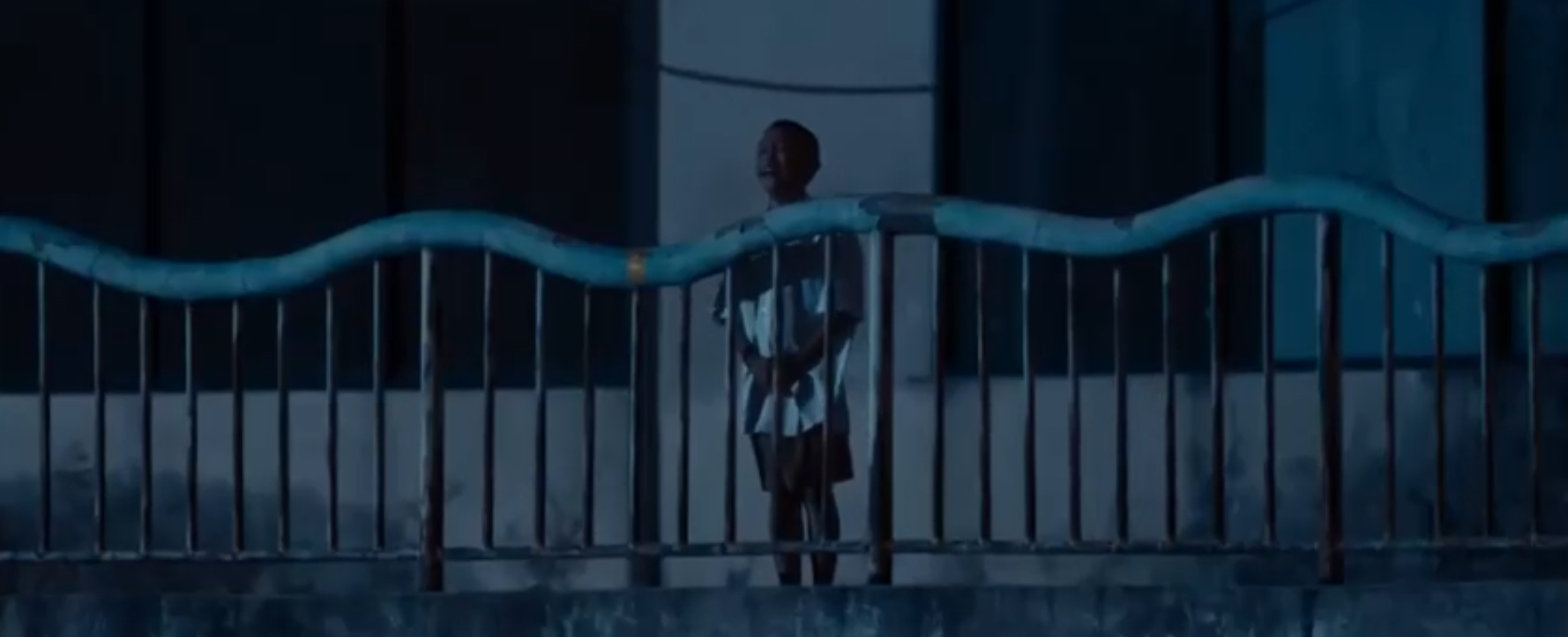
Ukrit Sa-nguanhai’s short film The Pob’s House (บ้านผีปอบ) is a powerful reminder of the persistence of mob violence, and features a little boy turning to the camera and grinning, in a reference to the smiling boy in Ulevich’s photo. Chookiat Sakveerakul’s science-fiction epic Taklee Genesis (ตาคลี เจเนซิส) dramatised the events of 6th October, and in one shot, a young boy stands alone on a balcony laughing at the carnage.

06 October 2026

Thammasat University


Thammasat University


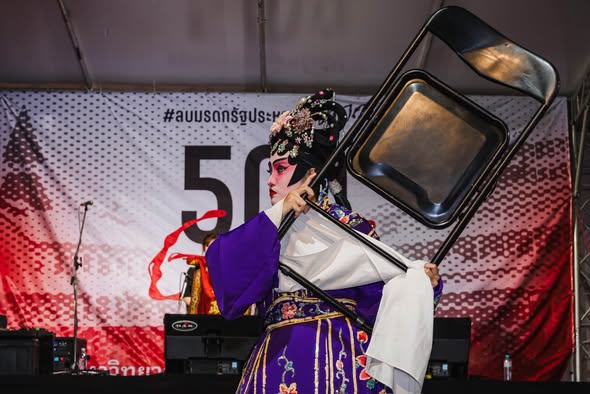
Today marks the fiftieth anniversary of the massacre at Thammasat University on 6th October 1976, and a commemorative event was held on campus throughout the day. In the evening, students from the Faculty of Social Administration performed a satirical opera (photographed by Khai Maew) about the events of 1976 and the amnesty ultimately granted to the students who were wrongfully arrested.

There is no 6th October exhibition at the university this year, though photographs of the events were on display, including an image from the Dao Siam (ดาวสยาม) newspaper hanging from a mobile along with other iconic photos from that day. A photocopy of the Dao Siam front page is on display at a concurrent exhibition at Chulalongkorn University’s Faculty of Political Science. The front page also appears in the new documentary We Who Remained (บันทึกจากความทรงจำ ๖ ตุลา), released today to mark the fiftieth anniversary.


We Who Remained


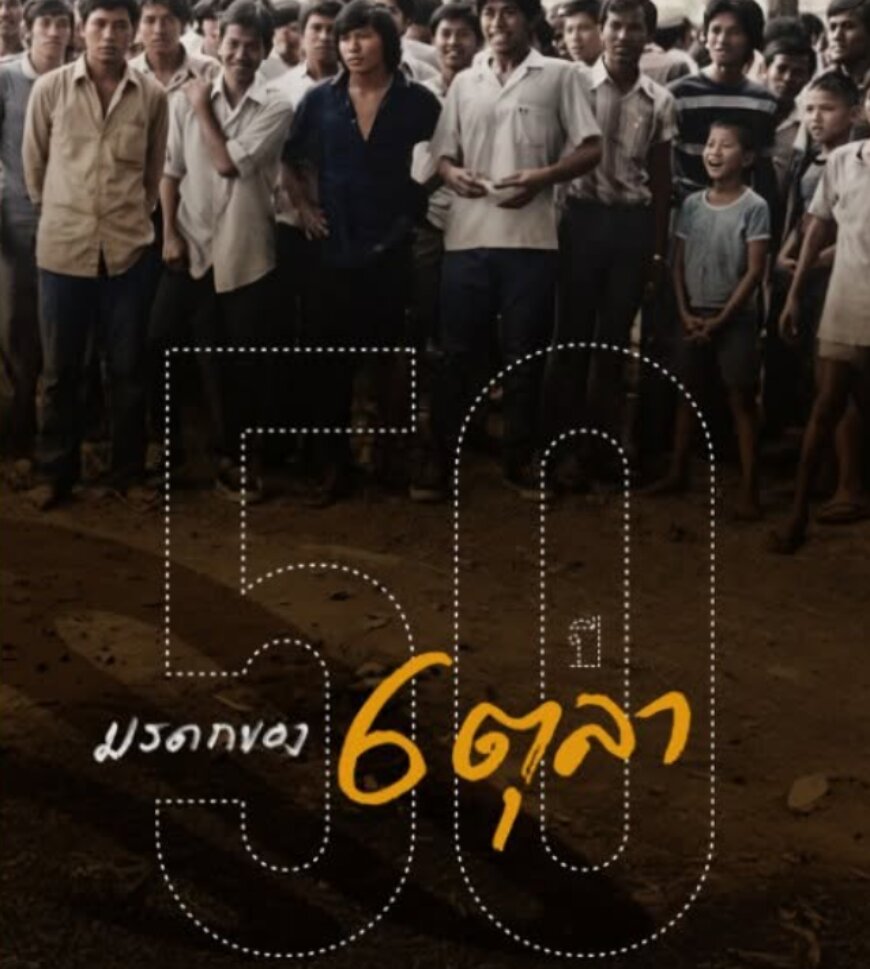
Thammasat has published a book to mark the anniversary — 50 ปี 6 ตุลา: มรดกของ 6 ตุลา (‘50 years of 6th Oct.: the legacy of 6th Oct.’) — edited by Kasidit Ananthanathorn. Its cover features a colourised version of a famous Neal Ulevich photograph taken on the day of the massacre, and it comes with a bookmark featuring an image of a smiling boy from that photo.

Three Films by Warat Bureephakdee


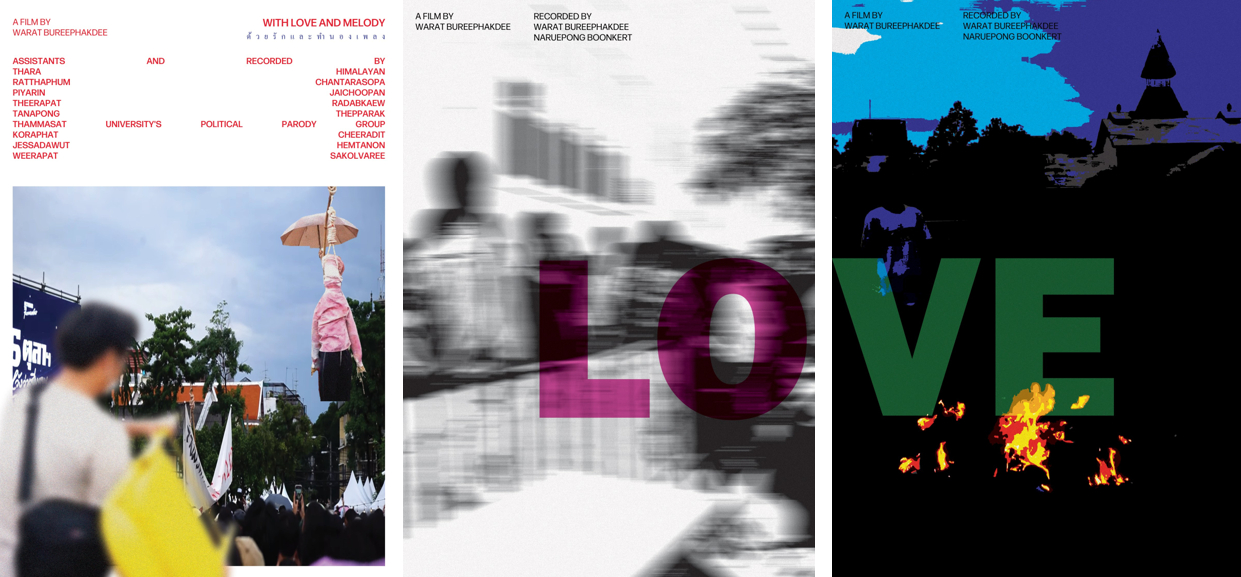
With Love and Melody / Lo / Ve


A trilogy of new films by Warat Bureephakdee will be shown at Doc Club and Friends in Bangkok on 10th October. With Love and Melody (ด้วยรักและทำนองเพลง), Lo (ด้วยรัก), and Ve (ด้วยรัก) were filmed at commemorations marking the 46th and 47th anniversaries of the 6th October 1976 coup. (With Love and Melody includes documentary footage shot by Tanapong Thepparak, Koraphat Cheeradit, and Weerapat Sakolvaree, amongst others.)

Warat noticed that these commemorations had higher attendance figures than in previous years, as more young people had become politically engaged following the student protests of 2020 and 2021. (In Thai, this political awakening is known as ta sawang.) His films focus on the songs performed at the commemorations, and how music had a unifying and participatory effect on the attendees. Similarly, Supong Jitmuang’s short film The Returning (วนเวียน) documented the growing attendance at commemorative events since 2020.

50 ปี 6 ตุลา
(‘50 years of 6th Oct.’)


50 ปี 6 ตุลา
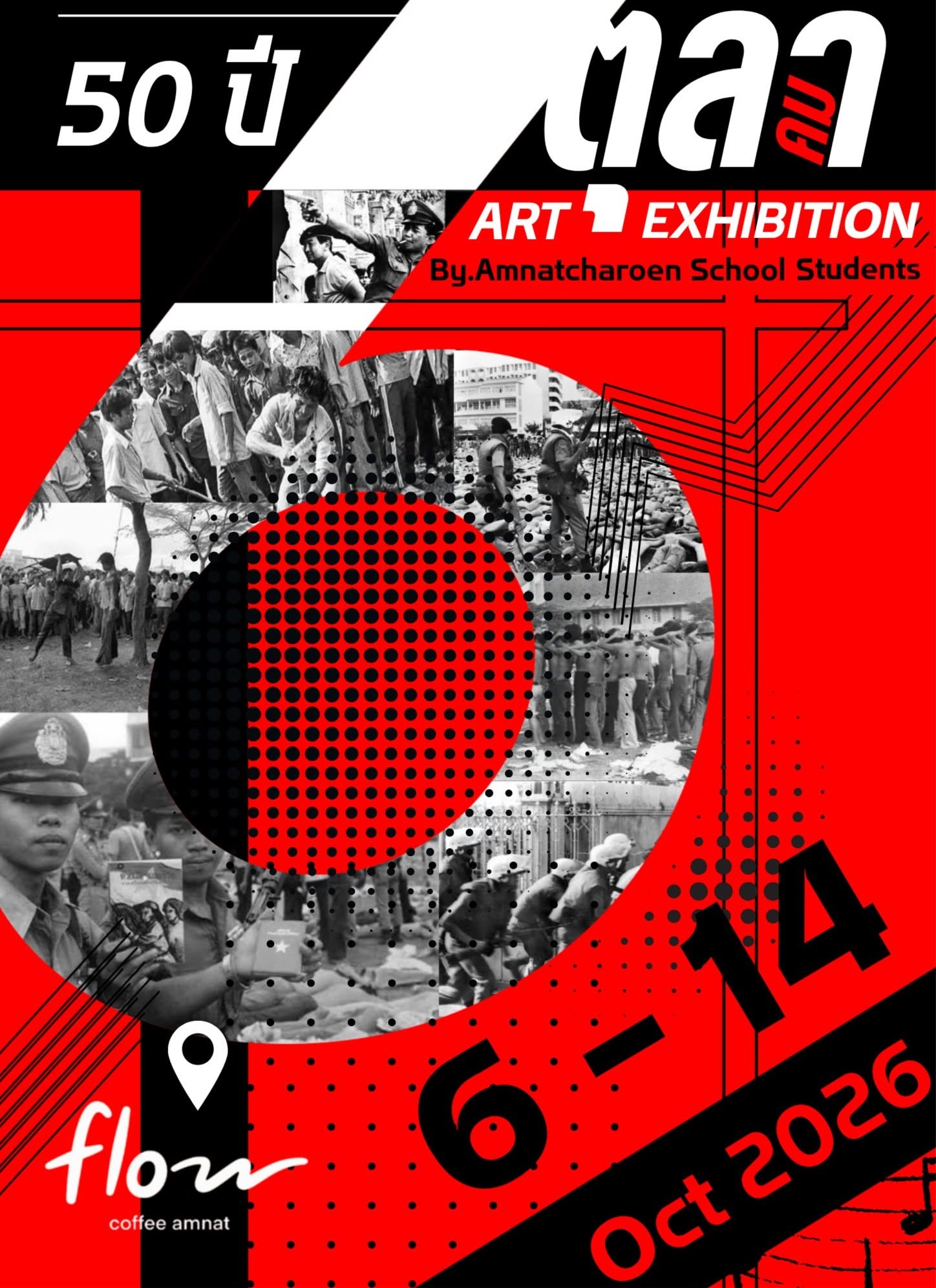
(‘50 years of 6th Oct.’), an exhibition at Flow Coffee Amnat in Amnat Charoen, features artworks created by students at Amnatcharoen School. The exhibition commemorates the fiftieth anniversary of the 6th October 1976 coup.


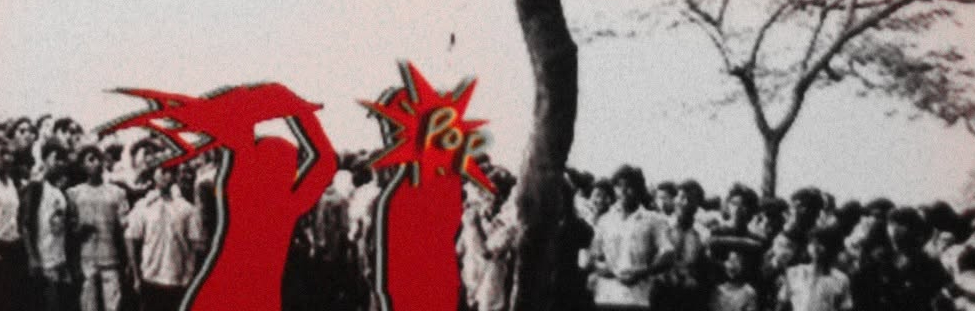
The exhibition opens today and runs until 14th October. It features a collage of reproductions of newspaper clippings that includes the notorious Dao Siam (ดาวสยาม) headline published the day before the coup. (The photograph that Dao Siam printed below the headline is not included.) Another exhibit modifies the famous Neal Ulevich photograph of the events with a comic “Pop” graphic.

Isan Odyssey


Isan Odyssey


Doc Club and Friends in Bangkok will show Thunska Pansittivorakul’s documentary Isan Odyssey (อีสานอำพราง) today and on 8th October. The film highlights the origins of mor lam as a form of political expression in the Isan region.

A veteran leader of a mor lam troupe recalls his youth in the 1960s, when he heard shots fired from helicopters, the sound of “Thai soldiers shooting communists”. This provides a segue to the film’s central theme: the state’s anti-communist campaign in various Isan provinces during the Cold War.

A voiceover describes how suspected communists were “brutally murdered” during Sarit Thanarat’s regime, and how this “ruthless suppression” continued during the Thanom Kittikachorn era. An elderly resident of the village of Nabua describes the situation at that time as “suffocatingly brutal.”

Isan Odyssey touches on three specific historical incidents, though only briefly. It includes 16mm newsreel footage from 14th October 1973, and a few photographs from 6th October 1976. A young photographer describes the military crackdown in May 2010, and a caption informs us that this resulted in 108 casualties. This grim statistic was a bone of contention in Nontawat Numbenchapol’s documentary Boundary (ฟ้าต่ำแผ่นดินสูง), which was briefly banned in part because it claimed that around 100 people had died.

One of Thunska’s films, This Area Is Under Quarantine (บริเวณนี้อยู่ภายใต้การกักกัน), was also banned. As a result, he told me in an interview for Thai Cinema Uncensored: “I decided not to show any of my films in Thailand.” Working with German producer Jürgen Brüning, he made nine films — The Terrorists (ผู้ก่อการร้าย), Supernatural (เหนือธรรมชาติ), sPACEtIME (กาล-อวกาศ), Reincarnate (จุติ), Homogeneous, Empty Time (สุญกาล), Santikhiri Sonata (สันติคีรี โซนาตา), Avalon (แดนศักดิ์สิทธิ์), Danse Macabre (มรณสติ), and Damnatio Memoriae (ไม่พึงปรารถนา) — all of which featured sexually explicit and politically sensitive content, and none of which had theatrical releases in Thailand.

Isan Odyssey is an exception: it was produced by Documentary Club in Thailand, rather than by Brüning in Germany, and it was the opening film of the What the Doc! (เทศกาลภาพยนตร์ สารคดีนานาชาติ แห่งประเทศไทย) film festival. As in Thunska’s other work, Isan Odyssey directly criticises the Thai state, though it avoids the graphic imagery of his earlier films, hence its ‘15’ rating from the Thai film censorship board.

02 October 2026

A Useful Ghost


A Useful Ghost


Ratchapoom Boonbunchachoke’s film A Useful Ghost (ผีใช้ได้ค่ะ) will be shown at Alliance Française in Bangkok tomorrow, as part of an event titled The Future in the Frame. The film was shown earlier this year at the Thai Film Archive in Salaya, and last year at House Samyan. It was also screened at the Bangkok International Film Festival 2025 (เทศกาลภาพยนตร์นานาชาติกรุงเทพมหานคร 2568).

The story of Mae Nak — the Thai legend in which a young woman dies and returns as a ghost to reunite with her husband — has been retold dozens of times, including in the blockbuster Pee Mak (พี่มาก .. พระโขนง) starring Davika Hoorne. (I wrote about the various Mae Nak adaptations for Encounter Thailand magazine.) Davika also stars in A Useful Ghost, though there’s a bizarre twist to the tale: she plays Nat, a ghost that returns to her husband March not as a traditional spectre, but as a haunted vacuum cleaner. (The names Nat and March evoke those of Mae Nak and her husband Mak.)

In A Useful Ghost, the restless spirits of the dead possess domestic appliances, either to be near their loved ones or, in most cases, to torment the people responsible for their deaths. Inhaling toxic dust particles seems to be a common cause of death, hence the possessed vacuums, and this is a reflection of real life: Bangkok and Chiang Mai are notorious for their air pollution.


The Future in the Frame


Ratchapoom’s film begins as an absurd comedy, as the haunted Hoover trundles around. (A Useful Ghost shares its sense of deadpan humour with the short films of Sorayos Prapapan.) In a hilarious early sequence, a monk insults Nat’s ghost, prompting a debate among his fellow monks: “Sir, we’re holy men. We shouldn’t use words like ‘cunt’ too liberally.”

In its second half, A Useful Ghost becomes much darker. We discover that some appliances are haunted by victims of political violence: Dr Paul, a government minister, complains that he can’t sleep due to the sounds of gunshots replayed by the ghosts of those who died at Ratchaprasong in 2010. It’s this noise, not his conscience, keeping him awake at night.

Dr Paul leads a decadent lifestyle, and seems to have authority everywhere he goes, yet his ministerial portfolio is unspecified. This ambiguity, and his generic name, are presumably intended to avoid any association with real-life politicians. His wife complains about protesters who revive memories of the 1976 Thammasat massacre and the 1932 revolution, and a subplot about the dismantling of a frieze also refers to the removal of monuments commemorating 1932.

The film shifts in tone from comedy to political satire, as Nat taps into people’s dreams and the state uses electroconvulsive therapy to erase the memories of the ghosts’ living relatives. (If people can’t remember the deceased in their dreams, then the ghosts disappear.) The ECT not only eliminates the ghosts, it also ensures that any memories of state atrocities are erased, and March resists this brainwashing by reading a (fictional) book about Ratchaprasong. As he tells Nat, she is helping to delete history, so he is trying to preserve it.


A Useful Ghost


The forgetting of political violence is also a key theme in the sci-fi film Taklee Genesis (ตาคลี เจเนซิส), the short film Transmissions of Unwanted Pasts (วงโคจรของความทรงจำ), the video installation Delete Our History, Now! (อำนาจ/การลบทิ้ง), the exhibitions Amnesia and Unforgetting History, the novel The Blind Earthworm in the Labyrinth (ไส้เดือนตาบอดในเขาวงกต), and Wichaya Artamat’s new play The Dead Still Riot. In fact, that play’s title also describes the ending of A Useful Ghost.

There are three short films featuring the ghosts of Ratchaprasong massacre victims: We Will Forget It Again (แล้วเราจะลืมมันอีกครั้ง) — which also deals with the theme of forgetting the past — This House Have Ghost [sic], and Hush, Tonight the Dead Are Dreaming Loudly. (Thai Cinema Uncensored discusses the history of Thai political filmmaking.)

As in Ten Years Thailand and Supernatural (เหนือธรรมชาติ), A Useful Ghost uses dystopian science-fiction to comment on present-day Thailand. Like the film’s scientists wiping memories, successive military governments have sought to suppress discussion of controversial events. The result of this whitewashing is a cycle of nascent democratic reforms repeatedly reset by military coups, as forgotten history is destined to repeat itself.

A Useful Ghost’s initial focus on dust and vacuum cleaners is given an additional resonance in its second half. In Thailand, the idiom ‘dust under the feet’ refers to people swept under the carpet like insignificant specks of dust. The film’s cathartic ending hints at this metaphorical meaning of ‘dust’, as the ghosts wreak their revenge on Dr Paul while dust particles are shown glittering in the air.

Celebration


Celebration


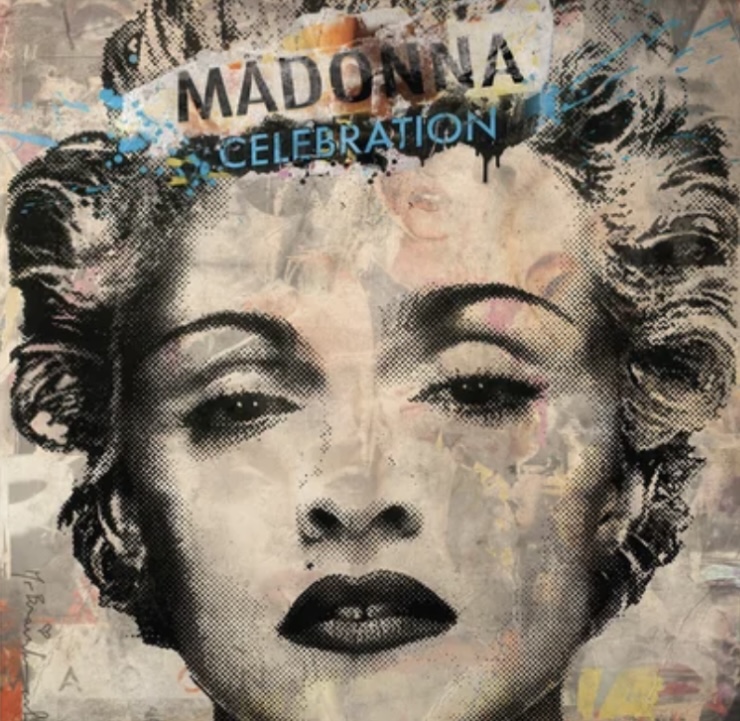
Madonna’s third greatest hits album, Celebration, will be issued on vinyl in a new edition with ten tracks on 11th December. The LP’s track list is: Hung Up, Music, Like a Prayer, Four Minutes, Holiday, Into the Groove, Vogue, La Isla Bonita, Material Girl, and Frozen.

Celebration was originally released in 2009 in two versions: on double CD and four-disc LP with thirty-six tracks, and as a single eighteen-track CD. The 2009 LP was produced in relatively small numbers, and became one of the most expensive Madonna records on the second-hand market.

Another previous Madonna release, the Evita film soundtrack, will be available on vinyl for the first time on 13th November. (It was previously released only on CD and cassette.)

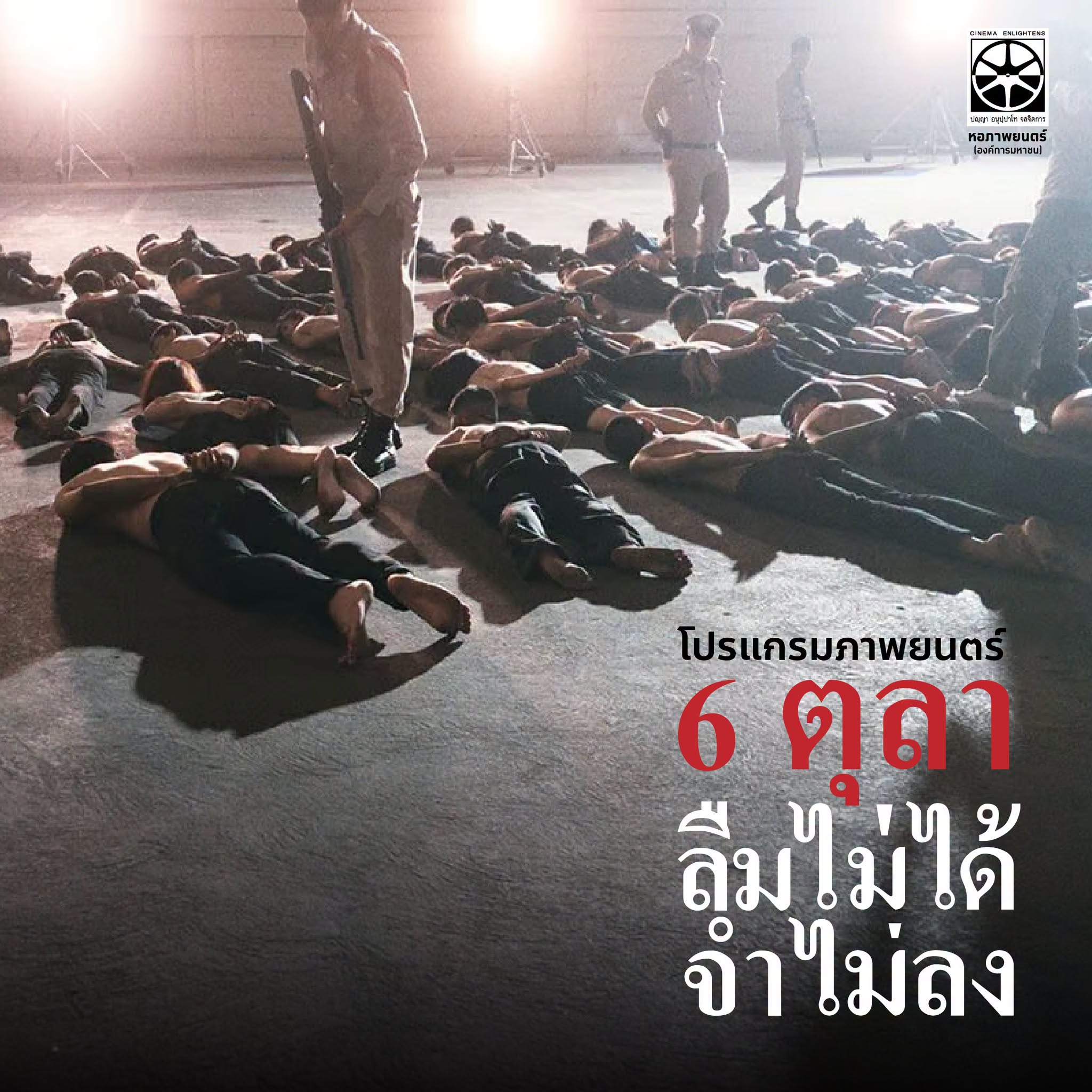
6 ตุลา ลืมไม่ได้ จำไม่ลง
(‘6th Oct. unforgettable, yet impossible to remember’)


This year marks the fiftieth anniversary of the violent and tragic events that took place on 6th October 1976 at Thammasat University, when forty-six people, most of whom were students, were killed by right-wing militia groups and vigilantes. The incident remains one of the most shocking moments in Thailand’s modern history.

To commemorate this year’s anniversary, the Thai Film Archive at Salaya will hold a discussion on 22nd October about the representation of 6th October in Thai films. (There are more than eighty films and videos that refer to 6th October, which are discussed in detail in Thai Cinema Uncensored.)

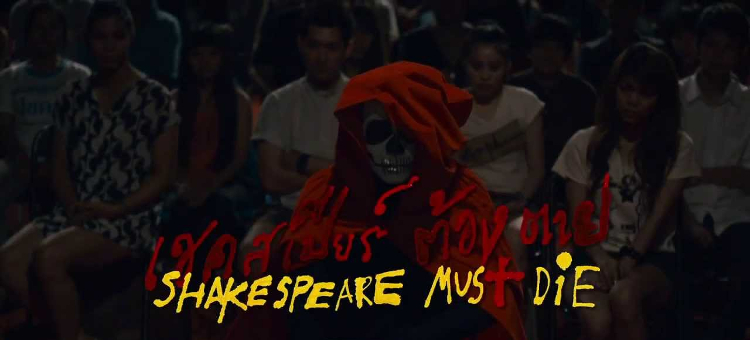
The archive will also be screening several films related to the incident, including Ing K.’s Shakespeare Must Die (เชคสเปียร์ต้องตาย) on 7th October (in 35mm), Anocha Suwichakornpong’s By the Time It Gets Dark (ดาวคะนอง) on 24th October, and Pundhevanop Dhewakul’s Whatever, I Don’t Care (ช่างมันฉันไม่แคร์) on 28th October. (By the Time It Gets Dark will also be shown at Mecani in Chiang Mai on 10th October.) The season’s title, 6 ตุลา ลืมไม่ได้ จำไม่ลง (‘6th Oct. unforgettable, yet impossible to remember’), is also the title of a book by historian Thongchai Winichakul, whose Moments of Silence is about the “Unforgetting” of the massacre.

On 31st October, the Archive will show a programme of short films about 6th October. These include Patporn Phoothong and Teerawat Rujenatham’s The Two Brothers (สองพี่น้อง), Padcha Ithijarukul’s Mom Yong Benjawan, Ooka Ryuuchi’s They Will Never Forget, Chalida Uabumrungjit’s ฉันนั่งอยู่ริมสนามฟุตบอล (‘I was sitting beside the football pitch’), Suchart Sawadsri’s “Red” at Last (มนัส เศียรสิงห์), Manussak Dokmai’s Don’t Forget Me, Anocha Suwichakornpong’s 3–0, and Chulayarnnon Siriphol’s ชวนอ่านภาพ 6 ตุลา (‘invitation to read images of 6th Oct.’).


Shakespeare Must Die


Shakespeare Must Die


Shakespeare Must Die is a Thai adaptation of William Shakespeare’s Macbeth. The film’s climax, a recreation of the Thammasat massacre, is its most controversial sequence, and one of the reasons why it was banned in 2012. A photograph by Neal Ulevich, taken during the massacre, shows a vigilante preparing to hit a corpse with a chair, and Shakespeare Must Die restages the incident. A hanging body (symbolising Shakespeare himself) is repeatedly hit with a chair, though rather than dwelling on the violence, Ing cuts to reaction shots of the crowd, which (as in 1976) resembles a baying mob.

When I interviewed her for Thai Cinema Uncensored, Ing didn’t mince her words, describing the censors as “a bunch of trembling morons with the power of life and death over our films.” Thai Cinema Uncensored also includes an insider’s account from a member of the appeals committee, who said he was obliged by his department head to vote against releasing the film: “I had to vote no, because it was an instruction from my director. But if I could have voted freely, I would have voted yes.”

The ban on Shakespeare Must Die was finally lifted by the Supreme Court in 2024, and its theatrical release came a few months later. It has since been shown at Burapha University, at Chiang Mai University, at Phimailongweek (พิมายฬองวีค), and at The 33rd Bangkok Critics Assembly Awards.


By the Time It Gets Dark


By the Time It Gets Dark


In By the Time It Gets Dark, a young director (Ann, a surrogate for Anocha herself) is making a biopic about a 6th October survivor, who describes the attackers “dragging the dead bodies out to burn them.” Some scenes are replayed, to suggest history repeating itself: Ann’s first session with the massacre survivor is later restaged, with the two women played by different actresses.

Anocha self-reflexively questions the motivations of a director in tackling such a politically loaded event, as Ann confesses to her interviewee: “Your life is meaningful. A life worth living. Whereas me, I appropriate someone’s life and turn it into a film.” She also challenges the ethics of such appropriation, as another character advises Ann to let the film’s subject write the script herself: “You should give it to her. She’s a writer. And it’s about her life, so it’s her story.” The film therefore acknowledges the inherent limitations involved in representing historical events in works of fiction.

By the Time It Gets Dark begins by subverting the audience’s expectations. Students are shown lying on the ground, watched over by armed soldiers, though what initially appears to be a flashback to 6th October is, in fact, taking place on a movie soundstage. The sense of verisimilitude is further confounded when an off-screen voice (Ann, the director) instructs the soldiers to kick the students and point guns at them. The film also recreates a news photograph (taken by Kraipit Phanvut) from 6th October, of police colonel Watcharin Niamvanichkul aiming his pistol while nonchalantly smoking a cigarette.


Whatever, I Don't Care


Whatever, I Don’t Care


Whatever, I Don’t Care includes a black-and-white flashback to 6th October, though it sanitises the horror of the event. Although non-diegetic gunshots are heard repeatedly on the soundtrack, the violence depicted is limited to hand-to-hand combat.


The Two Brothers


The Two Brothers


The Two Brothers features interviews with relatives of two young men who were hanged by police for campaigning against the return of former dictator Thanom Kittikachorn from exile. It has previously been screened at Thammasat University in 2025, 2020, and 2017. It was shown at Hope Space in 2024 and 2025.


Mom Yong Benjawan


Mom Yong Benjawan


Mom Yong Benjawan is a documentary about the director’s mother, Benjawan, who was a student at Thammasat in 1976 and survived the massacre. It was previously shown at the 24th Short Film and Video Festival (เทศกาลภาพยนตร์สั้นครั้งที่ 24), and at Wildtype Middleclass 2023.

They Will Never Forget


They Will Never Forget documents a strike by female workers at the Hara factory in Bangkok. Following the 1976 coup, state censorship increased dramatically, though post-production of They Will Never Forget was completed in Japan, giving the filmmakers more freedom in their political commentary. It was previously shown at the Archive in 2017.

The film condemns military dictator Thanom Kittikachorn, “whose hands were stained with the blood of at least seventy-six patriots,” and its assessment of the coup is equally honest and unrestrained: “The reign of violence and injustice was back.” It also includes a surprisingly direct reference to student actors whose mock hanging led to the 6th October massacre. The film mentions media reports that an actor playing a hanging corpse “resembled the Crown Prince,” an issue that remains unspoken in Thailand even today.

ฉันนั่งอยู่ริมสนามฟุตบอล
(‘I was sitting beside the football pitch’)


ฉันนั่งอยู่ริมสนามฟุตบอล is a static, out-of-focus shot of Thammasat’s football field, one of the sites associated with the 1976 massacre. It was filmed at 5:30am on 6th October 2006, exactly thirty years after the campus was invaded. The film was first shown at the Pridi Banomyong Institute’s Nothing to Say, a programme of silent short films with political themes organised by ThaiIndie in 2008.

“Red” at Last


The documentary “Red” at Last is told from the first-person perspective of one 6th October victim, Manus Siansing. The film begins and ends with a fictitious voiceover from the dead man, and a survivor of the attack narrates flickering archive footage of the events of that day.

Don’t Forget Me


Don’t Forget Me is a multilayered documentary featuring archive footage of 6th October and scathing political captions, accompanied by the plaintive title song and a narration appropriated from an ethnographic documentary on the nomadic Mlabri tribe. The voiceover describes the tribe’s elaborate ceremonies and rituals, its tone and content providing an intentionally ironic counterpoint to the massacre footage.

The voiceover comes from the 1962 documentary ผีตองเหลือง (‘yellow-leaf ghost’). Don’t Forget Me was shown at Thammasat in 2024. It was part of the Histoire(s) du thai cinéma [sic] (‘histories of Thai cinema’) programme of short films at Dam’n Cineclub in 2018, and the Chiang Mai Now! (เชียงใหม่นาว!) exhibition at Bangkok Art and Culture Centre in 2011. It can currently be seen at MAIIAM in Chiang Mai, as part of that museum’s Old Path in the Deep Dark Forest (รอยทางเก่าในป่าลึก) screening programme.

3–0


3–0 contains several political allusions, though they are somewhat oblique. The film intercuts between a woman trying to cross the road, another woman exercising, and a boy’s physiotherapy session, and ends with a peaceful demonstration against the 2006 coup.

The film was made shortly after the coup, and was first shown in the Spoken Silence programme at the 11th Thai Short Film and Video Festival (เทศกาลภาพยนตร์สั้น ครั้งที่ 11). The festival provided a timely opportunity for filmmakers to comment on the coup, less than a year after it had taken place.

The boy’s physical disability is a metaphor for political paralysis. The film’s title refers to Anocha’s age at the time — she was 30 in 2006 — and to the thirtieth anniversary of the 1976 massacre.

ชวนอ่านภาพ 6 ตุลา
(‘invitation to read images of 6th Oct.’)


In ชวนอ่านภาพ 6 ตุลา (‘invitation to read images of 6th Oct.’), viewers from different generations interpret a series of photographs of the events at Thammasat. The images, many of which were previously unpublished, were shown at the Facing Demons (เผชิญหน้าปิศาจ) exhibition at Kinjai Contemporary in 2022.

The documentary was originally commissioned for Facing Demons. It has since been shown at the Doc Club Festival and Doc Club Festival Selections in 2024, and at Chulayarnnon’s I a Pixel, We the People (ข้าพเจ้าคือพิกเซล, พวกเราคือประชาชน) exhibition at Bangkok CityCity last year. It is also currently on show as part of Old Path in the Deep Dark Forest.