





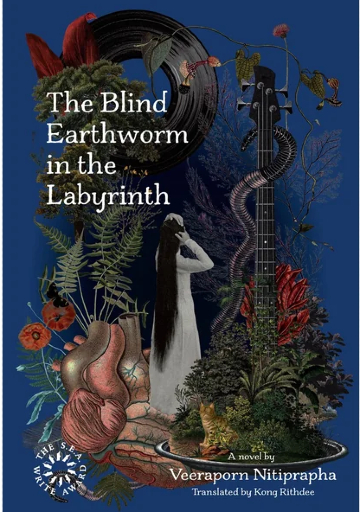
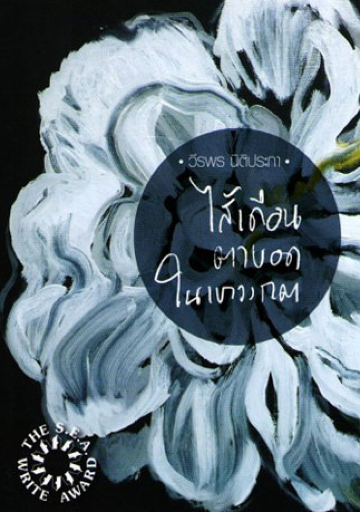
Veeraporn Nitiprapha’s novel The Blind Earthworm in the Labyrinth was originally published in Thai (ไส้เดือนตาบอดในเขาวงกต) in 2015, and was translated into English by Kong Rithdee in 2019. Veeraporn describes the shroud that descended over Bangkok following the events of May 2010: “After the fire was doused and the terrible incidents ended days later, the city would still find itself cloaked in an impenetrable haze that prevented it from knowing the truth of what had actually happened. That darkness would remain in place for many years.”
In a 2019 interview with the Electric Literature website, Veeraporn explained how the novel had been directly inspired by Ratchaprasong: “I was overcome with a deep, painful bitterness seeing the fashionable, well-educated, well-paid people of the city feeling content about the injuries inflicted upon the poorer, less educated people who were mostly from the upcountry. And it was important to write about that bitterness.” This situates the novel within a movement that Sayan Daenklom called “Post-Ratchaprasong art”, in the journal Read (อ่าน; vol. 3, no. 2).
The novel has an intentionally melodramatic narrative, in a parody of Thai lakorn (soap operas), particularly Club Friday (คลับฟรายเดย์เดอะซีรีส์). In the Electric Literature interview, Veeraporn linked the repetitive nature of soap plotlines to the vicious cycle of Thai politics: “they have the same old toxic storylines that keep repeating themselves, which is also very similar to how the general public keeps becoming involved with politics in the streets of Thailand.” (Sanchai Chotirosseranee’s short film The Love Culprit makes the same point, comparing lakorn remakes to the cycle of Thai coups.)
In a 2019 interview with the Electric Literature website, Veeraporn explained how the novel had been directly inspired by Ratchaprasong: “I was overcome with a deep, painful bitterness seeing the fashionable, well-educated, well-paid people of the city feeling content about the injuries inflicted upon the poorer, less educated people who were mostly from the upcountry. And it was important to write about that bitterness.” This situates the novel within a movement that Sayan Daenklom called “Post-Ratchaprasong art”, in the journal Read (อ่าน; vol. 3, no. 2).
The novel has an intentionally melodramatic narrative, in a parody of Thai lakorn (soap operas), particularly Club Friday (คลับฟรายเดย์เดอะซีรีส์). In the Electric Literature interview, Veeraporn linked the repetitive nature of soap plotlines to the vicious cycle of Thai politics: “they have the same old toxic storylines that keep repeating themselves, which is also very similar to how the general public keeps becoming involved with politics in the streets of Thailand.” (Sanchai Chotirosseranee’s short film The Love Culprit makes the same point, comparing lakorn remakes to the cycle of Thai coups.)


The Blind Earthworm in the Labyrinth also describes the whitewashing of another notorious episode from the collective memory: “6 October was twelve years past and its memory had begun to fade. People were no longer even sure if it had actually happened.” (Similarly, all reminders of Ratchaprasong’s violent past have long since been removed.) The short films We Will Forget It Again (แล้วเราจะลืมมันอีกครั้ง) and Delete Our History, Now! (อำนาจ/การลบทิ้ง), and the exhibitions Amnesia and Unforgetting History, also address this social amnesia, which is a central theme in Thongchai Winichakul’s book Moments of Silence.
Silence and 6th October 1976 are also central to Atibhop Pataradetpisan’s novel from 2012, ประวัติศาสตร์ของความเงียบ (‘the history of silence’). Atibhop’s book is one of several novels written in the years after the 2010 massacre that draw parallels between 1976 and 2010: others include โปรดจงโอบกอดฉันไว้ (‘please embrace me’) by Preedee Hongsaton (also from 2012), อนุสรณ์สถาน (‘memorial’) by Veerapong Soontornchattrawat (2013), หลงลบลืมสูญ (‘lost, forgotten’) by Wipas Srithong (2015), ดังนั้นจึงสิ้นสลาย (‘thus it is destroyed’) by Nithi Nithiverakul (also 2015), and เนรเทศ by Phu Kradat.
Silence and 6th October 1976 are also central to Atibhop Pataradetpisan’s novel from 2012, ประวัติศาสตร์ของความเงียบ (‘the history of silence’). Atibhop’s book is one of several novels written in the years after the 2010 massacre that draw parallels between 1976 and 2010: others include โปรดจงโอบกอดฉันไว้ (‘please embrace me’) by Preedee Hongsaton (also from 2012), อนุสรณ์สถาน (‘memorial’) by Veerapong Soontornchattrawat (2013), หลงลบลืมสูญ (‘lost, forgotten’) by Wipas Srithong (2015), ดังนั้นจึงสิ้นสลาย (‘thus it is destroyed’) by Nithi Nithiverakul (also 2015), and เนรเทศ by Phu Kradat.

Phu’s novel, written in 2014, will be published next year in an English translation titled Exile. He wrote it as a response to the 2006 coup, as he explained in an author’s note in his collection of short stories, Particles of Perpetual Paralysis: Short Stories of Odds and Sods (ปกรณัมความปวกเปียก: รวมเรื่องสั้นก๊อกๆ แก๊กๆ): “The coup d’etat was staged in 2006 fuelling prior political tensions. I was gobsmacked. My first reaction — “why in the hell are you clamouring for nothing but the coup?!” So I wrote Exile — to hammer you bastards, to bash it in your damn face.”