07 August 2026

8:
The Silence of the Goats


8

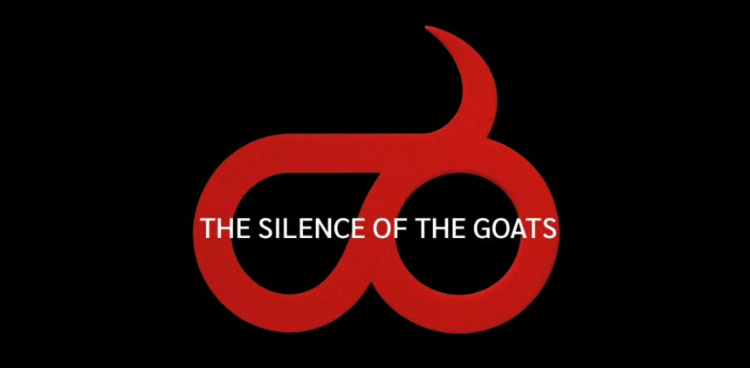
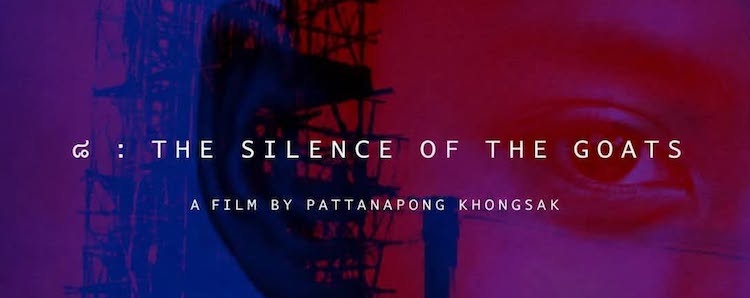
Pattanapong Khongsak’s new short film 8: The Silence of the Goats combines historical material with modern technology, using generative AI to visualise the past. This hybrid documentary has no narration, so key events are explained using written captions.

Photos of major political milestones — 6th October 1976, the yellow-shirt and red-shirt protests, the ‘Shutdown Bangkok’ campaign, and the 2006 and 2014 coup announcements — are solarised and rendered as 3D images. Pattanapong also uses bright red and blue tinting, as he did in Bad Taste (โอรส).

8
8

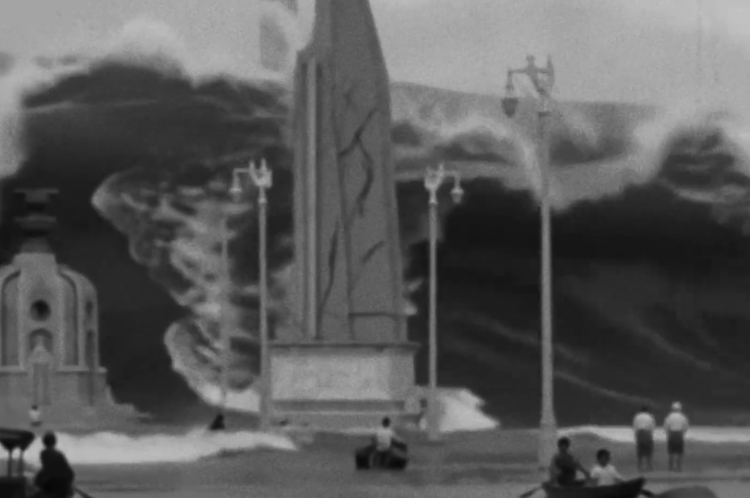
The AI manipulation makes the familiar images even more impactful, and dramatic reconstructions help to clarify the details. One sequence strays into deepfake territory: a newsreel-style scene of Democracy Monument engulfed by a tsunami, like a silent disaster movie.

The main focus is on the unexplained death or assassination of Rama VIII, the subsequent smear campaign against Pridi Banomyong, and the wrongful conviction of three men for conspiracy to murder. A caption tells us that the men were executed “8 years, 8 months, 8 days since the King’s death” — hence the 8 (๘) in the film’s title.

Traces of Silence:
Body, Being, and the Bounded Land


Traces of Silence

Three short documentaries by Vichart Somkaew — Antipsychotics, Sleeping Together (ราตรีวิไล), and his latest film The Southern Echo — will be shown in Hat Yai tomorrow. The event, Traces of Silence: Body, Being, and the Bounded Land (ในรอยแผล ความเงียบงัน มนุษย์ ร่างกาย และผืนดิน), will be held at Lorem Ipsum.

The Southern Echo

The Southern Echo


The Southern Echo focuses on a campaign against a proposed land bridge linking Chumphon and Ranong, a megaproject involving the construction of a new motorway, rail line, and two ports. The land bridge is part of the Southern Economic Corridor, and the head of the SEC Watch group opposing the scheme describes its potential effects on the area: “The environmental impact will be massive in scale and scope.”

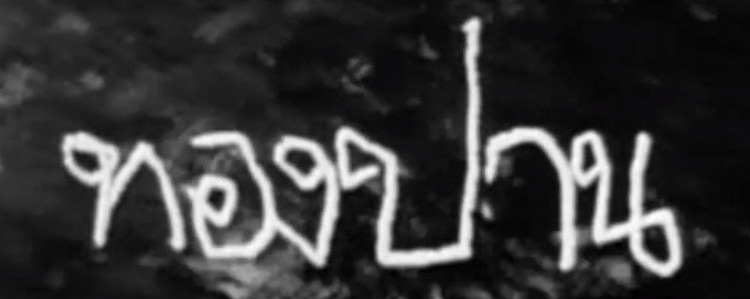
Vichart uses drone shots and underwater photography to highlight the natural beauty of the region, which is under threat from the development project. Similarly, The Poem of the River (บทกวีแห่งสายน้ำ) highlighted the consequences of dredging the Lai Phan canal in Phatthalung. The Southern Echo also recalls the classic film Tongpan (ทองปาน), a dramatisation of a seminar debating the construction of the Pa Mong dam on the Mekong river.

Sleeping Together

Sleeping Together


Sleeping Together begins in the same way as Sompot Chidgasornpongse’s Railway Sleepers (หมอนรถไฟ), as an observational study of train passengers, though it soon develops into a moving portrait of marginalised people exploited or neglected by society and the state. It was voted best documentary at the Chiang Mai Film Festival 2026 (เทศกาลหนังแห่งเมืองเชียงใหม่ 2569), and it was also shown at The 1st Lung Film Festival (ลุงฟิล์มเฟสติวัลครั้งที่ 1) last month.

Antipsychotics

Antipsychotics


In Antipsychotics, Vichart turns the camera on himself and reveals that he suffers from depression. In a voiceover, he describes his symptoms, which include hallucinations and feelings of paranoia. On screen, we see profiles of various antidepressant and antipsychotic drugs, and their possible side effects, accompanied by stock footage.

The director also recounts the traumatic experience that he feels led to his condition: the humiliating hazing rituals and violent punishments he endured during his conscription. “I drew a red card and was drafted into the military service”, he says, before describing the physical and mental harm he was subjected to.

In Thailand, twenty-one-year-old men must take part in a draft lottery. Vichart picked a red ticket, which means two years of compulsory military service.

There have been occasional news reports of cadets being injured — and worse — during military training sessions, though there is less coverage of the potential psychological toll that Vichart describes. At the end of his powerful and ultimately optimistic film, he argues that conscription should be replaced by voluntary service.

Like Sleeping Together, Antipsychotics was previously screened at The 1st Lung Film Festival. It has also been shown at the Thailand International LGBTQ+ Film and TV Festival 2026, the Chard Festival (ฉาด เฟสติวัล), Open Screen, and in last year’s Short Film Marathon (หนังสั้นมาราธอน).

01 August 2026

The Godfather


The Godfather

The Godfather will be rereleased at both branches of Century Movie Plaza in Bangkok (Victory Monument and Sukhumvit) on 19th August. It was previously shown in Thai cinemas for its fiftieth anniversary in 2022. It was also shown in 2018, twice: at Cinema Winehouse, and at Scala.

Pirab


Before October Come

Pasit Promnampol’s short film Pirab (พิราบ) will be shown at Hope Space in Bangkok on 9th August, as part of a series of events titled Before October Come [sic] (ก่อนจะถึงเดือนตุลา). Pirab has previously been screened at Bangkok Art and Culture Centre, Thammasat University, Future Fest 2023, and the Thai Film Archive.

31 July 2026

Auey Kaab


Shotbyly

Patthakarn Sadubtham will launch a large-format photozine, Auey Kaab (เอื้อยค้าบบบ˜), on 16th August at The Independent Print Club at One Bangkok. The zine features photographs shot during the filming of his short film of the same name, which was screened at the Thailand International LGBTQ+ Film and TV Festival 2026 in June.

The zine and film show young Isan men in Songkran costumes celebrating the water festival. (Of course, their costumes soon come off.) In his introduction to the zine, Patthakarn admits that he has a thing for Isan men, who ‘make his heart flutter like a broken flute’.

The film was shot on Super 8mm. It has a comical narration about the stereotype of Isan men who elicit money from people who fall for them by pretending that their buffalo is sick. Readers of the zine can view an online video of behind-the-scenes footage from the making of the film.

Patthakarn uses the pseudonym Shotbyly, and has also produced a series of four Shotbyly Vintage magazines over the past two years, each limited to fifty copies. After the softcore first issue, he switched to a different printer (the one that printed Vichai Imsuksom Eros Reinterpretation catalogue), and later issues have been more explicit.

Shotbyly Vintage Magazine vol. 2, Tum, was a portfolio of photos of model Theeraphat Khajornsuwan. The theme of vol. 3 was Paradiso, and vol. 4’s was The Secret Room (ห้องหฤหรรษ์).

Shotbyly often collaborates with Oat Montien, who has also made Super 8mm short films and a photozine, The Exquisite Fall (อัสดง). Oat curated Patthakarn’s Boy x Therapy exhibition in 2023, and produced the new Auey Kaab zine, which is limited to 100 copies.

27 July 2026

Hearing the Voice of the Absence


Hearing the Voice of Absence

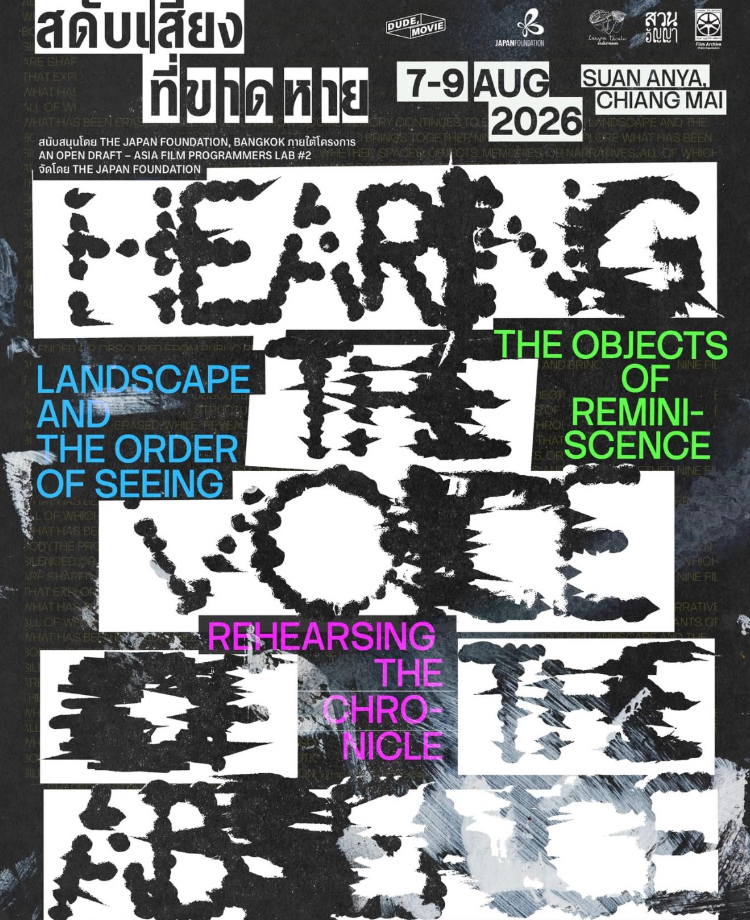
Hearing the Voice of the Absence (สดับเสียงที่ขาดหาย), a three-day programme of open-air film screenings, will take place in Chiang Mai next month. Highlights include the classic Tongpan (ทองปาน) and two recent short films, Apichatpong Weerasethakul’s Night Colonies and Anocha Suwichakornpong’s Narrative.

Tongpan and Night Colonies will be shown in the first session, titled Landscape and the Order of Seeing, on 7th August. Narrative will be shown during the third session, Rehearsing the Chronicle, on 9th August.

Hearing the Voice of the Absence is the second in a series of events, An Open Draft — Asian Film Programmers Lab, set up by the Japan Foundation. The screenings will be held at Suan Anya in Chiang Mai from 7th to 9th August, and are organised by Dude, Movie.

Night Colonies

Night Colonies


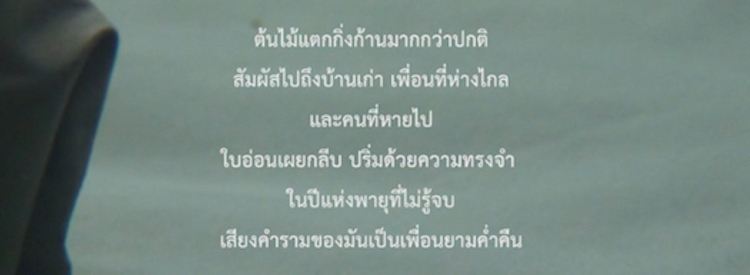
Night Colonies, originally shown as part of the anthology film The Year of the Everlasting Storm, combines two of Apichatpong’s consistent themes — light and the natural world — as it features insects buzzing around neon lights. The film begins with a poem paying tribute to “distant friends, and those who had disappeared”, a reference to pro-democracy campaigners self-exiled or abducted following lèse-majesté charges.

The poem continues: “The young leaves unfold, flushed with memories in the year of the everlasting storm.” In addition to giving the portmanteau film its title, these lines are also a metaphor for the student protesters campaigning for political reform. In fact, the film’s soundtrack includes audio recorded at protests in Bangkok on 27th July and 20th August 2020.

Narrative

Narrative


Narrative is a prelude to Anocha’s forthcoming film Fiction, in which she will stage a fictional trial of those accused of sanctioning the military crackdown on red-shirt protesters in 2010. Witnesses and relatives of the victims take part in a workshop about their memories of the event, in three guided discussion sessions.

As in Anocha’s By the Time It Gets Dark, the process of making a film about a traumatic episode of state violence self-reflexively becomes part of the film itself. Anocha and her crew are shown filming the workshop, and this acts as a distancing device, to the extent that the speakers’ words are sometimes drowned out.

Tongpan

Tongpan


Tongpan is a realistic dramatisation of a seminar that took place in 1975, which was organised to debate the construction of the Pa Mong dam on the Mekong river. The eponymous central character is a farmer who lost his land due to a previous dam.

In the film, Sulak Sivaraksa makes an impassioned speech against the proposed dam: “Development only serves a few people in Bangkok... And what about the destruction of our country? The whole province of Loei will be flooded by this Pa Mong Dam.” Ultimately, the Pa Mong project was abandoned, though this was a Pyrrhic victory for environmental campaigners, as dozens of hydroelectric dams are currently under construction.

Tongpan was made during the brief period of political freedom after the collapse of a military dictatorship in 1973, though by the time filming had been completed in 1977, the military had seized power again, and the film was banned. Its prologue captures the optimism of 1973 (“A military junta fled into exile, and the students from the city went into the countryside to tell the farmers”), though this is contrasted by an epilogue that describes the return of military rule (“shortly after the shooting of this film, a violent coup d’etat of a magnitude never before seen in Thailand brought an end to Thailand’s three-year experiment with democracy”).

Tongpan has previously been shown at Noir Row Art Space, Cinema Oasis, Bangkok Art and Culture Centre, and the Thai Film Archive (most recently in 2024). It was also screened last year in Khon Kaen.

20 July 2026

Sarit Thanarat


Sarit Thanarat

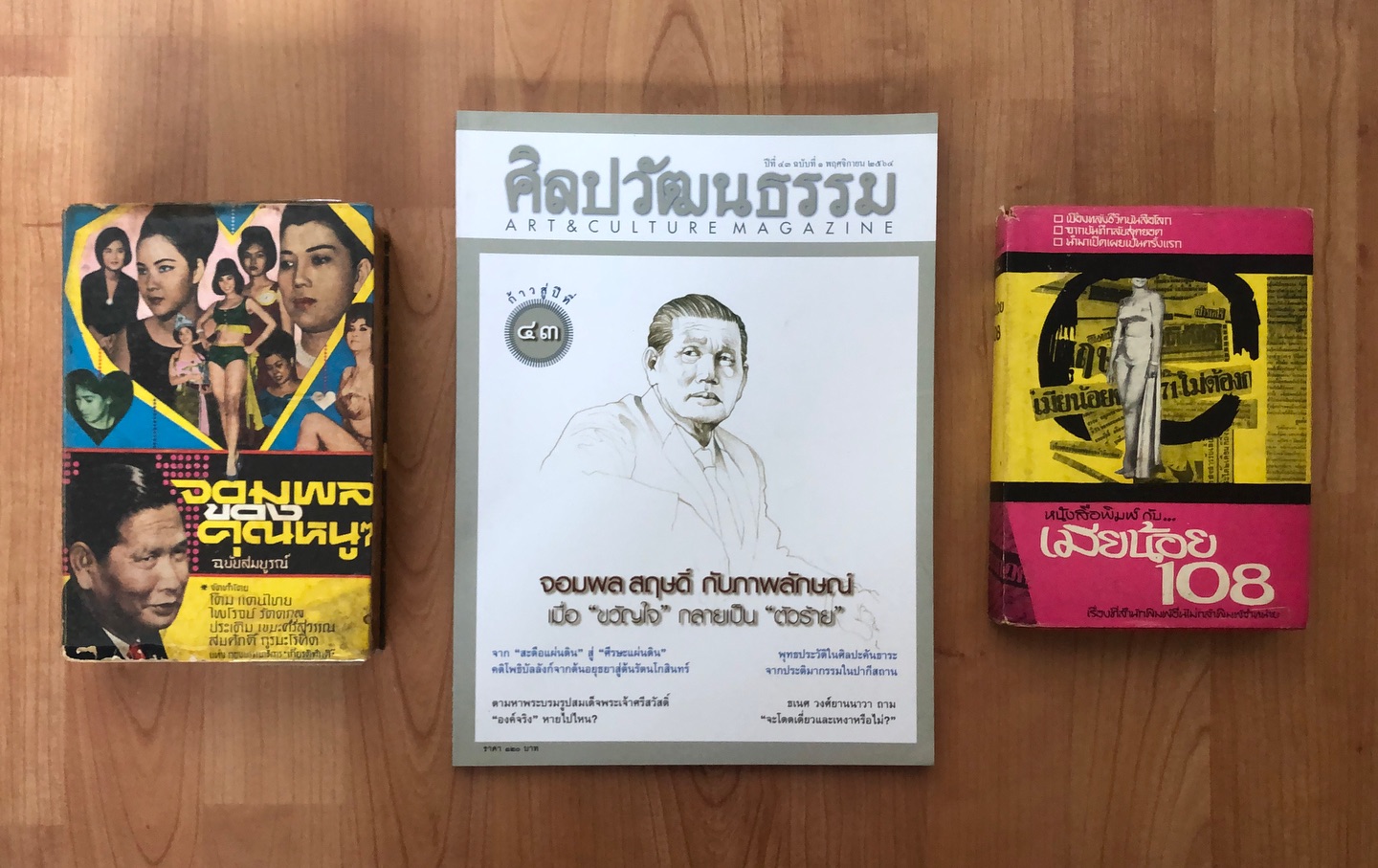
Sarit Thanarat, military prime minister during the Cold War, died in December 1963. After his death, the floodgates opened, and exposés of his love life were rushed into print. His lovenest was a private residence nicknamed the ‘pink palace’ (วิมานสีชมพู; also the title of an unauthorised posthumous Sarit biography), and เมียน้อย 108 (‘108 mistresses’) printed a list of the concubines he entertained there.

Several other books — including อัลบั้มภาพชุดสีชมพู (‘pink album’), วิมานสวาท หลังกองพล ๑ (‘the palace of love behind the 1st infantry regiment’) and the similarly titled รังสวาทหลังพล 1, จอมพลของคุณหนูๆ (‘young ladies of the general’), แม่ม่ายผ้าขะม้าแดง (‘the widow in the red sarong’), and สาวม่ายในวิมานสีชมพู (‘widows in the pink palace’) — featured dossiers of photographs of his alleged lovers. The Daily News (เดลินิวส์) cartoon booklet การ์ตูนชุดแม่ม่ายผ้าขาวม้าแดง (‘the widows in the red sarong cartoon series’) also featured thinly-veiled portrayals of Sarit’s mistresses.
Song of the City Junta Connection

Almost fifty years later, the phrase ‘pink palace’ was censored by Channel 3 when it broadcast the lakorn คุณชายพุฒิภัทร (‘khun Chai Puttipat’) on 5th May 2013. In the third episode, a former military general played by Montree Jenuksorn (who slightly resembles Sarit) discussed his ‘pink palace’, though the sound was muted, presumably to avoid any possibility of a libel suit from Sarit’s descendents. (The novel on which the drama was based refers to Sarit more obliquely.)

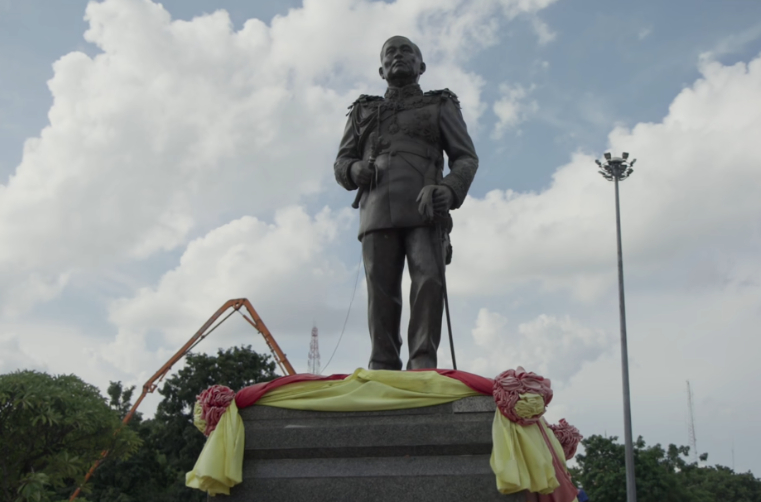
Potential defamation also prevented director Banjong Kosallawat from making a semi-fictionalised Sarit biopic in 2002, which was to have been titled จอมพล (‘marshal’). Sarit did feature briefly in the horror movie Zee Oui (ซี-อุย), ordering the swift execution of the murderous title character for political expediency. And Sarit’s statue looms ominously over the characters in Song of the City, Apichatpong Weerasethakul’s segment of the portmanteau film Ten Years Thailand.


The newsreel การปฏิบัติหน้าที่เพื่อประเทศชาติในตำแหน่งหัวหน้ารัฐบาลและผู้นำทางทหาร จนถึงล้มป่วยและอสัญกรรมของ ฯพณฯ จอมพลสฤษดิ์ ธนะรัชต์ (‘Field Marshal Sarit Thanarat performing duties for the country as the head of government and military leader until his illness and death’) is a fascinating example of Cold War state propaganda. Screened shortly after Sarit’s death, it provided a counter-narrative to the books that exposed his decadence and corruption. The film depicts Sarit as a tireless and selfless leader, to the extent that he became ill through overwork. Thunska Pansittivorakul’s recent documentary Isan Odyssey (อีสานอำพราง) gives the other side of the story, in a voiceover describing how suspected communists were “brutally murdered” during Sarit’s regime.


After Sarit led a coup in 1957, he was portrayed as a hero by pliant newspaper cartoonists. One example of such propaganda showed Sarit cradling a rescued child in his arms, returning the boy (who represents the Thai people) to his grateful mother. In contrast, a July 1958 cartoon in the liberal ประชาชน (‘people’) newspaper depicted Sarit as a monkey wrapping his tail possessively around Democracy Monument.

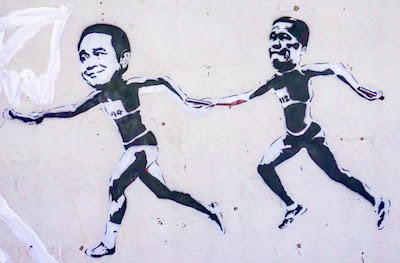
In the wake of the 2014 coup, Sarit satire was too sensitive, and the Guerrilla Boys self-censored their mural Junta Connection (วิ่งผลัดเผด็จการ), which originally depicted Sarit passing his (literal) baton of dictatorship to Prayut Chan-o-cha. Junta Connection was shown in 2018 as part of Khon Kaen Manifesto (ขอนแก่น แมนิเฟสโต้), a group exhibition that directly addressed Sarit’s contested legacy.

Art and Culture (ศิลปวัฒนธรรม) magazine analysed cartoonists’ caricatures of Sarit (vol. 43, no. 1), and the journal Same Sky (ฟ้าเดียวกัน) examined the lurid books published shortly after his death (vol. 20, no. 2). Thai Cinema Uncensored discusses the portrayal of Sarit in Thai films.
15 July 2026

October 6th:
A Reconfigured Archive


October 6th

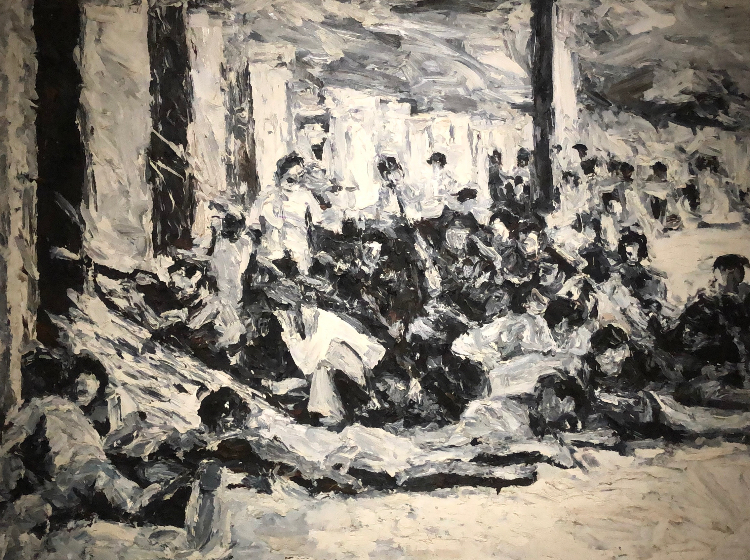
This year marks the fiftieth anniversary of the violent and tragic events that took place on 6th October 1976 at Thammasat University, when forty-six people, most of whom were students, were killed by right-wing militia groups and vigilantes. The bodies of the victims were desecrated by baying mobs, and the incident remains one of the most shocking moments in Thailand’s modern history.

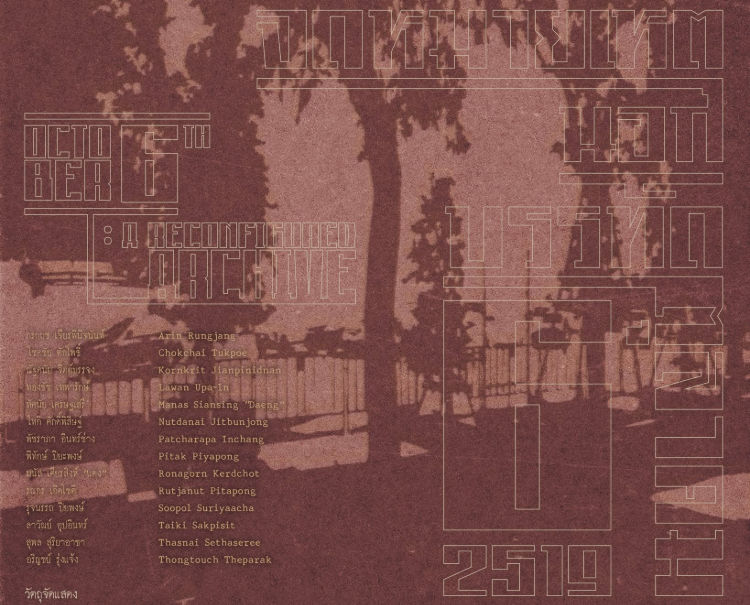
MAIIAM in Chiang Mai is commemorating the anniversary with a group exhibition devoted to the incident, October 6th: A Reconfigured Archive (จดหมายเหตุนอกบรรทัด 6 ตุลาคม 2519), which opened on 10th July and runs until 30th November. The exhibition features artworks commenting on the Thammasat massacre alongside books and other archival materials documenting the event.

The exhibition includes Nutdanai Jitbunjong’s installation A Massacre: a folding chair suspended from the ceiling. The chair is an iconic signifier of the massacre, thanks to Neal Ulevich’s photograph of a man preparing to hit a corpse with a folding chair. Nutdanai’s chair is made from tamarind wood, as the dead man in Ulevich’s photo was hanged from a tamarind tree. A Massacre was previously shown in the Status in Statu (รัฐพิลึก) and Khon Kaen Manifesto (ขอนแก่น แมนิเฟสโต้) exhibitions.

Several works from Taiki Sakpisit’s exhibition Dark Was the Night (ผีพุ่งไต้) are included, notably his video installation of the same title and his photograph Half Day Closing, an image of the notorious ‘red elevator’, which — according to legend — is haunted by victims of the 1976 attack. The lift was discussed in the documentary Ghosts, and it inspired the horror film Haunted Universities (มหาลัยสยองขวัญ).

Thasnai Sethaseree has produced numerous paintings that refer to 1976. The exhibition features three of his untitled collages: news photos of the incident heavily obscured by colourful overpainting. They were also shown in a previous MAIIAM exhibition, Errata.

16 19 35

Other paintings in the exhbition include Patcharapa Inchang’s Father, Lawan Upa-In’s ก่อน ๖ ตุลา ๒๕๑๙ (‘before 6th Oct. 1976’), and Ronagorn Kerdchot’s 16 19 35 (๑๖ ๑๙ ๓๕). The title of Ronagorn’s work refers to the years 1973, 1976, and 1992 according to the Buddhist Era calendar, and all three periods are associated with episodes of state violence.

Thanavi Chotpradit and Kornkrit Jianpinidnan’s book Prism of Photography is on display, alongside a photograph from Kornkrit’s Damage series. The book is a visual archive of the massacre, featuring dozens of Thai newspaper front pages and news photographs. ฟ้าใหม่ ใกล้มา (‘dawn of victory’), a ‘museum in a box’ featuring meticulously reproduced artefacts from 1976, is also on show.

To contextualise the events of 1976, the exhibition also features Arin Rungjang’s And Then There Were None, a series of paintings based on news photographs from 14th October 1973, a date almost as infamous as 6th October 1976, when a mass protest led to the (temporary) collapse of a military dictatorship. Her video of the same title, an interview with singer Boonchuang Denduang that begins with archive footage from 1973, is also included. Arin’s paintings were shown alongside Thasnai’s in Errata.

13 July 2026

A Romance… I Guess


A Romance... I Guess

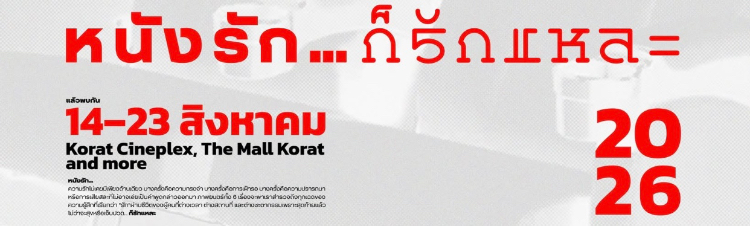
Michael Haneke’s The Piano Teacher (La Pianiste) will be shown in Korat at the A Romance... I Guess (หนังรัก... ก็รักแหละ) film festival on 23rd August at the Korat Cineplex. The festival runs from 14th to 23rd August.

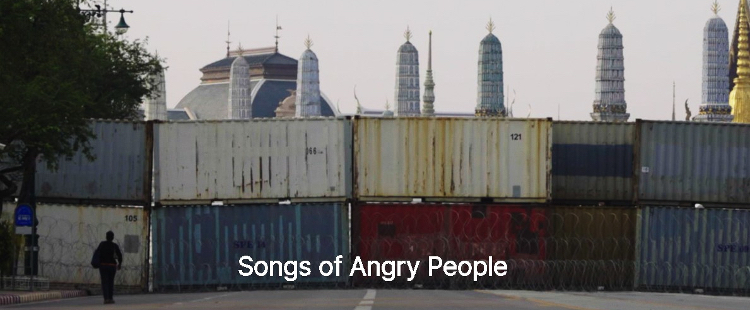
Songs of Angry People


Songs of Angry People

Uruphong Raksasad has directed a trilogy of documentaries about the recent student protest movement: Songs of Angry People, Paradox Democracy, and Cut of Speech. All have been shown at the Thai Film Archive in Salaya, though Songs of Angry People was deemed so sensitive that its screening — as part of To Commune, the 69th Flaherty Film Seminar programme in 2024 — wasn’t advertised in advance. Songs of Angry People was also shown in the Wildtype Middleclass programme this year, though the screenings were equally surreptitious, and it was listed as a ‘surprise film’ in the schedule.

In Paradox Democracy, speeches by protest leaders are intercut with extracts from The Revolutionist (คือผู้อภิวัฒน์), a play about Pridi Banomyong staged by the Crescent Moon theatre group in 2020. The film also includes footage shot at the 6th October 1976 commemorative exhibition at Thammasat University in 2020.

Cut of Speech concentrates almost exclusively on the protesters’ speeches. It features clips of forty-four speakers, in reference to article 44 of the interim constitution drafted after the 2014 coup.

Songs of Angry People does include short extracts from speeches by protest leaders — it begins with a fiery speech by Parit Chirawak outside the Crown Property Bureau offices — though it focuses more on the atmosphere of the protests. These include demonstrations at Democracy Monument, Din Daeng, and Nang Loeng in Bangkok, and at the smaller Democracy Monument in Khon Kaen.

Songs of Angry People

Songs of Angry People’s title comes from a comment by a protester to a phalanx of riot police: “Don’t make the people angry.” It also refers to the numerous protest songs performed at the demonstrations: Uruphong films Chaiamorn Kaewwiboonpan and the Bottom Blues performing 12345 I Love You, and The Commoner singing You Know Who (คนที่คุณก็รู้ว่าใคร) at Democracy Monument.

During the chorus of 12345 I Love You, demonstrators shout “ai hia Tu” instead of the original lyrics. (Ai hia is a strong insult, and Tu is Prayut Chan-o-cha’s nickname.) While Uruphong was filming Chaiamorn perform the song, his camera also caught sight of another director, Yuthlert Sippapak, who was coincidentally also filming the same performance. (Yuthlert was filming 1410, a project he announced with Chaiamorn in 2021.)

You Know Who

You Know Who was released as a single in 2021. Its lyrics refer to “He Who Must Not Be Named”, which is a description of Voldemort from the Harry Potter franchise. (The link between Harry Potter and the protest movement goes back to one of the first demonstrations in 2020, organised by Arnon Nampa at Democracy Monument.) The music video ends with brief footage of the student protests, though its main theme is the discovery of the bodies of dissidents in the Mekong river.