_________________________________________________________________________________

11 March 2010

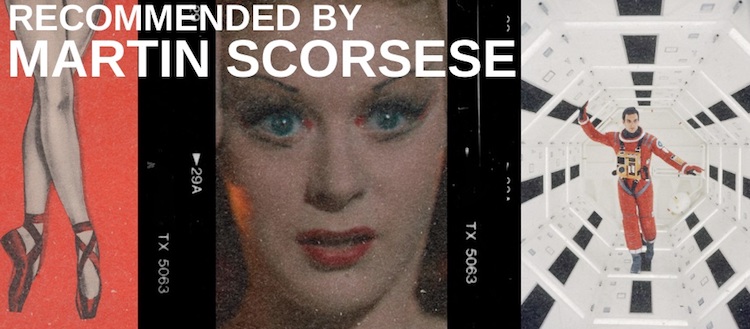
20 Essential Films

Citizen Kane Psycho 2001: A Space Odyssey
Twenty Essential Films, in chronological order:
  • A Trip To The Moon (1902)
  • The Cabinet Of Dr Caligari (1919)
  • Battleship Potemkin (1925)
  • Un Chien Andalou (1928)
  • The Rules Of The Game (1939)
  • Citizen Kane (1941)
  • Casablanca (1942)
  • Rome: Open City (1945)
  • Out Of The Past (1947)
  • Rashomon (1950)
  • On The Waterfront (1954)
  • The Seventh Seal (1956)
  • The Searchers (1956)
  • Breathless (1959)
  • Psycho (1960)
  • 2001: A Space Odyssey (1968)
  • The Godfather (1972)
  • Annie Hall (1977)
  • Raging Bull (1980)
  • Pulp Fiction (1994)

video

10 March 2010

Lars Vilks

Hunden I Konsten Hunden I Konsten
The Dog In Art The Dog In Art
Seven people have been arrested in Ireland in connection with an Al Quaeda plot to murder the Swedish cartoonist Lars Vilks. Vilks depicted Mohammed as a dog in a series of drawings which were removed from the Hunden I Konsten exhibition in 2007.

Today, three Swedish newspapers (Dagens Nyheter, Expressen, and Sydsvenska Dagbladet) printed some of the drawings, and they were also broadcast on television by SVT. The plot to murder Vilks comes after a man was arrested in January for the attempted murder of Kurt Westergaard, who created the most notorious of the Jyllands-Posten Mohammed caricatures.

8 March 2010

Chaotic Victory

Chaotic Victory, an exhibition of new works by Vasan Sitthiket and Iwan Wijono, will open at Whitespace Gallery, Bangkok, from 12th March to 11th April. Vasan has a simultaneous exhibition at Number One Gallery, Ten Evil Scenes Of Thai Politic [sic.].

Ten Evil Scenes Of Thai Politic [sic.]

Ten Evil Scenes Of Thai Politic
A new exhibition by Vasan Sitthiket, titled Ten Evil Scenes Of Thai Politic [sic.], opens on 11th March at Number One Gallery, Bangkok, and will close on 3rd April.

Vasan's new paintings explicitly depict politicians such as Thaksin Shinawatra, Abhisit Vejjajiva, and Suthep Thaugsuban as thoroughly corrupt figures succumbing to the temptations of sex and money. He exhibited similarly graphic paintings last year, in the anti-capitalist show Capitalism Is Dying!, and some of his videos were shown at From Message To Media.

7 March 2010

Alice In Wonderland

Alice In Wonderland
Tim Burton's new film, Alice In Wonderland, stars Mia Wassikowsa as a mature, feminist Alice, who returns to Wonderland (or, more correctly, Underland), in a loose adaptation of Lewis Carroll's novels Alice's Adventures In Wonderland and Through The Looking-Glass.
Johnny Depp, who has taken the lead role in six previous Burton films, plays the Mad Hatter. Burton's partner, Helena Bonham Carter, plays the Red Queen. (Depp and Bonham Carter have previously appeared together in Burton's films Corpse Bride, Charlie & The Chocolate Factory, and Sweeney Todd.) The eccentric Mad Hatter has the appearance and mannerisms of Willy Wonka from Charlie & The Chocolate Factory, though Depp adds an occasional Glaswegian accent to signify anger. The shrill Red Queen resembles Queenie from Blackadder II.

Depp and Bonham Carter basically steal the show; Bonham Carter's performance is more consistent, though, and Depp's riddle (with no payoff) and dance (like Grandpa's in Charlie & The Chocolate Factory) are both anticlimactic. There's an impressive British supporting cast led by Stephen Fry as the sly Cheshire Cat, though Anne Hathaway's White Queen is far too passive. The plot has been significantly altered, with much emphasis placed on Alice slaying the Jabberwocky in a climactic battle scene. The un-necessary action sequences, coupled with the extensive CGI, are untypical of Burton's films and will hopefully be absent from his next one.

Structurally, Alice is remarkably similar to The Wizard Of Oz, and, just as that film changed into Technicolor when Dorothy arrived in Oz, the 3-D in Alice is used to maximum effect during the Wonderland scenes. Curled tree branches in the foreground create the perception of depth in 3-D, and various flying creatures appear to hover in front of our eyes. While the 3-D version (converted in post-production) emphasises the wonders of Wonderland, the eccentric characterisations are the highlights of the 2-D version. (The film has also been released in IMAX format.)

Japanese Bamboo

Japanese Bamboo
Japanese Bamboo: Tracing The Legend Of Beppu Craftsmanship is an exhibition of functional and sculptural bamboo objects produced by craftsmen from Beppu, Japan. The pieces, including abstract sculptures and baskets, date primarily from the past ten years, though there are a handful of exhibits from the past century. Each object is intricately woven, resulting in delicate and surprisingly feminine pieces which were all created by male bamboo masters or apprentices. The exhibition opened on 28th January at TCDC, Bangkok, and will close on 25th April.

2 March 2010

Another Side

A group exhibition, Another Side: Contemporary Artists' Dreams, will open at La Lanta in Bangkok later this month. The show includes The Altar, a new video by Thunska Pansittivorakul (director of Reincarnate, This Area Is Under Quarantine, and many short films). It also features Chaisiri Jiwarangsan's video The Illuded Moon, made in collaboration with Apichatpong Weerasethakul (director of Syndromes & A Century) and Araya Rasdjarmrearnsook (whose video works have previously been shown in From Message To Media and The Suspended Moment). Another side opens on 20th March and closes on 30th April.

26 February 2010

Circus Christi

Circis Christi
An exhibition at Granada University in Spain has been closed following protests from Catholic groups. The show, Corpus Christi by Fernando Bayona, features a series of photographs depicting Jesus as a gay man; he is also shown making love with Mary Magdalene. The exhibition opened on 11th February and closed after less than a week; it was originally scheduled to run until 5th March.

A fantasy scene featuring Jesus and Mary making love, from Martin Scorsese's film The Last Temptation Of Christ, caused controversy in 1989, and DH Lawrence's novel The Escaped Cock (1929) also depicts Jesus and Mary's sexual relationship. Jesus has previously been depicted as gay in two films (Matthias von Fistenberg's Passio, 2007; Ed D Louie's He, 1974), a poem (James Kirkup's The Love That Dares To Speak Its Name, 1976), and a magazine illustration (The Insurgent, 2006).

Christ has been represented as sexually active in a 19th Century illustration of Theresa by Felicien Rops, the engraving Nuptials Of God (1923) by Eric Gill, and the film Jesus Vender Tilbage by Jens Jorgen Thorsen (1992). Bill Zebub's films Into Thy Hands (2004) and The Worst Horror Movie Ever Made (2005) both feature Jesus as a rapist. In perhaps the most outrageous example, The Sheaf magazine printed a cartoon featuring Christ and a pig in flagrante delicto.

image

24 February 2010

Enjoying Cursive Writing

Jesus
A series of exercise books for children, Enjoying Cursive Writing I-IV, has provoked violent demonstrations in Batala, India. The books contain a drawing of Jesus holding a can of beer and a cigarette, and their publisher, Ram Mohan Jha, has been arrested.

The image in question, used to illustrate the word 'idol', was sourced from the internet; three years ago, it appeared on the front page of a Malaysian newspaper, Makkal Osai, and it also provoked violent protests when it was published by the Hyderabad newspaper Sakshi on 13th July 2008.

23 February 2010

Game Change

Game Change
Game Change: Obama & The Clintons, McCain & Palin, & The Race Of A Lifetime (also published with the more manageable title Race Of A Lifetime: How Obama Won The White House), by John Heilemann and Mark Halperin, is a journalistic account of the 2008 American presidential election campaign. Like Andrew Rawnsley's The End Of The Party (which covers contemporary UK politics), Game Change benefits from hundreds of senior yet unattributed sources.

The book's overall tone is rather gossipy, though it contains numerous revelations. While Barack Obama is certainly an infinitely better President than John McCain would have been, McCain was an amusing presidential candidate during the campaign (with hilarious appearances at the Al Smith Dinner and on Saturday Night Live). Game Change shows that McCain is privately much less entertaining, quoting angry outbursts directed at his wife. Hillary Clinton's aggressive plans challenge Obama are also discussed, and Sarah Palin is revealed to be even more stupid than we first thought.

The End Of The Party

The End Of The Party
The End Of The Party: The Rise & Fall Of New Labour is Andrew Rawnsley's sequel to his excellent Servants Of The People. The earlier book is an authoritative account of Tony Blair's first term as British Prime Minister; with the same access to senior yet unattributed sources, The End Of The Party covers Blair's second term and Gordon Brown's succession. Whereas the previous book centres on Brown's rows with Blair (deliberately omitted from Alastair Campbell's The Blair Years), the new volume focuses on Brown's bad-tempered relations with his staff.

Despite the international impact of his bank bail-out scheme, Brown's leadership has been heavily criticised after a series of U-turns and chronic presentational failures. There have been at least three internal attempts to remove him as Labour leader, the latest of which (organised by Geoff Hoon and Patricia Hewitt, with cabinet ministers offering Brown delayed and qualified support) came too late for Rawnsley's book.

20 February 2010

Nude II

Nude II
Organisers of the Visual Expressions exhibition in California have been criticised for removing a portrait of a female nude. The painting, Nude II by Jeff Hebron, was removed before the exhibition opened on 22nd January. The show, at The Merc, Temecula, will close tomorrow.

15 February 2010

Nuit & Brouillard

Nuit & Brouillard
The Holocaust documentary Nuit & Brouillard was directed by Alain Resnais, better known for his oblique French New Wave classics Hiroshima Mon Amour and Last Year At Marienbad. With a poetic narration, it intercuts contemporary footage of the concentration camp at Auschwitz with archive footage of dying and dead Holocaust victims.

Scenes of bodies bulldozed into mass graves shocked audiences even ten years after the atrocities took place, though arguably even more disturbing are the mountains of hair and personal effects removed from the millions of victims. Holocaust footage had previously been included in the drama The Stranger, and of course Schindler's List remains the most famous Holocaust film, though neither can convey the horror of the Holocaust as Nuit & Brouillard does.

My Own Private Idaho

My Own Private Idaho
Gus van Sant's visually and emotionally powerful road movie My Own Private Idaho was one of a group of films from the early 1990s known as New Queer Cinema, all of which were independent films with gay themes (arguably the first being Poison by Todd Haynes). The potentially controversial subject-matter (young male hustlers) was offset by the unexpected casting: teen idols River Phoenix and Keanu Reeves, both of whom were risking their mainstream appeal by starring in the film.

The narcoleptic central character, played by Phoenix (who, of course, would die of a drugs overdose two years later), first appears on an empty highway. It feels like the build-up to the crop-dusting sequence from North By Northwest. We return to this road at the end of the film, when Phoenix is bundled into a car by an unseen driver. This was originally intended as a happy ending, with the driver's identity revealed, though van Sant ultimately filmed the sequence in long-shot to maintain ambiguity. To me, the ending has echoes of the tragic conclusion to Easy Rider. A Clockwork Orange is another key reference, with similar scenes of young gang-members using intentionally unidiomatic dialogue. The brightly-coloured credits and inter-titles are an homage to Kubrick's film, though the (incongruous) Shakespearean dialogue was apparently inspired by Chimes At Midnight (which is namechecked, as is Rio Bravo) and the film is a loose adaptation of Shakespeare's Henry IV.

Gus van Sant has also directed the black comedy To Die For and an oddly anachronistic Psycho remake. Several of his films, including My Own Private Idaho, take place in Portland, Oregon though he is now most famous for Good Will Hunting which, like The Departed, stars Matt Damon and is set in Boston. Keanu Reeves and River Phoenix had previously appeared together in I Love You To Death. Reeves later appeared in blockbusters such as Speed, Devil's Advocate, and The Matrix I-III, though his more recent films (The Lake House and a remake of The Day The Earth Stood Still) have been much less successful.

13 February 2010

Film Talk

Middle Earth
Thai film director Thunska Pansittivorakul gave a Film Talk yesterday at The Jim Thompson Art Center in Bangkok. He discussed his experiences at international film festivals, and screened two films: Vous Vous Souviens De Moi? and Middle-Earth. (Thunska premiered the latter at the 11th Thai Short Film & Video Festival.)

Thunska's most recent films are Reincarnate and This Area Is Under Quarantine, and he has held retrospective screenings in Bangkok (Inside Out, Outside In) and Chiang Mai (Liberalizing & Personalizing Of Film).

Dagbladet

Dagbladet
After Aftenposten printed Kurt Westergaard's Mohammed cartoon last month, another Norwegian paper has also printed a Mohammed caricature. There have been demonstrations outside the offices of Dagbladet after the paper printed a front-page drawing of Mohammed on 3rd February.

The image is not one of the original Jyllands-Posten Mohammed cartoons, and is considerably more offensive than any of them: it depicts Mohammed as a pig, which is an extreme insult in Islamic culture. It is one of three deliberately inflammatory images circulated in the Middle East by a group of Danish imams to provoke protests against Jyllands-Posten.

11 February 2010

Alfred Hitchcock Presents: Revenge

Revenge
Revenge is the first episode of Alfred Hitchcock Presents, the television series hosted by Hitchcock for a decade and first broadcast on 2nd October 1955. The series was apparently devised by Lew Wasserman, who advised Hitchcock to capitalise on his celebrity status by appearing on TV. Royalties from the show gave Hitchcock a substantial income, as did his shares in Wasserman's MCA talent agency. At a time when the rest of the film industry was competing with TV using gimmicks such as 3-D (which even Hitchock could not avoid) and Cinerama, the idea of a film director producing a TV show was unexpected. (Thomas Schatz discusses this in The Genius Of The System.)

Hitchcock directed seventeen half-hour episodes of the show (and one hour-long episode of the programme's successor, The Alfred Hitchcock Hour), though he appeared at the beginning of every episode to set the scene with a droll monologue. The dramas themselves featured several actors from Hitchcock's films, including Claude Rains and Vera Miles. Hitchcock's daughter, Patricia, also appeared in several episodes. (She also appeared in three Hitchcock films: Stage Fright, Strangers On A Train, and Psycho.) Famously, Hitchcock used members of the show's crew to film Psycho (the subject of recent books by David Thomson and Philip J Skerry), in order to cut costs and produce an AIP-style thriller.

Revenge, directed by Hitchcock, stars Vera Miles, who later appeared in Hitchcock's The Wrong Man and Psycho (and was unsuccessfully groomed for the lead role in Vertigo, later replaced by Kim Novak). Her character suffers a nervous breakdown and is subsequently attacked by an unidentified man, and her husband attempts to track down her attacker. In the establishing scenes before the attack, Miles is sexy and confident, and she then makes an effective transition to post-traumatic confusion (similar to her character in The Wrong Man). The episode's conclusion is rather predictable, though it's an effectively suspenseful and succinct drama.

There are two inexplicable moments: a female character looks at Miles's legs for slightly too long, and Miles is seen holding the head of a carnation; the carnation clearly suggests the Miles has been 'deflowered', though its status as a clue to the attacker's identity is not explained, and potential suspicions about the other female character are also unresolved.

2 February 2010

The Purple Rose Of Cairo

The Purple Rose Of Cairo
In Woody Allen's The Purple Rose Of Cairo, Mia Farrow plays Cecilia, a downtrodden Depression-era housewife, who finds escapism in glamorous Hollywood movies. When she sees The Purple Rose Of Cairo (the film-within-the-film, Allen's parody of a 1930s high-society melodrama), one of its characters, Tom, breaks the fourth wall by stepping out of the screen and into the cinema.

Cecilia and Tom fall in love, though his fellow characters are left standing around on screen, unable to continue the film because Tom is missing. Though Cecilia recognises the impossibility of a real relationship with Tom, she ultimately returns to the short-term escapism of the movies, with Fred Astaire in Top Hat as her only consolation.

Buster Keaton's Sherlock Jnr was the first film to feature interaction between cinema audiences and fictional characters as a plot device. The idea was later ripped off by the critical and commercial flop Last Action Hero (and the Thai horror film Coming Soon). Allen played on the confusion between fantasy and reality in his Stardust Memories, with the actors commenting on their own performances; in Play It Again, Sam, Allen's character is visited by Humphrey Bogart as he appeared in Casablanca; and Allen's brilliantly acerbic Deconstructing Harry features characters from a novel who invade the life of the author, as does the recent film Stranger Than Fiction. Finally, Bruce La Bruce's Otto features a character who thinks she's a silent movie character, consequently appearing in black-and-white and speaking via inter-titles.

1 February 2010

Orson Welles

The One-Man Band
Orson Welles: The One-Man Band, directed by Vassili Silovic with Ojar Kodar, features clips and out-takes from various unfinished Orson Welles films. The footage was left to Kodar by Welles in his will, and the film's title comes from a sketch in which Welles played both a busker and his unappreciative audience. (Welles saw himself metaphorically not as a one-man band but as a "friendly neighbourhood grocery store" in an age of supermarkets.)

The documentary includes extracts from The Other Side Of The Wind, which resembles Easy Rider with its zooms and jump cuts. Impressive footage from The Merchant Of Venice (Welles as Shylock, with gothic locations and masked extras), The Deep (later filmed by Phillip Noyce), and the television pilot The Orson Welles Show (featuring the Muppets!) is also included. In one hilarious clip, a butler who thinks he's a chicken keeps his job because his employer needs the eggs; this traditional joke later appeared at the end of Woody Allen's Annie Hall. Footage of Welles reading from the novel Moby Dick now appears somewhat dated, and there is unfortunately no mention of Don Quixote.

An alternate version of the documentary, narrated by Welles acolyte Peter Bogdanovich, also exists. Filmographies of unfinished Welles projects are included in Discovering Orson Welles and Orson Welles At Work.

28 January 2010

Гендерной Программы

Uzbek photographer Umida Akhmedova was arrested in Tashkent last month, after police claimed that her photographs insulted Uzbekistan. She has directed several controversial documentaries, though the formal charges relate to a book of her photos, titled Гендерной Программы Посольства Швейцарии, published in 2007.

image

23 January 2010

Only In New York

Only In New York
Only In New York: Photographs From Look Magazine, edited by Donald Albrecht and Thomas Mellins, is the catalogue of an exhibition of images from the Museum of the City of New York archives. It features photos of New York from the 1940s-1950s taken by staff photographers from Look magazine, including Stanley Kubrick.

Some of Kubrick's contact sheets featuring images of the Copacabana nightclub are included, as are several of his portraits of Walter Cartier (the subject of his film Day Of The Fight), Rocky Graziano, Rosemary Williams, and others. Selections of Kubrick's Look photos have previously been published in several books: Ladro Di Sguardi (direct reproductions from published Look layouts), Still Moving Pictures (an exhibition catalogue), and Drama & Shadows.

22 January 2010

films of the decade: 2000-2009

Several publications have compiled 'films of the 2000s' lists.
Here are their #1 films:
  • The Times: Cache
  • Bangkok Post: Tropical Malady
  • Film Comment: Mulholland Dr.
  • The Village Voice: Mulholland Dr.
  • Cahiers Du Cinema: Mulholland Dr.
  • Time Out (New York): Mulholland Dr.
  • The Observer (Notre Dame): Mulholland Dr.
  • The New Yorker: In Praise Of Love
  • The Patriot Ledger: Donnie Darko
  • Total Film: There Will Be Blood
  • Rolling Stone: There Will Be Blood
  • The Guardian: There Will Be Blood
  • The Daily Telegraph: Fahrenheit 9/11
  • Time Out (London): In The Mood For Love
  • The Sunday Times: In The Mood For Love
  • Tri-City Herald: The Lord Of The Rings I-III
  • Wausau Daily Herald: The Lord Of The Rings I-III
  • The Gazette (Montreal): The Lord Of The Rings I-III
  • Entertainment Weekly: The Lord Of The Rings I-III
  • Chicago Sun-Times [Roger Ebert]: Synecdoche, New York
  • Chicago Sun-Times [Richard Roeper]: The Departed
  • New York Post [Kyle Smith]: AI: Artificial Intelligence
  • New York Post [Lou Lumenick]: The Royal Tenenbaums
My favourite films of the decade (chronological):
  • Crouching Tiger, Hidden Dragon
  • Memento
  • Spirited Away
  • City Of God
  • Talk To Her
  • Oldboy
  • Tropical Malady
  • Cache
  • The Departed
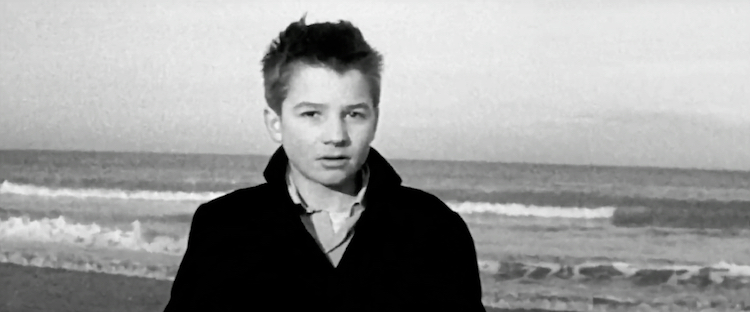
  • Four Months, Three Weeks, & Two Days
And the worst movie of the decade:
  • Transformers II: Revenge Of The Fallen

21 January 2010

Melanz Ostateczny

Sklot
Prosecutors in Poland are considering bringing charges against the Sklot nightclub in Warsaw, after it distributed flyers depicting Adolf Hitler. The Hitler drawing was being used to promote a club night, Melanz Ostateczny, which will take place on 20th February, though images glorifying Nazism are illegal in Poland.

(Last year, Ottmar Horl was threatened with prosecution in Germany, when his Nazi gnome was shown in Nuremberg. However, he was not prosecuted, and he subsequently displayed 1,200 Nazi gnomes in Straubing.)

12 January 2010

Orson Welles At Work

Orson Welles At Work
Orson Welles At Work, by Jean-Pierre Berthome and Francois Thomas, was originally published in French, as Orson Welles Au Travail. The production histories of Welles's films are accompanied by large production stills, storyboards, and annotated script pages, using materials obtained from archival research.

There is a detailed Welles bibliography and filmography, and a brief chronology. (Jonathan Rosenbaum's Discovering Orson Welles features a comparable filmography; Rosenbaum's This Is Orson Welles has a more detailed chronology, plus appendices on The Magnificent Ambersons and Touch Of Evil.) The series also includes Bill Krohn's acclaimed Hitchcock At Work, about Alfred Hitchcock.

10 January 2010

Time Out Film Guide 2010

Time Out Film Guide 2010
The eighteenth edition of the Time Out Film Guide (labelled 2010 though published last year) contains 500 new capsule film reviews, edited by John Pym (who took over from Tom Milne), and written by distinguished critics including Gilbert Adair, Jonathan Rosenbaum, and Mark Kermode.

18,500 films are reviewed in total, mostly taken from Time Out magazine's London cinema listings. While two other annual guides (Radio Times Guide To Films and Videohound's Golden Movie Retriever) include more reviews, they are largely restricted to mainstream films, in contrast to Time Out's unique emphasis on arthouse cinema. Time Out is also the only major guide to resist star-ratings. Unfortunately, though, its thematic index has now been discontinued. (As a substitute, Videohound includes extensive thematic indexes; the excellent Halliwell's Film Guide has apparently ceased publication, after its awful Movies That Matter edition.)

This new edition reviews thirty-six films which were screened at Cannes last year - including Antichrist ("as wildly implausible as it is provocatively gruesome"), Broken Embraces ("self-reflective melodrama"), Inglourious Basterds ("wild and childish revisionist revenge fantasy"), The White Ribbon ("A drama of extraordinary resonance and delicate ambiguities"), and Enter The Void ("swirling camerawork, hallucinatory sense of real time and narrative maelstrom of sex, drugs and death") - though they are not yet incorporated into the main alphabetical reviews section.

8 January 2010

Aftenposten

Jyllands-Posten
An attempted attack on cartoonist Kurt Westergaard was reported by news outlets around the world last week, though only a single newspaper has reprinted the cartoon which provoked the attack. An armed man was arrested after breaking into Westergaard's house on 1st January; this is the second attempt on the cartoonist's life, as a plot to murder Westergaard was uncovered in 2008.

Westergaard's caricature of Mohammed with a bomb was the most controversial of twelve cartoons published by Danish newspaper Jyllands-Posten in 2005 and reprinted internationally in 2006. Westergaard's cartoon was reprinted in isolation by several Danish newspapers in 2008 and broadcast by the BBC in 2007.

Today, the Norwegian newspaper Aftenposten published five of the original dozen cartoons, including Westergaard's, though no other newspapers have reprinted them this time.

4 January 2010

Psycho In The Shower

Psycho In The Shower

Psycho In The Shower

Psycho In The Shower: The History Of Cinema's Most Famous Scene (previously published as The Shower Scene In Hitchcock's Psycho), by Philip J Skerry, is a study of the Psycho shower scene (the eponymous Moment Of Psycho that David Thomson also discusses in his recent book). Except, of course, you can't write a whole book about one scene, even if it is the greatest scene since Battleship Potemkin's 'Odessa Steps' montage; thus, discussion of the shower scene is supplemented by interviews with Psycho cast and crew, precursors in Hitchcock's filmography, reactions from viewers, subsequent cultural references, and even an anecdotal account of the author's research process. Like Thomson, Skerry gives a detailed account of the film's first half though loses interest in the exposition after the shower scene.
Skerry tabulates the shower scene into a series of acts and shots, which reads like a maths textbook: "in this shot, and in the next shot, number 13, which is an almost exact duplicate of number 12"... zzzz. The extended interviews with star Janet Leigh, writer Joseph Stefano, and assistant director Hilton Green are much more interesting. Skerry attempts to debunk some of the rumours which have built up around Psycho, though in doing so he politely contradicts the conflicting accounts of his interviewees. He uses film stills to demonstrate that a knife does cut Leigh's skin in a split-second shot, and that her breasts are visible behind the opaque shower curtain.
The book also contains a previously unpublished photograph of a shot which was cut from all known prints of the film: Leigh's body-double, Marli Renfro, slumped naked over the bath. For Psycho fans, this exclusive photo automatically makes the book worth buying. In his valiant search for "the ur-Psycho", Skerry viewed laserdisc, VHS, DVD, and off-air versions of the film for comparison, though he is apparently unaware of the uncensored print which has been repeatedly broadcast on European TV.

3 January 2010

The Moment Of Psycho

The Moment Of Psycho
In his new book, The Moment Of Psycho: How Alfred Hitchcock Taught America To Love Murder, David Thomson (author of the surprisingly good Have You Seen...?) claims that Psycho, released in 1960, symbolises the transition from an apparently innocent 1950s to the violence and sexual freedoms of the 1960s. Thomson sees Psycho not only as a milestone in the relaxation of film censorship (leading to Blood Feast, Bonnie & Clyde, The Wild Bunch, etc.), but also as a cultural precursor of increasing violence in society (JFK's assassination; the Vietnam war).

I've seen Psycho more times than I can remember; Hitchcock's low-budget shocker, in which Marion Crane steals $40,000 and is murdered in the shower by Norman Bates, is an ideal case study for anyone interested in film-making or film analysis. It arguably epitomises the shift from classical to post-classical Hollywood, and indeed David Bordwell divides Hollywood history into pre-1960 (The Classical Hollywood Cinema) and post-1960 (The Way Hollywood Tells It).

Thomson pays particular attention to the first half of Psycho, up to and including the "delirium" of the shower scene. He notes the fatalism in Marion's relationship with her lover, and especially savours the parlour conversation between Marion and Norman ("One needs to see this scene several times to catch all the nuances"). However, he is disappointed by the unconvincing plot device (Norman's schizophrenia) in the film's second act, which, he writes, "is as fabricated and spurious as the first hour is solid and resonant".

The Moment Of Psycho, at less than 200 pages, feels like an extended essay with a lot of padding: a production history of The Birds, a mainly expository summary of Psycho's first half, capsule reviews of films influenced by Psycho, and even a chapter on American highways. It would be more satisfying as a single fifty-page chapter, minus the superfluous digressions.

Raymond Durgnat's scene-by-scene analysis (A Long, Hard Look At Psycho), Stephen Rebello's comprehensive production history (Alfred Hitchcock & The Making Of Psycho), and Philip J Skerry's new study of the shower scene (Psycho In The Shower) are also worth reading, as is the published screenplay (edited by Richard J Anobile).

2 January 2010

Bruno

Bruno
Bruno is a spoof documentary starring Sasha Baron Cohen as the eponymous central character. It was directed by Larry Charles, who also made several episodes of the excellent Curb Your Enthusiasm.

An early scene featuring pilot for the fake TV show A-List Celebrity Max Out is hilariously obscene and tasteless ("Keep it or abort it?"; "Bruno!"). Unfortunately, the remainder of the film is little more than a remake of the similarly episodic Borat (also directed by Charles), with the main character supposedly abandoned by his sidekick. The sketches become more drawn-out, less funny, and less plausible as the film goes on.

26 December 2009

Twist & Shout

Twist & Shout

Giant Torayan

Dots Obsession

Mega Death

Mega Death

Twist & Shout: Contemporary Art From Japan is a multi-media exhibition featuring Japanese art from the past decade, at the Bangkok Art & Culture Centre from 20th November 2009 to 10th January 2010. The exhibition makes full use of the BACC's gallery spaces, with large artworks in corridors, in specially-created rooms and huts, and on the ceiling.

Kusama Yayoi's Dots Obesssions (1999) features polka dots stuck to the floor, on the walls, and hanging in mid-air. Yanobe Kenji's Giant Torayan (2005; a metal robot standing three storeys high), is the exhibition's most iconic sculpture, though Miyajima Tatsuo's Mega Death (1999; vast LED displays emitting an ominous blue glow) is an even more stunning installation.

Many of the artists are influenced by Sekaikei, a narrative genre which avoids historical, political, or social commentary, and the result is a collection of hyper-real pieces in a bright Pop Art style.

25 December 2009

What Is Design?

What Is Design?

Citroen DS1

An expanded version of TCDC's What Is Design? opened on 21st November. The former exhibition's VW Beetle has been replaced by a Citreon DS1, and recent examples of Thai product design have been added to the collection. Other design classics, such as Sony's Walkman and Piaggio's Vespa, are retained from the previous exhibition, though some (including Alessi's Juicy Salif) have been removed. The collection is organised geographically, according to the 'genius loci' (Genius Of The Place) principle.

Cinema Now

Cinema Now
Cinema Now, written by Andrew Bailey and edited (like Art Cinema, and over fifty other Taschen film books) by Paul Duncan, profiles sixty contemporary directors and a selection of their most recent films. Each director is introduced with one paragraph (!) of text, followed by several pages of film stills.

Some of the featured directors (and their films) are: Pedro Almodovar (All About My Mother; Talk To Her; Volver), Darren Aronofsky (The Fountain), Catherine Breillat (Romance; Anatomy Of Hell), Alejandro Gonzalez Inarritu (Amores Perros; Babel), Michael Haneke (Cache), Todd Haynes (Far From Heaven), Hou Hsiao-Hsien, Spike Jonze (Being John Malkovich; Adaptation), Fernando Meirelles (City Of God), John Cameron Mitchell (Shortbus), Christopher Nolan (Memento), Gyorgy Palfi (Taxidermia), Chan-Wook Park (Oldboy; Sympathy For Lady Vengeance), Alexander Payne (About Schmidt; 14e Arrondissement), Pen-Ek Rattanaruang (Invisible Waves), Cristi Puiu (The Death Of Mr Lazarescu), Tsai Ming-Liang (Goodbye, Dragon Inn), Gus van Sant (My Own Private Idaho), Apichatpong Weerasethakul (Tropical Malady; Syndromes & A Century), Wong Kar-Wai (In The Mood For Love; 2046), and Yimou Zhang (Curse Of The Golden Flower).

Notable omissions include Wisit Sasanatieng, Gaspar Noe, Lars von Trier, and Quentin Tarantino, all of whom made their debuts in the 1990s and are still producing consistently interesting films.

23 December 2009

Art Cinema

Art Cinema
Art Cinema, written by Paul Young, edited by Paul Duncan, and published by Taschen, is a survey of avant-garde film-making from its origins in the 1910s to the present day. Each chapter focuses on a specific film/art genre, such as Surrealist Cinema, Abstraction, The City Symphony, Structuralism, Expanded Cinema, and Collage, amongst others. The format is similar to Amos Vogel's seminal Film As A Subversive Art: a series of short essays accompanied by numerous rare film stills with extended captions.

Young's survey is comprehensive in scope though lacking in detail. There are less than 200 pages, most of which are dominated by large, full-colour images which limit the historical or analytical content of the text. There is a reasonable bibliography, though the filmography, with only ten entries, is absurdly brief. Also, the non-chronological organisation coupled with the lack of an index limits the book's potential as a source of reference. It is, however, a beautiful coffee-table book, full of superbly reproduced photographs.

20 December 2009

"Do not take this picture"

The Independent

Alex Turner

Bob Patefield

Bob Patefield

Bob Patefield

Bob Patefield

Earlier this month, The Independent newspaper highlighted several recent cases of photographers who were questioned by UK police after taking photos in public. Alex Turner was arrested for photographing two police officers who questioned him after he took photos in Chatham.

Not included in the 3rd December Independent report are the cases of Bob Patefield, Simona Bonomo, and Pericles Antoniou. Patefield was arrested in Accrington yesterday, after photographing Christmas festivities in the town centre. Bonomo was arrested a month earlier while filming buildings in Paddington, London. Antoniou was arrested in May after he took photos on the London Underground.

video