
There were several landmark obscenity cases in the US and UK throughout the twentieth century, when works of literature were put on trial. The first notable example was The Well of Loneliness, Radclyffe Hall’s 1928 novel about a doomed lesbian romance. In an influential article published in the Sunday Express on 19th August 1928, James Douglas wrote that the book was poisonous: “I would rather give a healthy boy or a healthy girl a phial of prussic acid than this novel. Poison kills the body, but moral poison kills the soul.” The judge agreed, and the novel was banned from sale in the UK, though it was published twenty years later without any legal challenge.
Henry Miller’s Tropic of Cancer was published in Paris in 1934, though any copies imported into the US were seized by customs. A US edition was eventually published in 1961, leading to obscenity trials in more than twenty states. In Pennsylvania, judge Michael Musmanno described the novel as “a cesspool, an open sewer, a pit of putrefaction, a slimy gathering of all that is rotten in the debris of human depravity.”
Henry Miller’s Tropic of Cancer was published in Paris in 1934, though any copies imported into the US were seized by customs. A US edition was eventually published in 1961, leading to obscenity trials in more than twenty states. In Pennsylvania, judge Michael Musmanno described the novel as “a cesspool, an open sewer, a pit of putrefaction, a slimy gathering of all that is rotten in the debris of human depravity.”
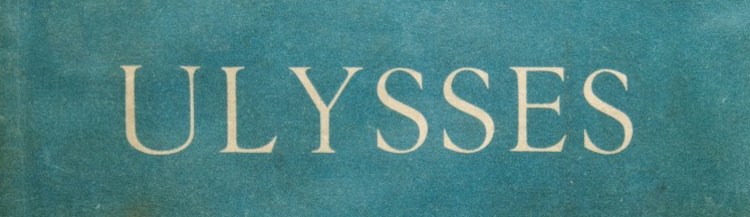
“The effect of Ulysses on the reader undoubtedly is somewhat emetic...”
James Joyce’s masterpiece Ulysses was also initially published in Paris, in 1922, and was declared obscene by customs officers in both the UK and US. The US ban even predated the novel’s Paris publication, as the editors of the literary magazine The Little Review were convicted of obscenity in 1921 after serialising it.
Random House sought to publish an edition in New York, and imported a copy from Paris to test the waters in 1932. The following year, judge John M. Woolsey ruled that the book was not obscene, leaving Random House free to publish it in the US. In his summing up, the judge argued that the novel was disgusting rather than titillating: “whilst in many places the effect of Ulysses on the reader undoubtedly is somewhat emetic, nowhere does it tend to be an aphrodisiac.” (The same argument was made by the appeals court judge in the Oz obscenity trial almost forty years later.)
Despite having read only forty-two pages of the novel, the UK’s director of public prosecutions, Archibald Bodkin, dismissed it as “a great deal of unmitigated filth and obscenity.” Copies brought into the UK were therefore confiscated by customs, until Bodley Head — encouraged by the US verdict — released a British edition in 1936. No longer imported from overseas and seized under the Customs Consolidation Act, the book was henceforth subject to the Obscene Publications Act, requiring a higher burden of proof. The attorney-general, David Somervell, advised that such a conviction would be unlikely, and the Bodley Head edition faced no legal challenge from the government.
The next landmark cases in US and UK obscenity law both came in the late 1950s. Samuel Roth was jailed in 1957 after the US Supreme Court ruled that his quarterly book series American Aphrodite (vol. 1, no. 3), published in 1951, was obscene. The case set a precedent as the judgement redefined obscenity as material which “taken as a whole appeals to the prurient interest”, thus preventing courts from convicting literature based on isolated extracts. Similarly, in 1959 the UK’s Obscene Publications Act added a stipulation that any material under scrutiny must be considered in whole rather than in part.
Random House sought to publish an edition in New York, and imported a copy from Paris to test the waters in 1932. The following year, judge John M. Woolsey ruled that the book was not obscene, leaving Random House free to publish it in the US. In his summing up, the judge argued that the novel was disgusting rather than titillating: “whilst in many places the effect of Ulysses on the reader undoubtedly is somewhat emetic, nowhere does it tend to be an aphrodisiac.” (The same argument was made by the appeals court judge in the Oz obscenity trial almost forty years later.)
Despite having read only forty-two pages of the novel, the UK’s director of public prosecutions, Archibald Bodkin, dismissed it as “a great deal of unmitigated filth and obscenity.” Copies brought into the UK were therefore confiscated by customs, until Bodley Head — encouraged by the US verdict — released a British edition in 1936. No longer imported from overseas and seized under the Customs Consolidation Act, the book was henceforth subject to the Obscene Publications Act, requiring a higher burden of proof. The attorney-general, David Somervell, advised that such a conviction would be unlikely, and the Bodley Head edition faced no legal challenge from the government.
The next landmark cases in US and UK obscenity law both came in the late 1950s. Samuel Roth was jailed in 1957 after the US Supreme Court ruled that his quarterly book series American Aphrodite (vol. 1, no. 3), published in 1951, was obscene. The case set a precedent as the judgement redefined obscenity as material which “taken as a whole appeals to the prurient interest”, thus preventing courts from convicting literature based on isolated extracts. Similarly, in 1959 the UK’s Obscene Publications Act added a stipulation that any material under scrutiny must be considered in whole rather than in part.

“Is it a book that you would even wish your wife or your servants to read?”
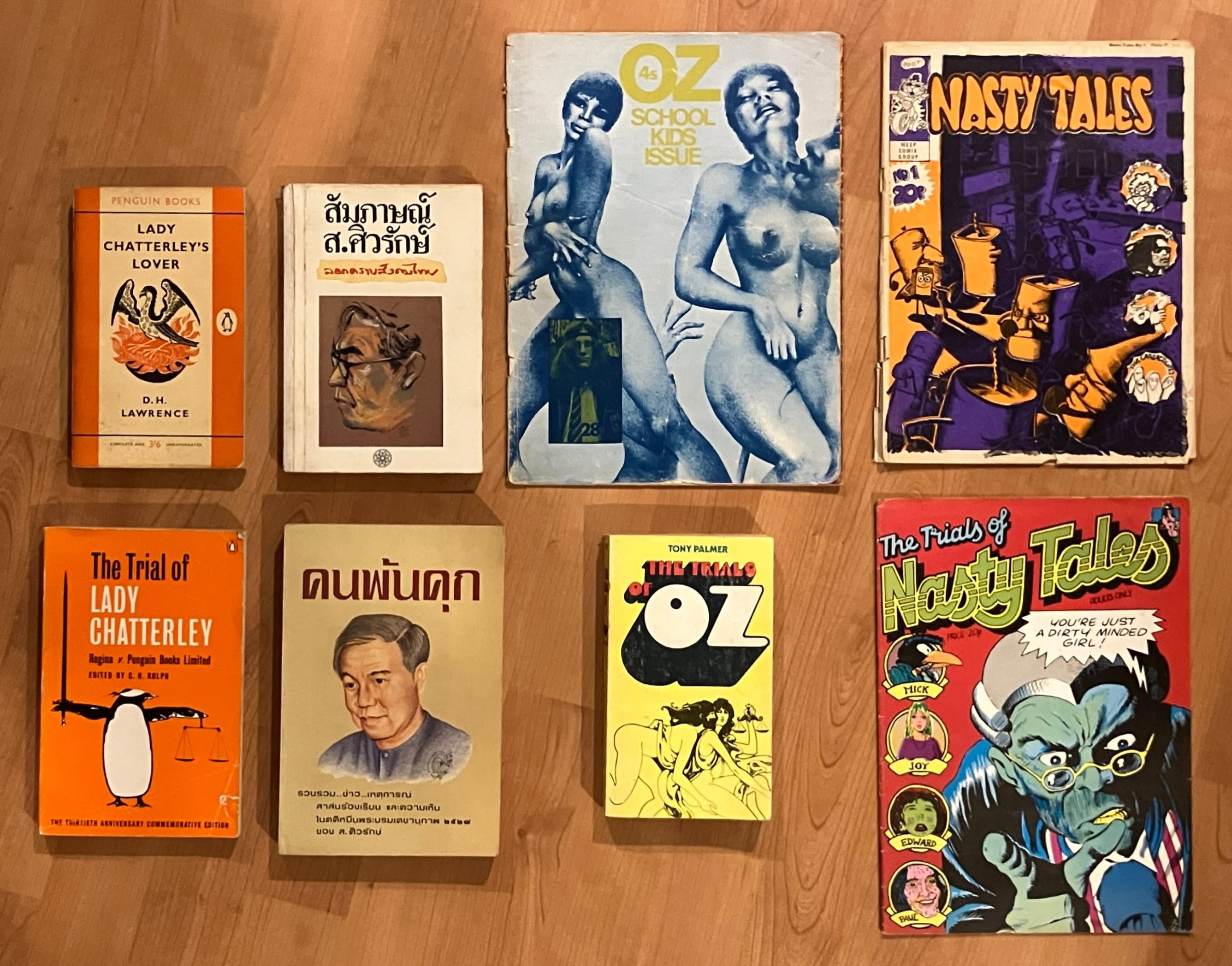
The change in the law in 1959 led directly to the acquittal of Lady Chatterley’s Lover a year later, when D.H. Lawrence’s scandalous novel was published as a Penguin paperback in an unexpurgated edition. (Like Tropic of Cancer and Ulysses, Lady Chatterley had initially been published in Paris.)
In his opening address at the Lady Chatterley obscenity trial in 1960, prosecutor Mervyn Griffith-Jones pointedly dismissed arcane Victorian pruderies, telling the jury: “do not approach this in any priggish, high-minded, super-correct, mid-Victorian manner”. But his moral objections to the novel were themselves somewhat Victorian: he disapproved of Lawrence’s putting “upon a pedestal promiscuous and adulterous intercourse”.
The defence called a great many witnesses — who each attested to the literary merits of Lawrence and, to a lesser extent, Lady Chatterley’s Lover itself — though they were rarely cross-examined. In his account of the proceedings, The Trial of Lady Chatterley, C.H. Rolph writes: “‘No questions’, said the surprising Mr Griffith-Jones... he was to say it many times”. The prosecution called no witnesses whatsoever, and Rolph notes that the consequent “gasp of surprise in Court was reprehensibly audible”.
Griffith-Jones took the trouble to keep a detailed tally of the novel’s profanities, informing the jury that the word ‘cunt’ occurs some fourteen times. What he did not mention, however, was that the word was used by Lawrence (albeit unrealistically) as a term of endearment: “Th’art good cunt, though, aren’t ter? Best bit o’ cunt left on earth!”
But the most notorious moment of the trial came at the beginning, when Griffith-Jones asked the jury: “would you approve of your young sons, young daughters — because girls can read as well as boys — reading this book?... Is it a book that you would even wish your wife or your servants to read?” There were so many outdated assumptions in these questions — that girls’ reading abilities were in question, that husbands controlled what their wives could read, and that people still had servants — that Rolph called this moment “the first nail in the prosecution’s coffin”.
In his opening address at the Lady Chatterley obscenity trial in 1960, prosecutor Mervyn Griffith-Jones pointedly dismissed arcane Victorian pruderies, telling the jury: “do not approach this in any priggish, high-minded, super-correct, mid-Victorian manner”. But his moral objections to the novel were themselves somewhat Victorian: he disapproved of Lawrence’s putting “upon a pedestal promiscuous and adulterous intercourse”.
The defence called a great many witnesses — who each attested to the literary merits of Lawrence and, to a lesser extent, Lady Chatterley’s Lover itself — though they were rarely cross-examined. In his account of the proceedings, The Trial of Lady Chatterley, C.H. Rolph writes: “‘No questions’, said the surprising Mr Griffith-Jones... he was to say it many times”. The prosecution called no witnesses whatsoever, and Rolph notes that the consequent “gasp of surprise in Court was reprehensibly audible”.
Griffith-Jones took the trouble to keep a detailed tally of the novel’s profanities, informing the jury that the word ‘cunt’ occurs some fourteen times. What he did not mention, however, was that the word was used by Lawrence (albeit unrealistically) as a term of endearment: “Th’art good cunt, though, aren’t ter? Best bit o’ cunt left on earth!”
But the most notorious moment of the trial came at the beginning, when Griffith-Jones asked the jury: “would you approve of your young sons, young daughters — because girls can read as well as boys — reading this book?... Is it a book that you would even wish your wife or your servants to read?” There were so many outdated assumptions in these questions — that girls’ reading abilities were in question, that husbands controlled what their wives could read, and that people still had servants — that Rolph called this moment “the first nail in the prosecution’s coffin”.
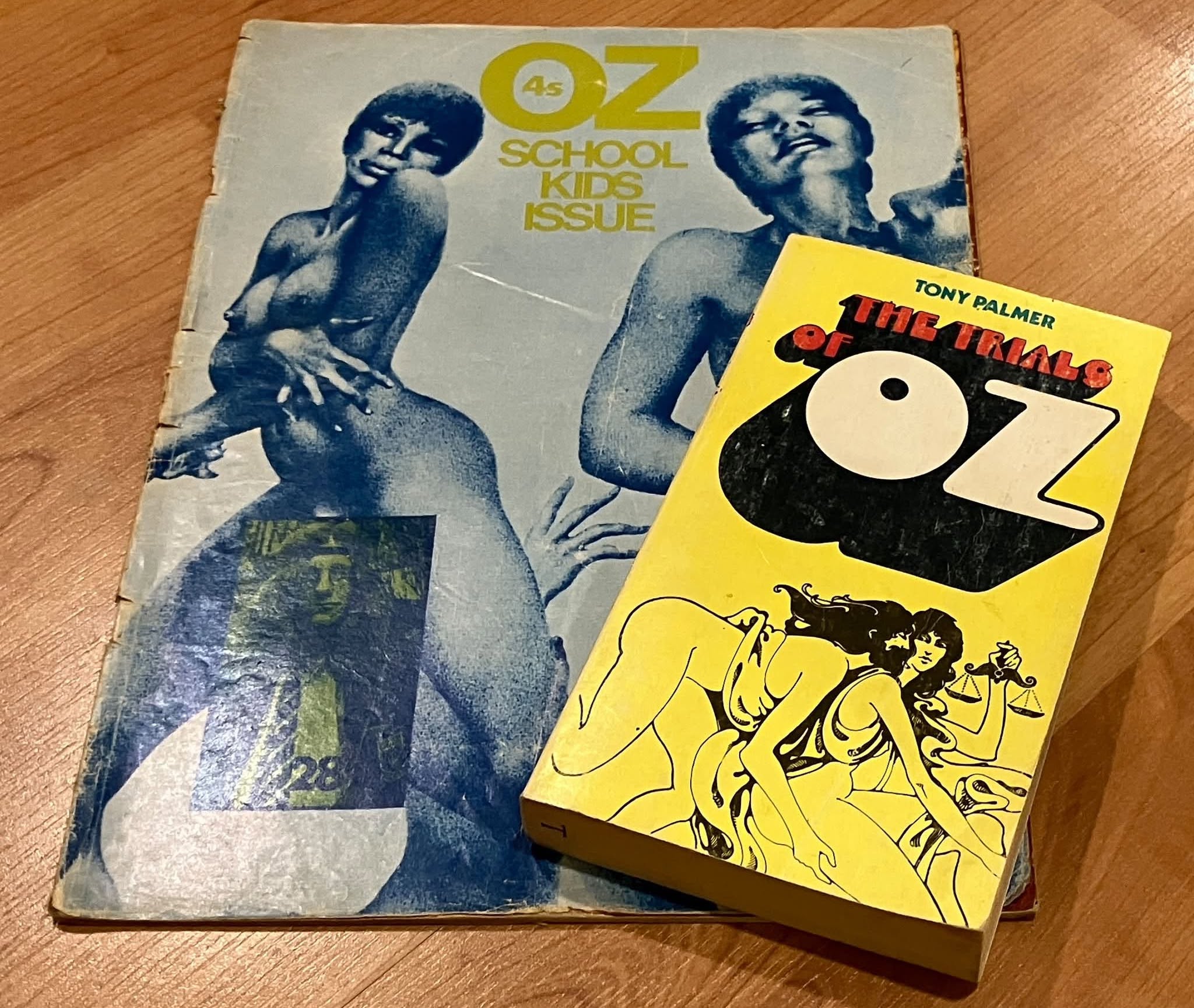
Lady Chatterley was by far the most famous obscenity case in the UK, though Britain’s longest obscenity trial took place a decade later, when the editors of Oz magazine were charged and convicted over issue no. 28, School Kids Oz. Richard Neville was sentenced to fifteen months in jail, James Anderson received a one-year sentence, and Felix Dennis was sentenced to nine months. Tony Palmer covered the court case in his book The Trials of Oz.
The Oz trial began on 22nd June 1971, and ended six weeks later with a withering summing up by the judge, Michael Argyle. When the jury asked him for guidance on the legal interpretation of obscenity, Argyle simply read out a dictionary definition, thus equating obscenity with indecency. (In fact, as per the Obscene Publications Act, obscenity in law requires a tendency to deprave and corrupt.) This “substantial and serious misdirection to the jury on the question of obscenity” was noted by the appeals court judge, David Widgery, who quashed the obscenity convictions.
The Oz trial began on 22nd June 1971, and ended six weeks later with a withering summing up by the judge, Michael Argyle. When the jury asked him for guidance on the legal interpretation of obscenity, Argyle simply read out a dictionary definition, thus equating obscenity with indecency. (In fact, as per the Obscene Publications Act, obscenity in law requires a tendency to deprave and corrupt.) This “substantial and serious misdirection to the jury on the question of obscenity” was noted by the appeals court judge, David Widgery, who quashed the obscenity convictions.
“Conspiracy to corrupt public morals...”
Alfred Barrett’s lonely hearts magazine The Link, founded in 1915, was certainly ahead of its time. It published personal ads, though as its masthead proudly proclaimed, they were “NOT MATRIMONIAL” in nature. So if people weren’t looking for a spouse, what could they be looking for...? The Metropolitan Police pondered that very question, after R.A. Bennett — editor of another magazine, the moralistic Truth — sent copies of The Link to Scotland Yard.
Bennett suspected that some of The Link’s classified ads were coded messages written by gay men. One example, which he underlined with a literal blue pencil, was by someone “anxious to correspond with friend. Must be same sex, affectionate, and amiable”. Homosexuality was illegal in Britain at the time, and the police seized not only copies of The Link but also letters sent to the box numbers advertised. Barrett was convicted of conspiracy to corrupt public morals in 1921, and sentenced to two years’ hard labour.
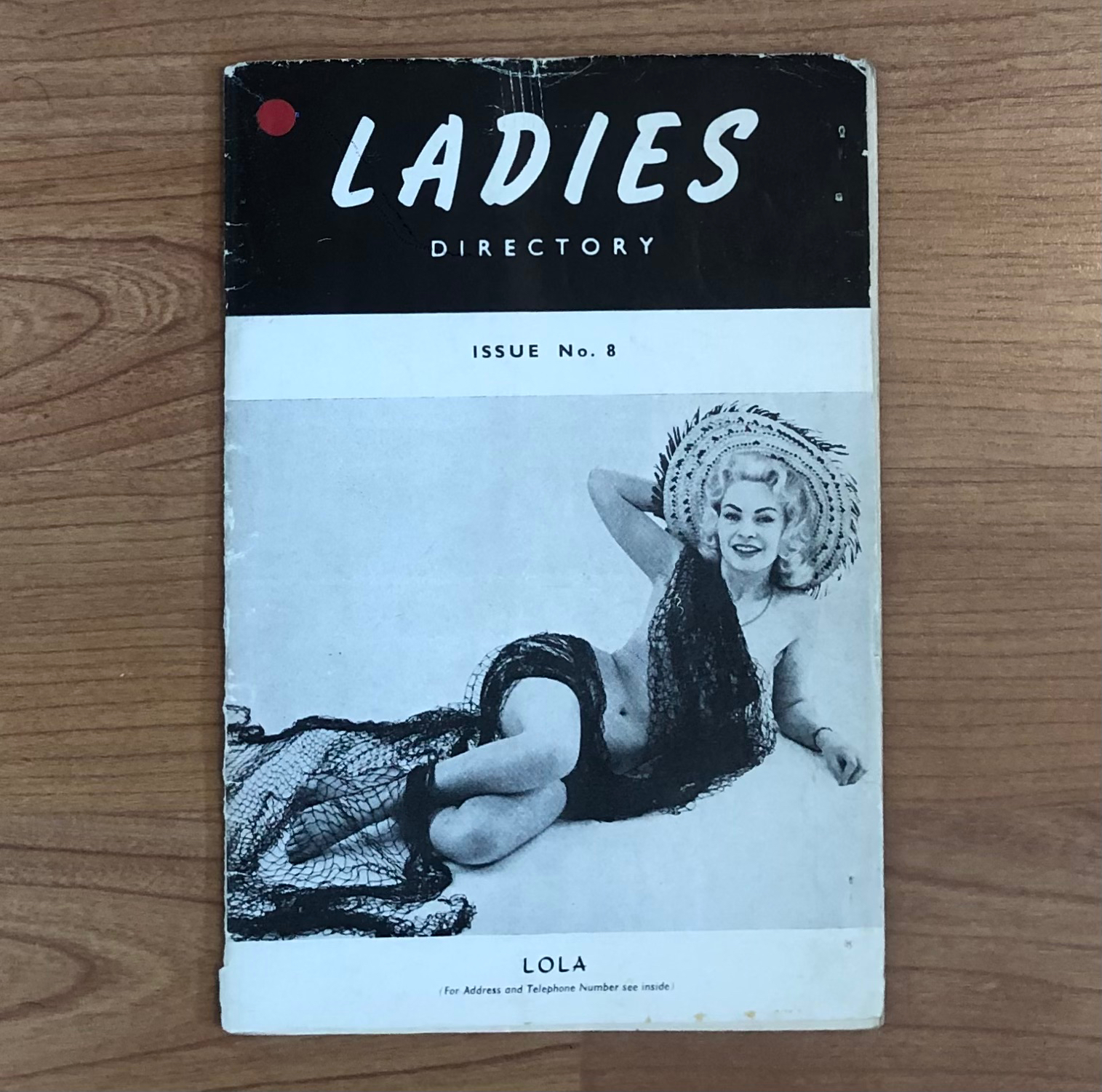
Forty years later, in 1961, another publisher was convicted of the same offence. Frederick Shaw’s Ladies Directory, founded in 1959, was a catalogue of ads placed by prostitutes. Shaw himself had sent his publication to the DPP, seeking guidance on its legality. He got his answer when he was charged with conspiracy to corrupt public morals, and after his conviction he served nine months in prison. The charge — which set a legal precedent — related specifically to no. 7–10 of the Ladies Directory. (My copy of no. 8 is an undated and unpaginated A5 booklet.)
The last major UK conviction for consiracy to corrupt public morals came in 1970, when three publishers of the underground magazine International Times received suspended sentences. In 1969 (no. 51–56), IT published a column of gay personal ads, and this gave the Met the excuse they needed to prosecute the magazine, after several previous speculative raids on its offices. In an echo of the investigation into The Link fifty years earlier, and notwithstanding the legalisation of homosexuality in 1967, the police also seized hundreds of letters sent in reply to the ads.
Bennett suspected that some of The Link’s classified ads were coded messages written by gay men. One example, which he underlined with a literal blue pencil, was by someone “anxious to correspond with friend. Must be same sex, affectionate, and amiable”. Homosexuality was illegal in Britain at the time, and the police seized not only copies of The Link but also letters sent to the box numbers advertised. Barrett was convicted of conspiracy to corrupt public morals in 1921, and sentenced to two years’ hard labour.
Forty years later, in 1961, another publisher was convicted of the same offence. Frederick Shaw’s Ladies Directory, founded in 1959, was a catalogue of ads placed by prostitutes. Shaw himself had sent his publication to the DPP, seeking guidance on its legality. He got his answer when he was charged with conspiracy to corrupt public morals, and after his conviction he served nine months in prison. The charge — which set a legal precedent — related specifically to no. 7–10 of the Ladies Directory. (My copy of no. 8 is an undated and unpaginated A5 booklet.)
The last major UK conviction for consiracy to corrupt public morals came in 1970, when three publishers of the underground magazine International Times received suspended sentences. In 1969 (no. 51–56), IT published a column of gay personal ads, and this gave the Met the excuse they needed to prosecute the magazine, after several previous speculative raids on its offices. In an echo of the investigation into The Link fifty years earlier, and notwithstanding the legalisation of homosexuality in 1967, the police also seized hundreds of letters sent in reply to the ads.
“The most offensive zine ever made...”
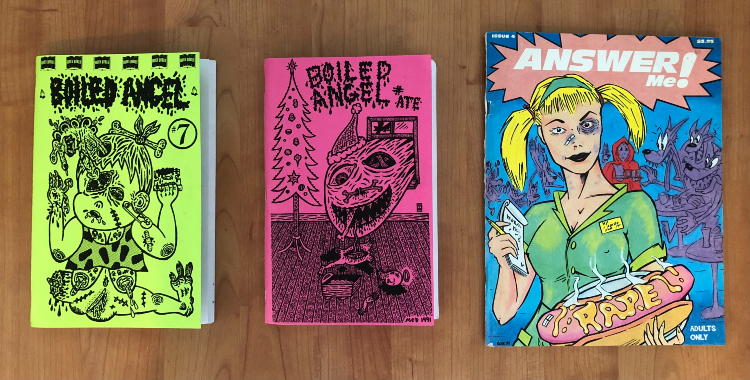
In 1994, cartoonist Mike Diana was convicted of producing and distributing obscene material, after Florida police obtained copies of his zine Boiled Angel (no. 7–8). Its twisted humour was certainly provocative, though this was precisely Diana’s intention. As he says in the documentary Boiled Angels: “My goal was to make the most offensive zine ever made.” Diana was fined $3,000 and sentenced to 1,248 hours of community service.
Although Diana is the only artist ever convicted of obscenity in the US, there have been other prosecutions of comic art. Booksellers in New York were fined $500 in 1970 for stocking Robert Crumb’s Zap Comix (specifically the ‘family values’ parody Joe Blow in no. 4; charges against Zap’s publishers, the Print Mint, were later dropped). In a similar case in the State of Washington, booksellers were prosecuted in 1995 in relation to Jim Goad’s zine Answer Me! (no. 4, with a cover illustration by Diana), though they were eventually acquitted.
Although Diana is the only artist ever convicted of obscenity in the US, there have been other prosecutions of comic art. Booksellers in New York were fined $500 in 1970 for stocking Robert Crumb’s Zap Comix (specifically the ‘family values’ parody Joe Blow in no. 4; charges against Zap’s publishers, the Print Mint, were later dropped). In a similar case in the State of Washington, booksellers were prosecuted in 1995 in relation to Jim Goad’s zine Answer Me! (no. 4, with a cover illustration by Diana), though they were eventually acquitted.
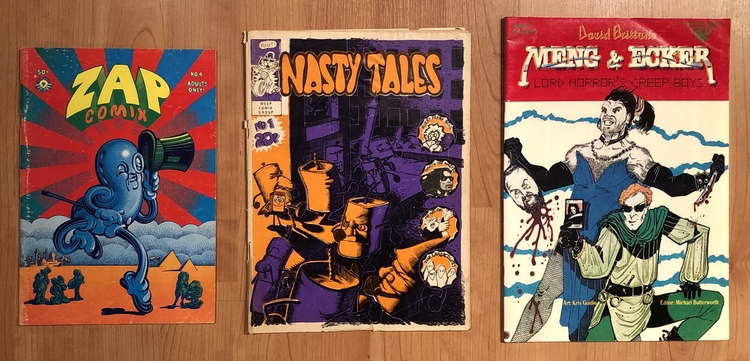
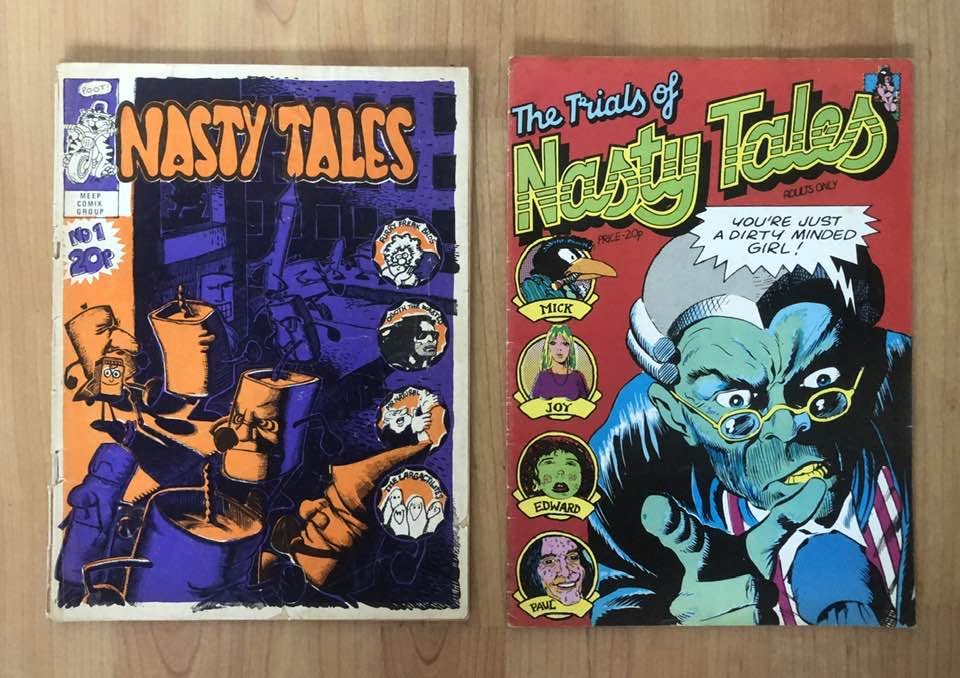
There have also been a handful of obscenity cases against comics in the UK. Charges against Oz and the Nasty Tales comic (no. 1) were both related to Robert Crumb cartoons published in 1971, and Crumb’s book My Troubles with Women was seized by customs in 1996. In all three cases, the charges were eventually dropped or overturned. A 1973 special issue of Nasty Tales — The Trials of Nasty Tales — documented its obscenity trial in comic form.
David Britton was found guilty on obscenity charges relating to his novel Lord Horror and his comic Meng and Ecker (no. 1) in 1991. The charge against the novel was overturned on appeal, though the conviction of the comic was upheld.
David Britton was found guilty on obscenity charges relating to his novel Lord Horror and his comic Meng and Ecker (no. 1) in 1991. The charge against the novel was overturned on appeal, though the conviction of the comic was upheld.

Lèse-majesté
In Thailand, book bans have persisted into the twenty-first century, though the bans have been due to lèse-majesté rather than obscenity. Paul M. Handley’s unauthorised biography of King Rama IX, The King Never Smiles, was banned here in 2006, as were Andrew MacGregor Marshall’s A Kingdom in Crisis in 2014 and Pavin Chachavalpongpun’s Rama X in 2023. (Rama X was banned due to its cover, and A Kingdom in Crisis on the basis of two newspaper reviews.) Two books by Giles Ji Ungpakorn — A Coup for the Rich and Thailand’s Crisis — were also banned.
Somyot Prueksakasemsuk, editor of Voice of Taksin magazine, was sentenced to eleven years in jail after being convicted of lèse-majesté. The charges related to columns published in February and March 2010 (vol. 1, no. 15–16), written under a pseudonym by Jakrapob Penkair. More recently, lèse-majesté charges have also been brought in relation to booklets written by the leaders of the three-finger protest movement.
Sulak Sivaraksa, scholar and public intellectual, has been at the centre of several lèse-majesté cases and book bans. He attempted to flee the country in 1984, after his book ลอกคราบสังคมไทย (‘peeling back the layers of Thai society’) was banned and a warrent was issued for his arrest. In 2005, an article in his journal Seeds of Peace (vol. 21, no. 1), written anonymously, prompted a lèse-majesté investigation. In 2006, an issue of the journal Same Sky (ฟ้าเดียวกัน; vol. 3, no. 4) was banned due to an interview with Sulak. In 2007, his book ค่อนศตวรรษ ประชาธิปไตยไทย (‘half a century of Thai democracy’) was banned for national security reasons.
Thailand’s most unusual book ban occurred when, as incredible as it may seem, a dictionary was burnt in the streets of Bangkok. The Longman Dictionary of English Language and Culture caused controversy as its entry for Bangkok described the city as “a place where there are a lot of PROSTITUTES”. (The capitalisation indicated a cross-reference; it was not for emphasis.) This mention of the city’s somewhat seedy reputation infuriated some Bangkokians, who burnt the dictionary in protest, and it was officially banned by Thai police in 1993. The publishers quickly removed the offending text, in time for the paperback edition.
Somyot Prueksakasemsuk, editor of Voice of Taksin magazine, was sentenced to eleven years in jail after being convicted of lèse-majesté. The charges related to columns published in February and March 2010 (vol. 1, no. 15–16), written under a pseudonym by Jakrapob Penkair. More recently, lèse-majesté charges have also been brought in relation to booklets written by the leaders of the three-finger protest movement.
Sulak Sivaraksa, scholar and public intellectual, has been at the centre of several lèse-majesté cases and book bans. He attempted to flee the country in 1984, after his book ลอกคราบสังคมไทย (‘peeling back the layers of Thai society’) was banned and a warrent was issued for his arrest. In 2005, an article in his journal Seeds of Peace (vol. 21, no. 1), written anonymously, prompted a lèse-majesté investigation. In 2006, an issue of the journal Same Sky (ฟ้าเดียวกัน; vol. 3, no. 4) was banned due to an interview with Sulak. In 2007, his book ค่อนศตวรรษ ประชาธิปไตยไทย (‘half a century of Thai democracy’) was banned for national security reasons.
Thailand’s most unusual book ban occurred when, as incredible as it may seem, a dictionary was burnt in the streets of Bangkok. The Longman Dictionary of English Language and Culture caused controversy as its entry for Bangkok described the city as “a place where there are a lot of PROSTITUTES”. (The capitalisation indicated a cross-reference; it was not for emphasis.) This mention of the city’s somewhat seedy reputation infuriated some Bangkokians, who burnt the dictionary in protest, and it was officially banned by Thai police in 1993. The publishers quickly removed the offending text, in time for the paperback edition.