
09 September 2008

ชิมไปบ่นไป
(‘tasting while grumbling’)


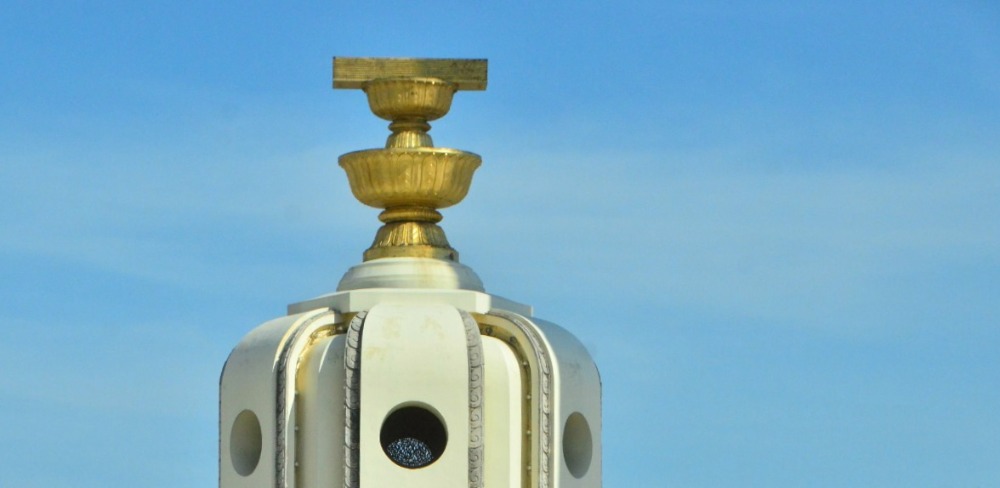
Democracy Monument

The Constitutional Court announced today that Samak Sundaravej — Prime Minister, and leader of the governing People Power Party — must be dismissed from office with immediate effect. The court ruled that he had violated the constitution by hosting a cookery show, ชิมไปบ่นไป (‘tasting while grumbling’), on TV earlier this year. The constitution forbids a serving prime minister from receiving private income; it also stipulates that the entire cabinet must resign following the PM’s disqualification.

Samak had been under pressure to resign for over a week, following the People’s Alliance for Democracy’s continued occupation of Government House. However, he had repeatedly refused to step down, arguing that an elected PM should not give in to mob rule. The Election Commission of Thailand voted unanimously to recommend the dissolution of the PPP last week. Their decision was based on the Supreme Court’s conviction of PPP deputy leader Yongyuth Tiyaphairat, following an investigation into vote-buying during the 2007 general election. The Constitutional Court has yet to rule on the PPP’s fate, though the court’s dissolution of Thai Rak Thai last year does not bode well for the PPP, given that the PPP is essentially a reincarnation of Thai Rak Thai.

08 September 2008

Ken Adam Designs The Movies

Ken Adam Designs The Movies
Ken Adam Designs The Movies: James Bond & Beyond is a new book by Ken Adam and Christopher Frayling, featuring reproductions of Adam's sketches and other pre-production art from the various films he has designed. It's an excellent companion to their previous book, which was an extended interview accompanied by a smaller selection of images.

Adam worked for Stanley Kubrick on Dr Strangelove and Barry Lyndon, and the earlier book quotes a letter sent to Adam by Kubrick after Adam initially refused to work on Barry Lyndon. Ken Adam Designs The Movies includes a copy of the letter, at the back of the book.

Bharat Mata
(‘mother India’)


Bharat Mata

India’s Supreme Court today ruled that Bharat Mata (‘mother India’), a 2005 painting by M.F. Husain, is not obscene. The decision upholds a similar verdict by the High Court in Delhi on 8th May. Husain, India’s greatest modern artist, faced dozens of lawsuits after Bharat Mata was exhibited in 2006. In particular, an advertisement promoting the exhibition in the 6th February 2006 issue of India Today, which included an image of Bharat Mata, prompted a campaign against the artist by conservative Hindus. Husain has been living in self-imposed exile since the legal cases were filed.

07 September 2008

Bangkok Post Sunday

Bangkok Post Sunday
The Bangkok Post today relaunched its Sunday edition, substantially expanding its pagination. In contrast, today's edition of The Sunday Nation is extremely thin: only eighteen pages in total, with virtually no advertising at all.

The Nation does at least include national news now, which it had dropped following the launch of the Daily Xpress. The Xpress itself is now twenty pages shorter than it used to be (and is seemingly no longer published on Sundays, replaced by The Sunday Nation).

04 September 2008

Sukiyaki Western Django

Sukiyaki Western Django
Sukiyaki Western Django was directed by Takashi Miike, the prolific Japanese horror/exploitation filmmaker most famous for the unsettling Audition and the extremely violent gangster film Ichi The Killer. Django, an early 'spaghetti western', provided the inspiration for Sukiyaki Western Django, and indeed Miike's film is technically a Django prequel.

In a prologue with a painted backdrop resembling Tears Of The Black Tiger, we learn about the Genpei War, a conflict between rival Genji and Taira gangs. Then, in an isolated town, the descendants of the rival groups prepare for a showdown, with one side in white and the other in red. I was reminded of the current political situation in Bangkok: two sides and two colours (anti-government, in yellow; pro-government, in red) facing each other in a violent confrontation.

The lead character is a lone cowboy (clearly inspired by Clint Eastwood's character in A Fistful Of Dollars, itself derived from Akira Kurosawa's Yojimbo) who arrives in town, proves he is quick on the draw, then puts an end to the feud between the two gangs by defeating both of them (just as Eastwood's character does). The stoical cowboy's role is not substantial, though, as he mostly bides his time until the final duel. Arguably more central to the story is a silent young boy whose mother and father belonged to different gangs.

Miike has put a Japanese twist on the Italian spaghetti western genre, a genre which was itself partly inspired by Japanese cinema - A Fistful Of Dollars was an unofficial Yojimbo remake. There have been similar attempts from other countries, the closest equivalent to Miike's being the Japanese 'noodle western' Tampopo. From India came the 'curry western' Sholay, and the Spanish film 800 bullets has been called a 'marmitako western'. This year, the South Korean The Good, The Bad, & The Weird was marketed as a 'kimchi western'. There are also 'borsch westerns' from Russia, 'Spätzle westerns' from Germany, 'kartoffel westerns' from Denmark, 'boureka westerns' from Isreal, 'camembert westerns' from France, and 'paella westerns' from Spain.

Pulp Fiction director Quentin Tarantino makes an amusing cameo appearance in the prologue, wearing a poncho in another echo of Clint Eastwood; when we return to his character near the end of the film, however, he has become a ridiculous old man in a wheelchair. Other characters are equally implausible. Neither gang leader is remotely menacing: one rolls his eyes, cowers behind his men, and recites Shakespeare very badly; the other has the weak-looking, lithe physique of Russell Brand. The most absurd character is the sheriff, who becomes severely schizophrenic in an unsuccessful attempt at slapstick comedy.

The film's dialogue is delivered in English, though the actors are largely Japanese, and their thick accents make many of their lines incomprehensible. There is stunning cinematography in several sequences, notably the prologue with its artificial backdrop and a couple of scenes with stylised blue lighting, though the characters and dialogue make it hard to take the film seriously. (The version released in Japan is twenty minutes longer.)

30 August 2008

Sticky & Sweet Tour

Sticky & Sweet Tour
Madonna's Sticky & Sweet Tour began earlier this month. Although the set list inevitably concentrates on her latest album, Hard Candy, there's also a surprising amount of classic songs (including superlative performances of Into The Groove and Like A Prayer). The show is divided into four themed sections: 'pimp', 'old school', 'gypsy', and 'rave'. Vocally, Madonna sounds great, though her costumes are quite eccentric.

The full set list is: The Sweet Machine, Candy Shop, Beat Goes On, Human Nature, Vogue, Die Another Day, Into The Groove, Heartbeat, Borderline, She's Not Me, Music, Rain, Devil Wouldn't Recognize You, Spanish Lesson, Miles Away, La Isla Bonita, You Must Love Me, Get Stupid, 4 Minutes, Like A Prayer, Ray Of Light, Hung Up, and Give It 2 Me.

28 August 2008

This Area Is Under Quarantine


This Area Is Under Quarantine

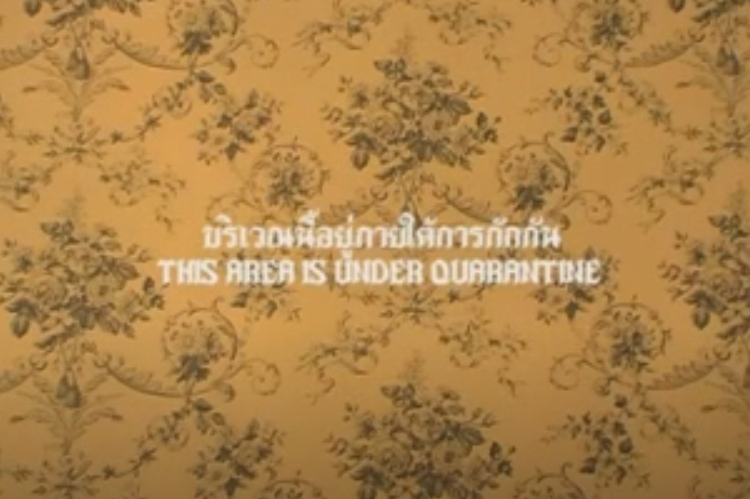
A new documentary by Thai filmmaker Thunska Pansittivorakul, This Area Is Under Quarantine (บริเวณนี้อยู่ภายใต้การกักกัน), was screened at Makhampom Studio, Bangkok, last night. (All of his previous films were shown at a retrospective in April.) Before the premiere of this new feature-length documentary, there were screenings of his recent short films Action! (which premiered at the 5th Bangkok Experimental Film Festival, and is currently showing as part of the 4th Project 6) and Middle-Earth (มัชฌิมโลก, which premiered at the 11th Thai Short Film and Video Festival), and his music video Blinded Spot. Most of the photographs from Thunska’s recent Life Show exhibition were also displayed, though the more explicit ones were missing.

Thunska has always made highly provocative films, and This Area Is Under Quarantine is no exception. Its first half resembles his short films Life Show (เปลือยชีวิต) and Chemistry (ปฏิกิริยา), with two gay men being interviewed about their past relationships. They later have sex with each other, filmed in close-up with a constantly moving camera, recalling Thunska’s short film Sigh (เมืองร้าง).

One of the men mentions that he is Muslim, which unexpectedly veers the discussion towards the notorious incident at Tak Bai in 2004 when seventy-eight Muslim men suffocated while held captive by the Thai army. Video footage of the Tak Bai incident is included, and Thaksin Shinawatra, who was Thailand’s prime minister at the time, is directly criticised in the film (albeit four years after the event).


The Tak Bai scenes are taken from a VCD issued by the journal Same Sky (ฟ้าเดียวกัน) in defiance of a ban imposed by the Thaksin government. Since then, the footage has become more widely available: earlier this year, a Tak Bai documentary — นี้คือ...ความจริงที่ตากใบ (‘this is... the truth about Tak Bai’) — was released on VCD alongside an older documentary about the ‘Black May’ protests. (Strangely, the VCD cover features an unrelated photograph from 14th October 1973.)

There were a few technical glitches at last night’s sold-out screening. The film will be shown again at the same venue on 1st September.

19 August 2008

Life With My Sister Madonna

Life With My Sister Madonna
Life With My Sister Madonna is an account by Christopher Ciccone of his relationship with Madonna, written by Ciccone with Wendy Leigh. Ciccone briefly recounts their childhood and their early days in New York, challenging the self-mythologising accounts of the period that Madonna has given in interviews. For instance, the story of how she arrived in New York with $35, and a taxi driver dropped her off in Times Square, is - surprise, surprise - not true.

The book's main focus is on his professional relationship with his sister. Over the years, she has employed him as an interior designer and stage director, and he writes at length about his demeaning chores and paltry compensation. It's hard to feel much sympathy though, because he also complains when she doesn't hire him.

He is evidently jealous of the men in her life, and he makes it clear that he can't stand her husband, Guy Ritchie. His personal offence at the wedding speech of Ritchie's best man seems like a massive over-reaction. Also, for some strange reason, he is surprised that Ritchie wants to approve the decor of their home rather than giving Ciccone carte blanche to design it however he likes.

There's nothing really revelatory about Madonna in this book. Yes, she seems selfish and controlling, but we knew that already. Where are the details about Sean Penn tying her to a chair all night?

16 August 2008

The Empire Top 500

The Empire Top 500
Empire magazine has launched a survey to find the 500 greatest films of all time. Voting is open until 5th September, and the results will be published at the end of next month.

15 August 2008

Flashback '76

Flashback '76
Died On 6th October 1976
The group exhibition Flashback '76 commemorates the 1976 Thammasat University massacre. The exhibition includes Manit Sriwanichpoom's photo series Died On 6th October 1976; Manit soaked autopsy photographs of the victims of the massacre in blood, to reinforce the violence of the event. They were created to express Manit's incredulity when Prime Minister Samak Sundaravej told CNN that only one person died in the massacre. The exhibition also includes Vasan Sitthiket's video Delete Our History, Now! (อำนาจ/การลบทิ้ง), which comments on the state's whitewashing of the 6th October incident.

The 1976 massacre was previously the subject of Manit's Horror In Pink series, shown at From Message To Media. (That series was made in response to Samak being elected governor of Bangkok in 2000 by an electorate that had seemingly forgotten his role as an agitator in the buildup to the massacre.) Ing K.'s ไทยมุง series, watercolour portraits of the crowd from Neal Ulevich's famous photograph of the massacre, are also include. Flashback '76, at the Pridi Banomyong Institute in Bangkok, opened on 2nd August, and will close on Saturday.