26 January 2019
Touch of Evil
22 January 2019
More or Less
On closer inspection, the ballot papers are a parody of recent Thai political factions, and a Thai flag backdrop is overlaid with army camouflage to indicate the military's pervasive influence over the country. Also, the ballot box has no bottom, so ballot papers fall straight onto the floor, symbolising the futility of elections that are often invalidated (as in 2006 and 2014) or postponed. According to the junta, a return to democracy is always on the horizon, and elections are perpetually due 'next year'. In the meantime, gallery visitors can vote via Januário's ballot papers.
A month after the coup, on 28th June 2014, Prayut Chan-o-cha promised an election by October 2015. On 9th February 2015, he committed to an election by February 2016. On 9th August 2016, he announced that an election would take place by November 2017. On 10th October 2017, he gave assurances that an election would happen by November 2018. On 27th February 2018, he pledged an election by February 2019, though another delay seems inevitable.
20 January 2019
Monstrous Phenomenon
A four-leaf clover is considered lucky, though five-leaf ones certainly aren't: they are genetic mutations caused by nuclear radiation. The exhibition features these and other plant and animal specimens from contaminated sites in Fukushima prefecture, including a bee from Minamisoma and a bovine lumbar vertebra from Namie.
Monstrous Phenomenon runs until 19th March at 1Projects. Ruangsak's sculpture 'Transformations' was included in ห้องเรียนวาฬไทย at HOF Art Space, and his 'Ash Heart Project' installation was part of the Dialogues exhibition at BACC.
18 January 2019
McJesus
Last week, the gallery was firebombed, and police fired tear gas at hundreds of demonstrators who accused the artist of blasphemy. The exhibition, Sacred Goods, is due to close on 17th February.
Jake and Dinos Chapman caused controversy with a similar sculpture in 2012. Their Unholy McTrinity, which also featured a crucified Ronald McDonald, was shown at the Hermitage in Russia.
15 January 2019
After the Coup
The political affiliations of Thais from the middle class, the south, the north, and the northeast are examined in four chapters. Middle-class and southern interviewees discuss their reasons for joining the PAD and PDRC, notably their devotion to Rama IX and their anger at Thaksin Shinawatra's "alleged disloyalty to King Bhumibol. Most interviewees cited this issue as a decisive factor in turning them against Thaksin." The book also confirms a widespread and patronising sense of middle-class superiority: "All interviewees stressed a lack of education among Thaksin's supporters as evidence that elections in Thailand lack legitimacy; the uneducated simply succumb to vote buying."
In contrast, two chapters on the north and northeast focus on the red-shirt movement and the UDD, asking two pertinent questions: "Why was there so little resistance to the coup? Why were there so few Red Shirt protests in the twelve months following the coup?" The junta's intimidation tactics provide the answer: red-shirts are closely monitored and coerced into renouncing all political activity, including one interviewee who "had to promise not to wear a red shirt, or even a checked shirt containing red in the pattern."
Other chapters have a broader focus. Prajak Kongkirati expands his earlier essay on the 2014 election (in Military, Monarchy and Repression) to analyse forty years of election-related violence. Surachart Bamrungsuk provides a potted history of Thai coups, demonstrating that, for the military, practice makes perfect: "The absence of external security challenges has left the army free to involve itself in political affairs and to become more skilled in political manipulation." Thongchai Winichakul (updating his essay in "Good Coup" Gone Bad) examines the prospects for royalist hegemony following the succession.
There are two especially interesting chapters on mass media and politics. Aim Sinpeng and Wimonsiri Hemtanon highlight the 'filter bubble' effect caused by Thailand's partisan media, though their essay includes an unfortunate instance of self-censorship. They discuss a 1995 Thai Rath (ไทยรัฐ) corruption exposé "involving a high-profile member of the prime minister's Democrat Party" without naming the politician involved. (Duncan McCargo previously identified Suthep Thaugsuban as "the figure at the centre of the scandal" in his book Politics and the Press in Thailand.)
Puangthong Pawakapan surveys international media coverage of the monarchy since the 1960s, noting how critical reporting has increased since the 2006 coup: "The foreign press was instrumental in constructing a benign image of King Bhumibol in the international arena, and was thus complicit in entrenching the power of the monarchy. However, the political coverage of Thailand changed after 2006. The foreign press began to see the monarchy... as a crucial factor in the conflict that now engulfed Thailand."
11 January 2019
100 Ideas that Changed Design
Like the other books in the series, 100 Ideas that Changed Design features 100 chapters, each with a single-page essay and a few well-chosen illustrations. There is also a wide-ranging bibliography.
The selected design ideas include broad concepts (such as style and taste), elements of the production process (such as mass production and quality control), practical considerations (such as ergonomics and safety), design philosophies (such as functionalism and design art), and well-known aphorisms (such as form follows function and less is more). Aesthetic trends and other stylistic 'isms' are excluded.
Charlotte and Peter Fiell are experts on product and furniture design. Their other books include The Story of Design, Plastic Dreams, Design of the 20th Century, A-Z of Design and Designers, Modern Furniture Classics, and Industrial Design A-Z.
Isan Creative Festival 2019

The inaugural Isan Creative Festival (เทศกาลอีสานสร้างสรรค์) opened yesterday at Thailand Creative and Design Center in Khon Kaen. The three-day event began with directors Apichatpong Weerasethakul and Surasak Pongson discussing their films made in the Isan region.
Apichatpong grew up in Khon Kaen, and his most recent feature, Cemetery of Splendour, was filmed in the city. (Its Thai title, รักที่ขอนแก่น, translates as ‘love in Khon Kaen’.) Song of the City, his segment of the portmanteau film Ten Years Thailand, was also filmed in Khon Kaen.
Still in his twenties, Surasak is already one of the most important figures in the Isan film industry, thanks to the commercial success of his Thibaan (ไทบ้าน) comedies. His latest film, a Thibaan sequel, hit the headlines after shots of a crying monk were censored. It was shown at a free open-air screening last night, along with Ten Years Thailand, on Isan Creative Festival’s opening night.
Apichatpong grew up in Khon Kaen, and his most recent feature, Cemetery of Splendour, was filmed in the city. (Its Thai title, รักที่ขอนแก่น, translates as ‘love in Khon Kaen’.) Song of the City, his segment of the portmanteau film Ten Years Thailand, was also filmed in Khon Kaen.
Still in his twenties, Surasak is already one of the most important figures in the Isan film industry, thanks to the commercial success of his Thibaan (ไทบ้าน) comedies. His latest film, a Thibaan sequel, hit the headlines after shots of a crying monk were censored. It was shown at a free open-air screening last night, along with Ten Years Thailand, on Isan Creative Festival’s opening night.
10 January 2019
Apichatpong Weerasethakul

This evening, Apichatpong Weerasethakul took part in a Q&A at the Isan Creative Festival (เทศกาลอีสานสร้างสรรค์) in Khon Kaen. Before the event, I did some sightseeing around the city, visiting a statue of Sarit Thanarat. (Sarit was a Cold War-era dictator, and his statue is an ominous presence in Song of the City, Apichatpong’s segment of the portmanteau film Ten Years Thailand.) A remarkable coincidence: while I was photographing the relief sculpture behind the statue, Apichatpong was driving past, and he photographed me.
09 January 2019
Khon Kaen Manifesto
Flashy Flashes No. 1

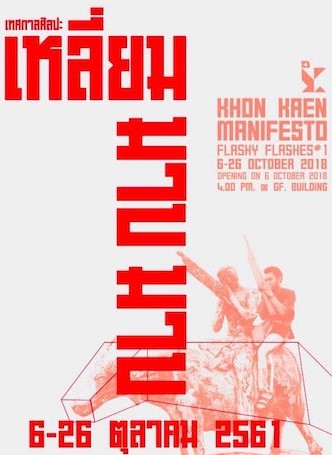
Khon Kaen Manifesto (ขอนแก่น แมนิเฟสโต้), an exhibition of political art, opened on 6th October last year. 6th October is, of course, infamous in Thailand, as a massacre took place at Thammasat University on 6th October 1976.
One of the installations in the exhibition, Nutdanai Jitbunjong’s A Massacre, referred directly to that event: it consisted of a folding chair hanging from a noose, in reference to Neal Ulevich’s photograph of a corpse being battered with a folding chair. Visitors to the exhibition were greeted by two girl scouts, an allusion to the Village Scouts militia group that took part in the massacre. (Ten Years Thailand also features children in scout uniforms, another reference to the Village Scout vigilantes.)
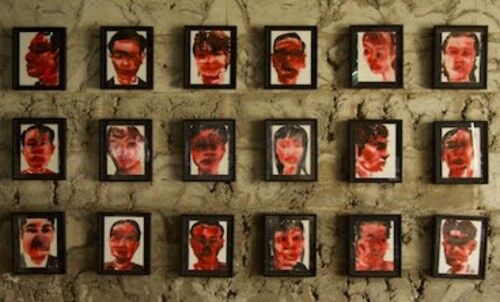
Other works in the exhibition also made reference to instances of state violence. Zakariya Amataya’s installation Report from a Partitioned Village (รายงานจากหมู่บ้านที่ถูกปิดล้อม) included a list of victims of the 2004 Tak Bai massacre. For his Red Faces series, Tawan Wattuya painted portraits of eighteen people killed on 10th April 2010, with red watercolour symbolising the blood of the victims.
Naturally, such politically sensitive subjects drew the attention of the military, and junta officials made regular visits to the exhibition in the days before and after it opened. As a result of this intimidation, a portrait of lèse-majesté convict Jatupat Boonpattararaksa was removed. (The painting, by Sermsilp Pairin, was part of a triptych, the others being portraits of politician Pridi Banomyong and writer Chit Phumisak.)
One of the installations in the exhibition, Nutdanai Jitbunjong’s A Massacre, referred directly to that event: it consisted of a folding chair hanging from a noose, in reference to Neal Ulevich’s photograph of a corpse being battered with a folding chair. Visitors to the exhibition were greeted by two girl scouts, an allusion to the Village Scouts militia group that took part in the massacre. (Ten Years Thailand also features children in scout uniforms, another reference to the Village Scout vigilantes.)
Other works in the exhibition also made reference to instances of state violence. Zakariya Amataya’s installation Report from a Partitioned Village (รายงานจากหมู่บ้านที่ถูกปิดล้อม) included a list of victims of the 2004 Tak Bai massacre. For his Red Faces series, Tawan Wattuya painted portraits of eighteen people killed on 10th April 2010, with red watercolour symbolising the blood of the victims.
Naturally, such politically sensitive subjects drew the attention of the military, and junta officials made regular visits to the exhibition in the days before and after it opened. As a result of this intimidation, a portrait of lèse-majesté convict Jatupat Boonpattararaksa was removed. (The painting, by Sermsilp Pairin, was part of a triptych, the others being portraits of politician Pridi Banomyong and writer Chit Phumisak.)

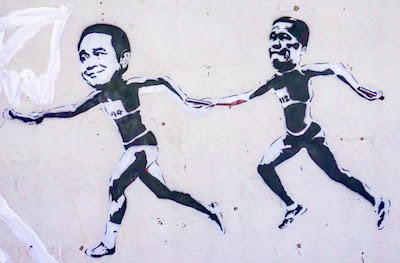
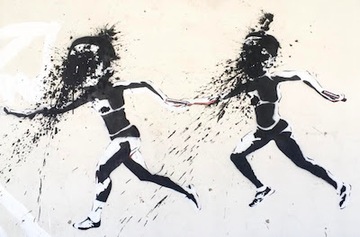
Some of the exhibition’s remaining works were self-censored. For example, Junta Connection (วิ่งผลัดเผด็จการ), a mural by the Guerrilla Boys, originally depicted Sarit Thanarat passing his (literal) baton of dictatorship to Prayut Chan-o-cha, though the work was later modified to obscure their faces.
Khon Kaen Manifesto ran from 6th to 26th October 2018 at the GF Building in Khon Kaen. (The theme for this inaugural event was Flashy Flashes No. 1.) Previous exhibitions in Thailand have also been censored for political reasons: photographs were removed from Rupture (หมายเหตุ ๕/๒๕๕๓) in 2010 and Whitewash (ไร้มลทิน) in 2017.
06 January 2019
2562++

Patipat Chaiwitesh’s taxidermy installation 2562++ is a dystopian commentary on the future consequences of plastic waste. He has posed various marine animals with disposable plastic products, to highlight the problem of water pollution. (2562 in the Buddhist calendar is equivalent to 2019.)
The installation is on show at the former offices of the East Asiatic Company, a colonial building now in a state of disrepair. It opened on 19th October last year, as part of the inaugural Bangkok Art Biennale (บางกอก อาร์ต เบียนนาเล่), and runs until 3rd February.
2019:
The Future


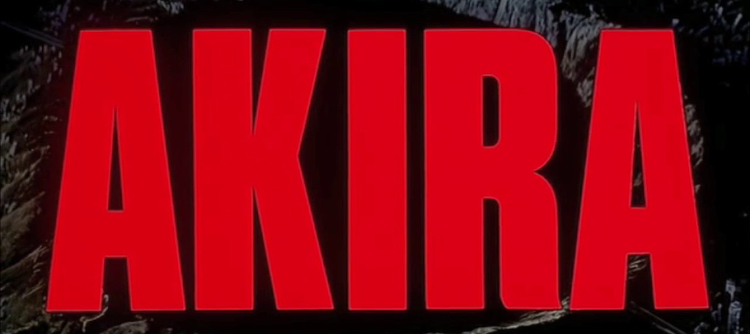
2019: The Future is the theme for this month’s Jam Ciné Club, at Jam in Bangkok, with screenings of dystopian science-fiction films set in a futuristic 2019. The season’s highlights are Katsuhiro Otomo’s Akira (アキラ) on 16th January and Ridley Scott’s Blade Runner on 30th January.
03 January 2019
Thai Film Archive

The Thai Film Archive at Salaya will be screening several films by Apichatpong Weerasethakul this month, to celebrate his recent FIAF Award. Uncle Boonmee Who Can Recall His Past Lives (ลุงบุญมีระลึกชาติ) will be screened on 5th January, Syndromes and a Century (แสงศตวรรษ) on 20th January, and Blissfully Yours (สุดเสน่หา) on 27th January. (Blissfully Yours will be shown in 35mm.) Next month’s highlights at the Archive include Pen-ek Ratanaruang’s documentary Paradoxocracy (ประชาธิป'ไทย) on 23rd February, and the portmanteau film Ten Years Thailand on 24th February.
GoodFellas
02 January 2019
The 12 Most Influential
Movies of All Time
Even accounting for the young target audience, three Disney titles (Snow White, Toy Story, and Frozen) - a quarter of the entire list - seems excessive. Also, there are no foreign-language entries. An appendix lists five additional films: Titanic (the James Cameron version), the Lord of the Rings trilogy, Avatar, and two more Disney titles (Who Framed Roger Rabbit and The Little Mermaid). The bibliography has just two entries: 1001 Movies You Must See Before You Die and (surprise, surprise) a Disney book.
Again, this is a children's book, so we shouldn't expect a scholarly tome, though there are plenty of factual errors. The Great Train Robbery has fourteen scenes, not "14 separate shots." Snow White was not "the first full-length animated movie." The Wizard of Oz's prologue is sepia, not "black-and-white film." Citizen Kane is not a "movie with no special effects". Three prop sharks, not one, were used in the making of Jaws. The book's glossary also contains some mistakes: confusingly, it defines a 'shot' as "frames in a movie" and 'footage' as "a specific section of a movie's film."
The twelve influential movies are as follows:
- The Great Train Robbery
- King Kong
- Snow White and the Seven Dwarfs
- Gone with the Wind
- The Wizard of Oz
- Citizen Kane
- Singin' in the Rain
- Jaws
- Star Wars
- Jurassic Park
- Frozen