





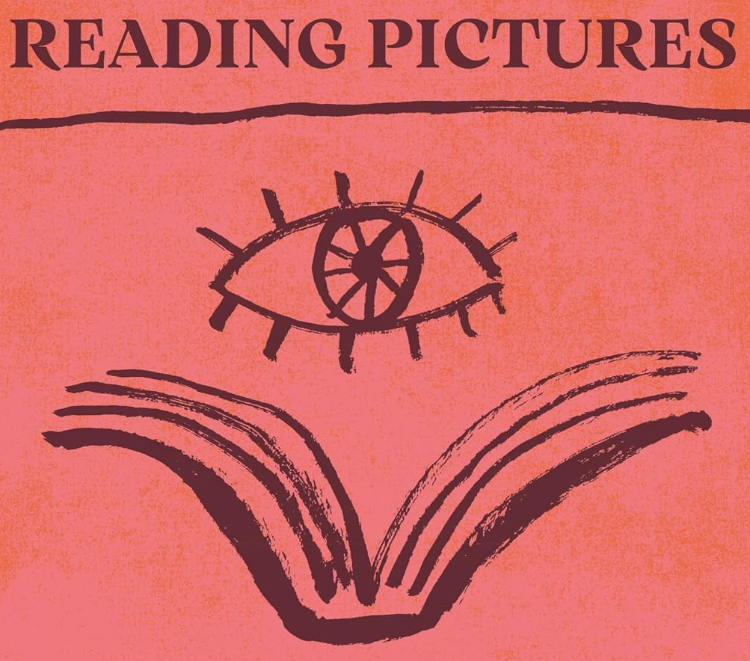
We live in an image-saturated culture, and Reading Pictures: A History of Illustration, by D.B. Dowd, shows how illustrations have been mass-produced and disseminated for more than 500 years. In his introduction, Dowd explains the book’s scope: “Reading Pictures is my attempt to tell a story of how printed images and texts developed, engaged, and sometimes manipulated audiences in North America, Europe, and East Asia from the early modern period to the present day, with greatest emphasis on the era of mass culture during the late nineteenth and twentieth centuries.”
The first half of the book covers the development of various printing techniques — woodblock printing in Asia, the invention of moveable type, and European etching and engraving — and the relationship between illustration and mass media: illustrated novels, satirical prints, lithographic advertising posters, newspapers, magazines, and comics. Later chapters are more thematic, focusing on the role of illustration in political propaganda, and the media’s formation of visual stereotypes about gender identities, childhood, and race.
The main emphasis is on Europe and America, though each chapter also includes coverage of illustration in China and Japan. Given the book’s stated focus on printed illustrations, there is no discussion of illuminated manuscripts. Illustration throughout the nineteenth century, and in the first half of the twentieth century, is covered in depth. (Fifty Years of Illustration, by Lawrence Zeegen and Caroline Roberts, is a more detailed guide to illustration since the 1960s.)
The first half of the book covers the development of various printing techniques — woodblock printing in Asia, the invention of moveable type, and European etching and engraving — and the relationship between illustration and mass media: illustrated novels, satirical prints, lithographic advertising posters, newspapers, magazines, and comics. Later chapters are more thematic, focusing on the role of illustration in political propaganda, and the media’s formation of visual stereotypes about gender identities, childhood, and race.
The main emphasis is on Europe and America, though each chapter also includes coverage of illustration in China and Japan. Given the book’s stated focus on printed illustrations, there is no discussion of illuminated manuscripts. Illustration throughout the nineteenth century, and in the first half of the twentieth century, is covered in depth. (Fifty Years of Illustration, by Lawrence Zeegen and Caroline Roberts, is a more detailed guide to illustration since the 1960s.)
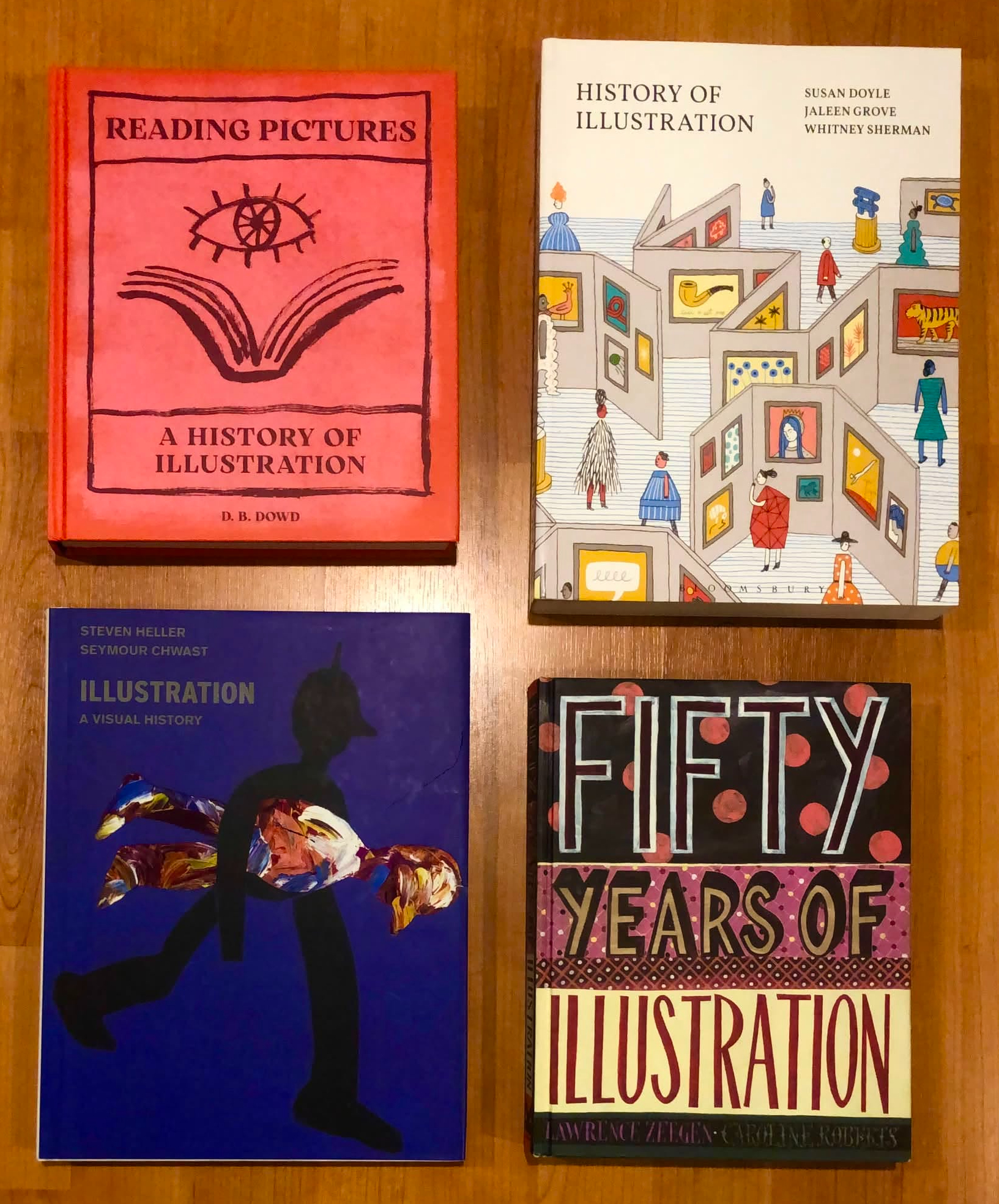
Reading Pictures is the third book to survey the history of illustration. Steven Heller and Seymour Chwast wrote a visual history of the subject in 2008, a concise introduction rather than an in-depth study. On the other hand, History of Illustration, published in 2018 and edited by Susan Doyle, remains the definitive work.
Doyle’s book is more global in its coverage than Dowd’s, with chapters on Indian, Latin American, African, and Islamic illustration. It also has more than twice as many images: 900, compared to Dowd’s still-impressive 400. Doyle’s more comprehensive book also finds space for histories of the major illustration genres — anatomy, natural history, and fashion — which are absent from Reading Pictures.
Doyle’s book is more global in its coverage than Dowd’s, with chapters on Indian, Latin American, African, and Islamic illustration. It also has more than twice as many images: 900, compared to Dowd’s still-impressive 400. Doyle’s more comprehensive book also finds space for histories of the major illustration genres — anatomy, natural history, and fashion — which are absent from Reading Pictures.