

29 May 2017
Cinema Explicito
The Attention Merchants

Wu is as critical of advertising as Packard, emphasising its detrimental impact on the commercial media and entertainment it sustains, from the penny press to prime-time broadcasting and clickbait: "The attention merchant had always tried to reach as broad an audience as possible, bombarding them with as many ads as they'd stand before going into total revolt." (Mark Tungate's Adland is a more favourable history of the advertising industry.)
25 May 2017
The 4th Silent Film Festival In Thailand


The Mark Of Zorro was directed by Fred Niblo, who also made the silent version of Ben-Hur. Starring Douglas Fairbanks, Zorro was one of the first adventure films featuring a swashbuckling hero. Fairbanks would play several similar characters in subsequent films throughout the 1920s (including Robin Hood, The Three Musketeers, The Thief Of Bagdad, and The Black Pirate), influencing Errol Flynn's performances in adventure films of the 1930s (Captain Blood and The Adventures Of Robin Hood).
The Festival opens on 8th June and closes on 14th June. The will be a photographic exhibition at Scala, Light & Shadow: Films Of The Weimar Republic, for the duration of the Festival.
24 May 2017
Bangkok Screening Room

Later this month, Bangkok Screening Room will be showing John Ford’s classic western, Stagecoach, the film that revived the Hollywood western and established many of the genre’s modern conventions. Orson Welles claimed that he watched Stagecoach every night for a month, while he was preparing to direct Citizen Kane, his first film. Citizen Kane, arguably the most influential film ever made, will be shown at Bangkok Screening Room next month.
Stagecoach will be shown on 30th and 31st May; and 1st, 2nd, 3rd, 4th, 7th, 9th, 10th, 11th, 14th, 15th, 17th, and 18th June. Citizen Kane will be screened on 6th, 7th, 8th, 9th, 10th, 11th, 15th, 16th, 17th, 18th, 20th, 21st, and 24th June.
Stagecoach will be shown on 30th and 31st May; and 1st, 2nd, 3rd, 4th, 7th, 9th, 10th, 11th, 14th, 15th, 17th, and 18th June. Citizen Kane will be screened on 6th, 7th, 8th, 9th, 10th, 11th, 15th, 16th, 17th, 18th, 20th, 21st, and 24th June.
23 May 2017
Woman's Day

The magazine quoted a high school classmate's description of Wilson: "Her name is – or was – Melanie Elizabeth Bownds, and she's 36 – she was born in 1979 and we left school in 1997." The article also included photographs of Wilson from her high school yearbook.
Wilson launched her lawsuit on 16th May last year, and the article was deleted from the Woman's Day website on the same day. In the magazine's print edition, the article was headlined "Just who is the REAL Rebel?"

22 May 2017
(Un) Happy Birthday


Participants were not permitted to use the words 'coup' or 'dictator', and they were not allowed to refer to the junta by name. The poster for the event was censored to remove the Thai abbreviation for the NCPO ("คสช"). To circumvent the restrictions, several speakers held up placards containing the banned words during their speeches.
Similarly, when an army spokesman participated in a discussion at the FCCT in Bangkok shortly after the coup, he asked participants to refer to the coup euphemistically as an "intervention". After initially pledging to hold an election in 2015, the junta has repeatedly delayed its 'roadmap', and an election is not realistically expected until 2018 or later.
21 May 2017
Thailand’s Political History:
From the 13th Century to Recent Times
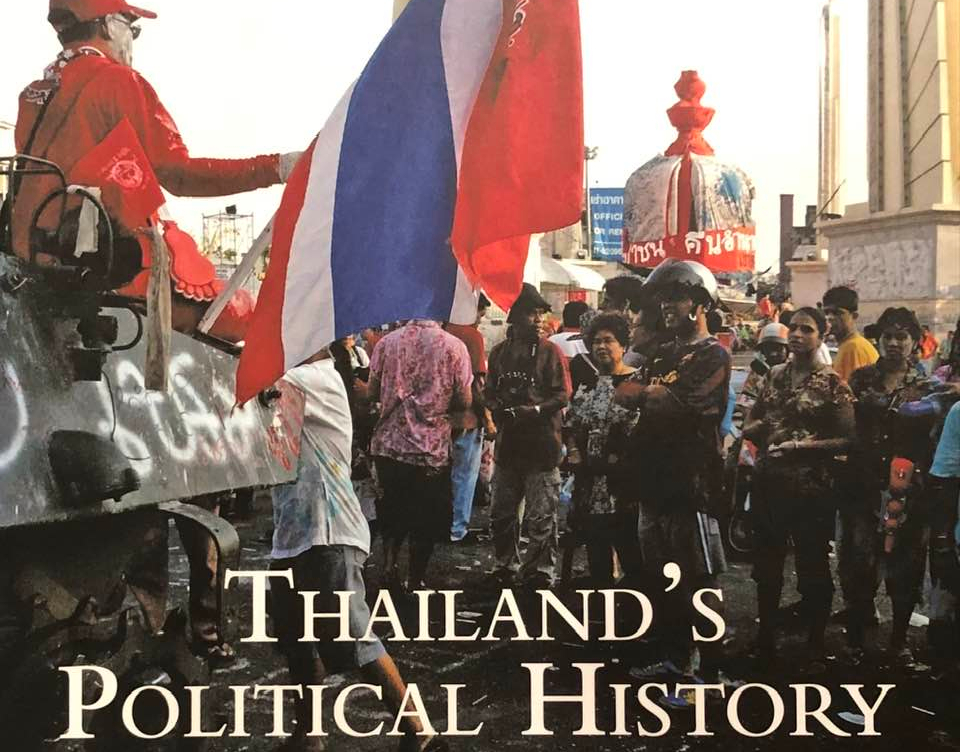
The second edition of Thailand’s Political History, by B.J. Terwiel, was published in 2011 with a new subtitle (From the 13th Century to Recent Times). This edition contains new chapters on Thailand’s political origins (the Sukhothai era) and contemporary events (the People’s Alliance for Democracy protests, the nullification of the 2006 election, the 2006 coup, the disqualification of Prime Minister Samak Sundaravej, the dissolutions Thai Rak Thai and the People Power Party, the United Front for Democracy Against Dictatorship riots, the red-shirt protests, and the 2010 military massacre).
Terwiel, who has been writing about Thai history for forty years, takes a refreshingly skeptical view of the nationalistic accounts of early Thai history, which he calls “national myths.” For example, he compares six different accounts of King Naresuan’s elephant duel. While the objective truth remains lost in the mists of time, recognising that these events are open to multiple interpretations is significant in itself: “It is doubtful whether anyone will unravel the details of this battle in a decisive way. Suffice to say that The Royal Chronicle version, which has had a monopoly in Thai history writing, is only one version among many.”
Terwiel, who has been writing about Thai history for forty years, takes a refreshingly skeptical view of the nationalistic accounts of early Thai history, which he calls “national myths.” For example, he compares six different accounts of King Naresuan’s elephant duel. While the objective truth remains lost in the mists of time, recognising that these events are open to multiple interpretations is significant in itself: “It is doubtful whether anyone will unravel the details of this battle in a decisive way. Suffice to say that The Royal Chronicle version, which has had a monopoly in Thai history writing, is only one version among many.”
16 May 2017
The Nation
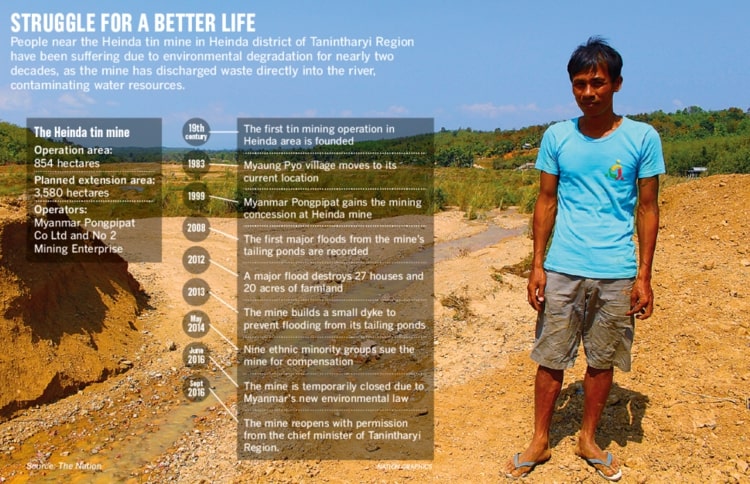
Myanmar Pongpipat, a Thai mining company, has filed a defamation lawsuit against The Nation and one of its journalists, Pratch Rujivanarom. The newspaper published an article by Pratch on 1st March (headlined “Thai mine ‘destroyed Myanmar water sources’”), quoting local residents who claim that the company’s Heinda tin mine has polluted the Myaung Pyo River in Myanmar.
The article appeared to endorse the claims, which it presented as facts rather than allegations: “Tailings from the mine have drained directly into the river for many years, clogging it with a large amount of sediment and contaminating the village’s water sources with heavy metals from the mine.” Also, it didn’t include a statement from the mining company, and there is no indication that the journalist even contacted the company before publication.
The Bangkok Post newspaper’s Spectrum supplement ran a cover story on the mine on 19th March. The Spectrum article also quoted residents complaining about the mine’s impact, though unlike The Nation it distanced itself from the claims, treating them as allegations rather than facts. Also in contrast to The Nation, Spectrum included a lengthy statement from the MPC managing director, who “rejected accusations that the company had caused the water contamination.”
The company’s lawsuit against Pratch and The Nation accuses them of defamation and violation of the Computer Crime Act, as the article was also published on the newspaper’s website. (Defamation, like lèse-majesté, is a criminal offence in Thailand.) Last year, the Tungkum mining company lost a defamation case against Thai PBS for reporting that a mine had caused water pollution in Loei, Thailand.
The article appeared to endorse the claims, which it presented as facts rather than allegations: “Tailings from the mine have drained directly into the river for many years, clogging it with a large amount of sediment and contaminating the village’s water sources with heavy metals from the mine.” Also, it didn’t include a statement from the mining company, and there is no indication that the journalist even contacted the company before publication.
The Bangkok Post newspaper’s Spectrum supplement ran a cover story on the mine on 19th March. The Spectrum article also quoted residents complaining about the mine’s impact, though unlike The Nation it distanced itself from the claims, treating them as allegations rather than facts. Also in contrast to The Nation, Spectrum included a lengthy statement from the MPC managing director, who “rejected accusations that the company had caused the water contamination.”
The company’s lawsuit against Pratch and The Nation accuses them of defamation and violation of the Computer Crime Act, as the article was also published on the newspaper’s website. (Defamation, like lèse-majesté, is a criminal offence in Thailand.) Last year, the Tungkum mining company lost a defamation case against Thai PBS for reporting that a mine had caused water pollution in Loei, Thailand.

14 May 2017
Alien: Covenant

Covenant's action takes place several years before Alien's storyline, though Alien really needs to be seen first, not for narrative reasons but to fully appreciate the original 'chestburster' sequence. In that respect, Prometheus and Covenant are similar to the (inferior) Star Wars prequels: they provide convoluted and largely unnecessary backstories, they depict 'older' worlds that paradoxically seem more advanced, and they disclose the plot twists in the earlier films.
Covenant's final revelation, involving Michael Fassbender's two characters, was far too predictable. (Revealing it to the audience sooner would have led to more Hitchcockian suspense.) Covenant benefits from Scott's typically superb production design and cinematography, though ultimately it's Alien without the tension or (Fassbender excluded) the depth of character.
12 May 2017
Are We There Yet?


08 May 2017
The Art Of The Hollywood Backdrop

Whereas theatrical backdrops are often stylised, cinematic backings are (like matte paintings) designed to deceive the audience: to create a realistic 2D simulation of a 3D environment. As the authors explain, "backings created for the movies of Hollywood were rarely recognized for what they were - nor was that their purpose. These special effect backings, the largest paintings ever created, were breathtaking in their artistic and technical virtuosity."
Aside from double-page photographs of Georges Melies and Fritz Lang, The Art Of The Hollywood Backdrop is devoted entirely to films from the American studio system. A 100-page introduction traces the history of the Hollywood backdrop, and subsequent chapters profile individual backdrop artists. This is a substantial and comprehensive book, lavishly presented in a slipcase. It has 300 illustrations, many of which are stunning full-page photographs (though twenty-eight pages on Lemony Snicket's A Series Of Unfortunate Events is perhaps excessive).
07 May 2017
Puppetry: A World History

Blumenthal writes in her preface: "Puppetry: A World History encompasses all kinds of constructed actors and performing objects from all times and all places. Given this gigantic scope, the default methodology would have been to sort the material by genre, time, or place - particularly since no other existing study does that job." She argues, however, that the shared functions and aesthetics of puppetry around the world lend themselves to a thematic survey rather than a chronological history.
The Meaning Of Life
Irish police have announced that they are investigating a complaint of blasphemy in relation to comments made by Stephen Fry in a television interview. The interview, for an episode of The Meaning Of Life, was broadcast by RTE One on 1st February 2015.
In the programme, presenter Gay Byrne asked Fry what he would say to God if there was an afterlife. Fry, who has been a life-long atheist, didn't mince his words: “I’ll say, ‘Bone cancer in Children? What’s that about? How dare you! How dare you create a world in which there is such misery that is not our fault. It’s not right, it’s utterly, utterly evil. Why should I respect a capricious, mean-minded, stupid God who creates a world which is so full of injustice and pain?’”
Irish law states that anyone who intentionally “publishes or utters blasphemous matter” is guilty of criminal defamation. The 2009 Defamation Act defines “blasphemous matter” as “grossly abusive or insulting in relation to matters held sacred by any religion, thereby causing outrage among a substantial number of the adherents of that religion,” though there are exemptions for content of “literary, artistic, political, scientific, or academic value”.
In the programme, presenter Gay Byrne asked Fry what he would say to God if there was an afterlife. Fry, who has been a life-long atheist, didn't mince his words: “I’ll say, ‘Bone cancer in Children? What’s that about? How dare you! How dare you create a world in which there is such misery that is not our fault. It’s not right, it’s utterly, utterly evil. Why should I respect a capricious, mean-minded, stupid God who creates a world which is so full of injustice and pain?’”
Irish law states that anyone who intentionally “publishes or utters blasphemous matter” is guilty of criminal defamation. The 2009 Defamation Act defines “blasphemous matter” as “grossly abusive or insulting in relation to matters held sacred by any religion, thereby causing outrage among a substantial number of the adherents of that religion,” though there are exemptions for content of “literary, artistic, political, scientific, or academic value”.
04 May 2017
“Delete the picture...”
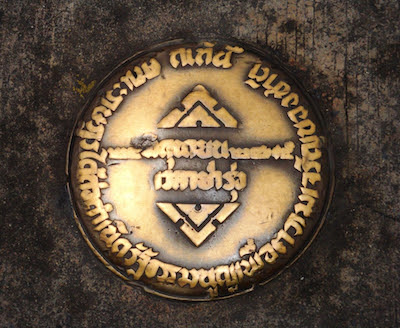
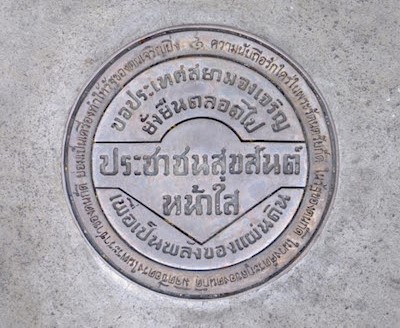
A commemorative plaque has been removed from its position in Bangkok’s Royal Plaza. The brass plaque commemorated Thailand’s transition from absolute to constitutional monarchy in 1932, and was a symbol of the country’s democratic revolution. It has now been replaced by a new plaque with an inscription promoting prosperity and happiness.
The original plaque was installed in 1936, next to a statue of King Rama V. Apart from a hiatus from 1960 to 1963, it had remained in place until approximately one month ago, when it was removed by persons unknown. The plaque’s current whereabouts, and the reason for its replacement, have not been revealed. According to the Bangkok Metropolitan Authority, CCTV cameras in the area were not operational when the plaque was removed.
Early last month, the plaque’s removal generated plenty of critical comments on social media. However, that debate has since died down, as the military government has discouraged any commentary on the issue. A panel discussion on the subject, which had been due to take place at the Foreign Correspondents’ Club of Thailand last night, was cancelled by the police.
Even a month after the replacement, a policeman still stands guard near the new plaque, to prevent photography. Today, the police officer was friendly, yet insistent: “You can delete? Delete. Delete. Delete! Delete the picture! OK, you delete.”
The original plaque was installed in 1936, next to a statue of King Rama V. Apart from a hiatus from 1960 to 1963, it had remained in place until approximately one month ago, when it was removed by persons unknown. The plaque’s current whereabouts, and the reason for its replacement, have not been revealed. According to the Bangkok Metropolitan Authority, CCTV cameras in the area were not operational when the plaque was removed.
Early last month, the plaque’s removal generated plenty of critical comments on social media. However, that debate has since died down, as the military government has discouraged any commentary on the issue. A panel discussion on the subject, which had been due to take place at the Foreign Correspondents’ Club of Thailand last night, was cancelled by the police.
Even a month after the replacement, a policeman still stands guard near the new plaque, to prevent photography. Today, the police officer was friendly, yet insistent: “You can delete? Delete. Delete. Delete! Delete the picture! OK, you delete.”
02 May 2017
German Film Week 2017


01 May 2017
Veep

C**tgate (a pun on Watergate) was broadcast by HBO on 29th May 2016. It was co-written by Will Smith, who presented The C Word (2007), a documentary about the word 'cunt'. In the DVD audio commentary for the episode, director Brad Hall says: "I have a feeling this particular episode is going to set a record for the amount of times the word 'cunt' has been said in an audio commentary!"
The plot of the episode, with Meyer trying to identify the person who called her a cunt, is similar to an episode of 30 Rock (2007), in which the main character overheard one of her staff calling her the same word. Iannucci's UK series The Thick Of It (2005) also included a similar plot device in one episode, with an investigation into which staff-member called another a cunt in an email.