

28 November 2009
Metro
27 November 2009
Story Of The Eye

Story Of The Eye is at Gossip Gallery, Bangkok, from 12th November until 12th December. (The anthology film L'Erotisme was also inspired by Bataille.)
23 November 2009
Napoleon:
The Greatest Movie Never Made

Napoleon: The Greatest Movie Never Made, edited by Alison Castle, is a collection of ten volumes (Reference, Script, Production, Notes, Correspondence, Chronology, Text, Costumes, Location Scouting, and Picture File), and a poster, packaged inside an enormous, hollow book. It’s outrageously expensive and extremely heavy (10kg), and is limited to 1,000 numbered copies.
Stanley Kubrick started planning a proposed epic Napoleon Bonaparte biopic in 1968, and his research included collecting over 300 Napoleonic books (all of which are listed in Castle’s bibliography), a database of 17,000 images (of which Castle reproduces 6,000; the full database is online), and 25,000 biographical index cards (of which Castle reproduces 100). The project was ultimately cancelled, however, after the box-office failure of another Napoleon film, Waterloo.
Castle’s book, published by Taschen, features full reprints of Kubrick’s Napoleon treatment and screenplay, and two drafts of his production notes. Selections from his thousands of letters, notebooks, and costume photographs are also included. Lengthy conversations between Kubrick and historian Felix Markham are meticulously and comprehensively transcribed.
After Kubrick died, his archive materials were displayed in a temporary Stanley Kubrick exhibition, and the permanent Stanley Kubrick Archive was established. The exhibition catalogue, published in 2004, contains a chapter about Napoleon by Eva-Maria Magel, and Castle’s book The Stanley Kubrick Archives includes a Napoleon chapter by Gene D. Phillips.
Stanley Kubrick started planning a proposed epic Napoleon Bonaparte biopic in 1968, and his research included collecting over 300 Napoleonic books (all of which are listed in Castle’s bibliography), a database of 17,000 images (of which Castle reproduces 6,000; the full database is online), and 25,000 biographical index cards (of which Castle reproduces 100). The project was ultimately cancelled, however, after the box-office failure of another Napoleon film, Waterloo.
Castle’s book, published by Taschen, features full reprints of Kubrick’s Napoleon treatment and screenplay, and two drafts of his production notes. Selections from his thousands of letters, notebooks, and costume photographs are also included. Lengthy conversations between Kubrick and historian Felix Markham are meticulously and comprehensively transcribed.
After Kubrick died, his archive materials were displayed in a temporary Stanley Kubrick exhibition, and the permanent Stanley Kubrick Archive was established. The exhibition catalogue, published in 2004, contains a chapter about Napoleon by Eva-Maria Magel, and Castle’s book The Stanley Kubrick Archives includes a Napoleon chapter by Gene D. Phillips.
18 November 2009
The September Issue

The film basically confirms our perceptions of Wintour (her instant dismissals of clothes, photos, or comments she doesn't like), though more surprising are the supporting cast of Vogue's editorial staff. The likable, hippyish, down-to-earth Grace Coddington clomps around the office, and has Wintour's fashion instincts plus humour and sensitivity. In contrast, Andre Leon Talley is almost a caricature; with his ridiculous capes and designer towels, he looks like a huge, spangly potato.
16 November 2009
Reincarnate
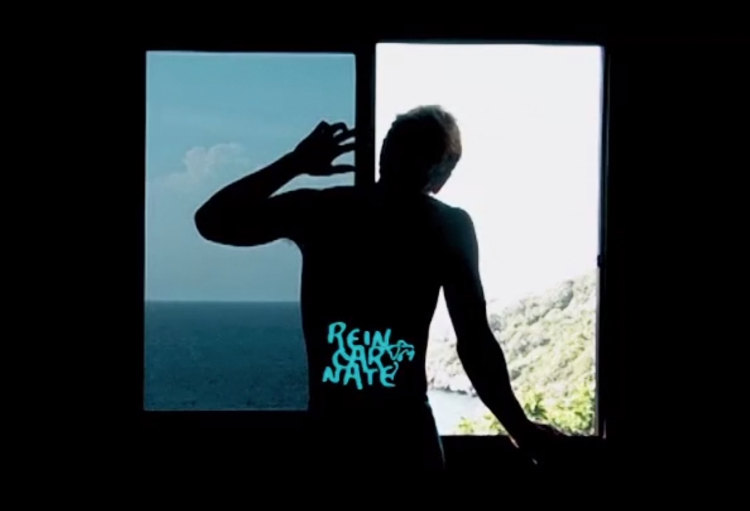
Thunska Pansittivorakul’s new film, Reincarnate (จุติ), is a fictionalised portrait of Thunska and his leading actor, Panuwat Wisessiri. Panuwat discusses the filming process with Thunska, while never breaking character, thus blurring the boundary between behind-the-scenes footage and the scenes themselves. The camera films Panuwat’s body as he sleeps, showers, and relaxes.
Thunska and Panuwat play Jenga, with the red, yellow, and blue blocks symbolising the various political groups in Thailand. (Supporters of Thaksin Shinawatra wear red shirts; their antagonists, who support the current government, wear blue shirts; anti-Thaksin monarchists wear yellow shirts.) Thunska’s film This Area Is Under Quarantine (บริเวณนี้อยู่ภายใต้การกักกัน) was more overtly political, though it was consequently banned. (His earlier films were screened at a retrospective in 2008.)
Reincarnate is arguably Thunska’s most explicit film, with a brief sequence (featuring Tharapong Buasai) which is visually similar to, and even more graphic than, his short documentary Unseen Bangkok (มหัศจรรย์กรุงเทพ). In both films, the same camera angle is used, foregrounding a particular part of the anatomy, which the director can’t resist touching. Reincarnate was intended partly as a protest against the 2009 Thai cinema ratings system, which prohibits frontal nudity amongst many other taboos; unsurprisingly, the film has not been submitted to the national ratings board.
There are some beautiful images in the film, such as Panuwat, in silhouette, framed by an open window. The film’s ending, in which Panuwat describes giving birth to a daughter, who then entices his spirit to leave his body, is deliberately ambiguous, and tonally similar to the work of Apichatpong Weerasethakul, who was a co-producer of Reincarnate.
Thunska and Panuwat play Jenga, with the red, yellow, and blue blocks symbolising the various political groups in Thailand. (Supporters of Thaksin Shinawatra wear red shirts; their antagonists, who support the current government, wear blue shirts; anti-Thaksin monarchists wear yellow shirts.) Thunska’s film This Area Is Under Quarantine (บริเวณนี้อยู่ภายใต้การกักกัน) was more overtly political, though it was consequently banned. (His earlier films were screened at a retrospective in 2008.)
Reincarnate is arguably Thunska’s most explicit film, with a brief sequence (featuring Tharapong Buasai) which is visually similar to, and even more graphic than, his short documentary Unseen Bangkok (มหัศจรรย์กรุงเทพ). In both films, the same camera angle is used, foregrounding a particular part of the anatomy, which the director can’t resist touching. Reincarnate was intended partly as a protest against the 2009 Thai cinema ratings system, which prohibits frontal nudity amongst many other taboos; unsurprisingly, the film has not been submitted to the national ratings board.
There are some beautiful images in the film, such as Panuwat, in silhouette, framed by an open window. The film’s ending, in which Panuwat describes giving birth to a daughter, who then entices his spirit to leave his body, is deliberately ambiguous, and tonally similar to the work of Apichatpong Weerasethakul, who was a co-producer of Reincarnate.
15 November 2009
7th World Film Festival of Bangkok
The 7th World Film Festival of Bangkok (เทศกาลภาพยนตร์โลกแห่งกรุงเทพฯ ครั้งที่ 7) finished today, after opening on 3rd November. All screenings took place at Paragon Cineplex (the same as the 6th Festival, whereas the 5th was held at Esplanade Cineplex).
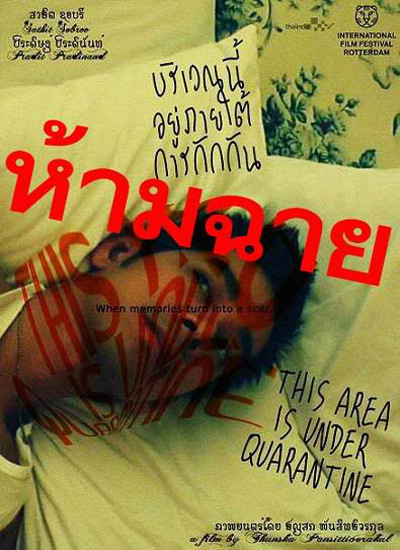
A Letter To Uncle Boonmee (จดหมายถึงลุงบุญมี), part of Apichatpong Weerasethakul’s Primitive project, was screened on 9th and 15th November. Unfortunately, This Area Is Under Quarantine (บริเวณนี้อยู่ภายใต้การกักกัน), by Thunska Pansittivorakul, was not shown, after the Ministry of Culture refused to give it a rating. The documentary contains footage of the 2004 Tak Bai incident, taken from a VCD distributed by Same Sky (ฟ้าเดียวกัน) magazine.
A Letter To Uncle Boonmee (จดหมายถึงลุงบุญมี), part of Apichatpong Weerasethakul’s Primitive project, was screened on 9th and 15th November. Unfortunately, This Area Is Under Quarantine (บริเวณนี้อยู่ภายใต้การกักกัน), by Thunska Pansittivorakul, was not shown, after the Ministry of Culture refused to give it a rating. The documentary contains footage of the 2004 Tak Bai incident, taken from a VCD distributed by Same Sky (ฟ้าเดียวกัน) magazine.
09 November 2009
Controverses

One of the most powerful photographs is a picture of a severed hand, from a victim of the World Trade Center terrorist attack. The image (2001), by Todd Maisel, was published by only a single newspaper (New York's Daily News), while other American papers made a collective decision to avoid printing photographs of the victims. (Similarly, during World War II there was an American government ban on publication of images of dead US soldiers, though Life magazine was finally permitted to print George Strock’s photograph of three dead soldiers on 20th September 1943.)
The two Iraq wars have produced similarly controversial images (not included in the book). A photo by Ken Jarecke of an Iraqi soldier's charred body was rejected by all newspapers except The Observer (which printed it on 10th March 1991), and "a gruesome image of a young child's head split open" was the subject of much debate in the UK media before finally being printed by The Guardian (on 28th March 2003).
Arguably the most shocking picture is Kevin Carter's photograph (1993) of a vulture following a starving Sudanese child. After taking the photograph, Carter shooed the potential scavenger away, though he was later criticised for not helping the child any further.
The book includes some famously provocative images, such as Oliviero Toscani's Benetton poster showing a nun kissing a priest (1992) and Andres Serrano's Piss Christ (1987). A Robert Mapplethorpe self-portrait (1978) is included, though it's one of Mapplethorpe's less graphic images.
Several controversial photographs of naked children are featured, including a sexualised portrait by Irina Ionesco (1970) of her daughter Eva, and notorious images by Graham Ovenden (1984) and Jock Sturges (1989). Annelies Strba's Sonja In Her Bath (1985) and a portrait of Brooke Shields by Gary Gross (1975), both of which have been removed by the police from UK galleries, are also included. Nan Goldin's "Klara and Adda Belly Dancing" [sic] is mentioned though not reproduced.
A paparazzo photo of Princess Diana taken by Jacques Langevin in the moments before her car crash (1997) is included. The infamous photo of Diana receiving first aid after the crash is mentioned in the text without being reproduced.
03 November 2009
Suicide Mind


For his new exhibition Suicide Mind, Pornprasert Yamazaki has painted in his own blood on paper and ceramics. His works on paper, large reproductions of Thai and American banknotes, are hung on the walls, while on the floor are ceramic tiles painted with flower patterns. In the centre stands a vase of dead roses on a stone plinth.
Suicide Mind opened at Whitespace Gallery in Bangkok on 23rd October, and will close on 6th December. The exhibition also includes a video showing Pornprasert extracting blood from his arm via a syringe.
02 November 2009
European Union Film Festival 2009


The 2007 festival also featured an outstanding Romanian film, Four Months, Three Weeks, & Two Days. Both of these films have also been screened at Chulalongkorn University's International Film Festival: Four Months, Three Weeks, & Two Days in 2008, and California Dreamin' at the 2008-2009 event.
01 November 2009
ภาพยนตร์ศรีศาลายา


Art & Words
