





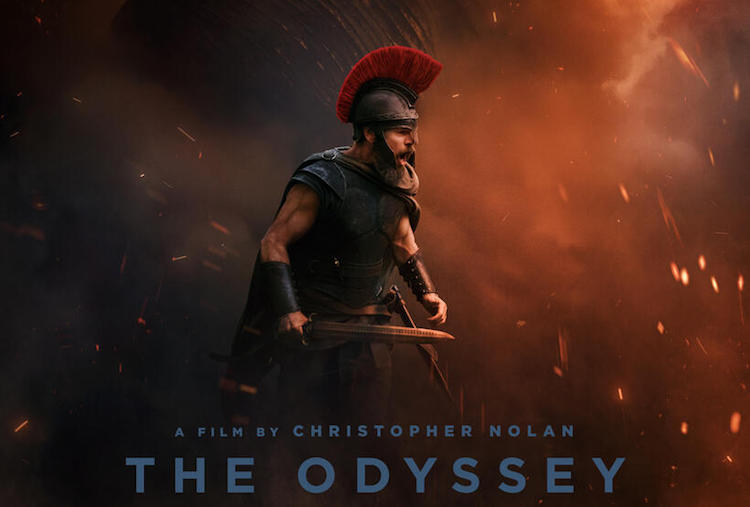
Christopher Nolan’s epic The Odyssey is the first film to be shot
entirely on IMAX 70mm film. With
The Dark Knight in 2008, Nolan
became the first Hollywood director to shoot selected action scenes in the
format, and he has done so ever since, with
The Dark Knight Rises, Interstellar, Dunkirk, Tenet, and Oppenheimer.
Other filmmakers have also used IMAX 70mm cameras for selected sequences, following Nolan’s lead, but the technology was always considered too noisy for dialogue scenes. IMAX created a large sound-proof blimp for The Odyssey, making it possible to use the large-format camera for the entire film.
Thailand’s first IMAX 70mm cinema, at Major Cineplex Ratchayothin in Bangkok, opened in 1998. The slightly larger Krungsri IMAX screen at Bangkok’s Siam Paragon opened in 2006, and both venues showed The Dark Knight in IMAX 70mm. (Ratchayothin and Paragon are the only Thai cinemas with true IMAX-format 1.43:1 screens.)
Ratchayothin converted to digital laser projection in 2010, though the Paragon cinema screened The Dark Knight Rises, Interstellar, and Dunkirk in IMAX 70mm. But Paragon’s 70mm projector repeatedly broke down during screenings of Tenet in 2020, and it has now been replaced with a digital laser projector.
The Ratchayothin and Paragon laser systems each use a single projector — the IMAX CoLa format — meaning that they are only capable of projecting a 1.9:1 aspect ratio image (almost identical to the 1.85:1 ratio of regular cinema screens). To fill the entire 1.43:1 IMAX screen, 70mm or dual-laser GT projectors are required.
Also, CoLa produces a 4k image, which is now the same resolution as many conventional cinemas. Dual-laser IMAX GT also has a 4k resolution, significantly less than the unsurpassed image quality of IMAX 70mm.
Thailand’s other IMAX venues use either the CoLa system or the similar XT single-laser format (which is also 4k), and have smaller 1.9:1 screens. This IMAX-lite setup is known informally as ‘LieMAX’, as it differs so much from the original 1.43:1 IMAX format.
Other filmmakers have also used IMAX 70mm cameras for selected sequences, following Nolan’s lead, but the technology was always considered too noisy for dialogue scenes. IMAX created a large sound-proof blimp for The Odyssey, making it possible to use the large-format camera for the entire film.
Thailand’s first IMAX 70mm cinema, at Major Cineplex Ratchayothin in Bangkok, opened in 1998. The slightly larger Krungsri IMAX screen at Bangkok’s Siam Paragon opened in 2006, and both venues showed The Dark Knight in IMAX 70mm. (Ratchayothin and Paragon are the only Thai cinemas with true IMAX-format 1.43:1 screens.)
Ratchayothin converted to digital laser projection in 2010, though the Paragon cinema screened The Dark Knight Rises, Interstellar, and Dunkirk in IMAX 70mm. But Paragon’s 70mm projector repeatedly broke down during screenings of Tenet in 2020, and it has now been replaced with a digital laser projector.
The Ratchayothin and Paragon laser systems each use a single projector — the IMAX CoLa format — meaning that they are only capable of projecting a 1.9:1 aspect ratio image (almost identical to the 1.85:1 ratio of regular cinema screens). To fill the entire 1.43:1 IMAX screen, 70mm or dual-laser GT projectors are required.
Also, CoLa produces a 4k image, which is now the same resolution as many conventional cinemas. Dual-laser IMAX GT also has a 4k resolution, significantly less than the unsurpassed image quality of IMAX 70mm.
Thailand’s other IMAX venues use either the CoLa system or the similar XT single-laser format (which is also 4k), and have smaller 1.9:1 screens. This IMAX-lite setup is known informally as ‘LieMAX’, as it differs so much from the original 1.43:1 IMAX format.