31 March 2012
Sun City & Other Stories
14 March 2012
MDNA
The album is surprisingly aggressive (Gang Bang) and confessional (I Fucked Up), though it also contains some pure dance tracks, such as the catchy Turn Up The Radio and Love Spent. Masterpiece is a ballad with a weak first line ("If you were the Mona Lisa, you'd be hanging in the Louvre"). Superstar, like the earlier non-album track Superpop, references some of Madonna's heroes ("You're like Brando on the silver screen").
Several songs - notably I Don't Give A and Best Friend - refer directly to her failed marriage, recalling Till Death Do Us Part on her earlier Like A Prayer album. In another link with Like A Prayer, there are numerous references to Catholicism: Girl Gone Wild begins with a confession, and I'm A Sinner includes a list of saints. MDNA represents a real return to form, with the insubstantial B-Day song being its only weak track.
The double-disc track-list is: Girl Gone Wild, Gang Bang, I'm Addicted, Turn Up The Radio, Give Me All Your Luvin', Some Girls, Superstar, I Don't Give A, I'm A Sinner, Love Spent, Masterpiece, Falling Free, Beautiful Killer, I Fucked Up, B-Day Song, and Best Friend. A single-disc version, containing fewer tracks, is also available, and both versions are also available in non-explicit editions.
12 March 2012
100 Ideas That Changed Film
It's refreshing to see film-theory concepts like mise-en-scene, and structural elements such as flashbacks, given equal coverage alongside more mainstream entries. This will hopefully promote an awareness of film grammar (close-ups, zooms, continuity editing, etc.) and the historical development of the medium. Conversely, the chapters on major topics such as film noir are inevitably condensed.
The book, with its extensive and well-chosen illustrations, provides a practical and accessible introduction to film studies. It's a useful supplement to film-history surveys such as Cinema: The Whole Story and film-analysis primers like How To Read A Film.
11 March 2012
La fête 2012

This year’s La fête arts festival runs from 2nd February until 29th March, at various venues around Bangkok including Alliance Française. A highlight of last year’s festival, Museum Siam’s Cinema Picnic by Moonlight (Cinéma pique-nique au clair de lune), returned on Valentine’s Day with an outdoor screening of the Georges Méliès classic A Trip to the Moon (Le voyage dans la lune).
A Trip to the Moon, silent cinema’s first masterpiece, was presented in 35mm, in a hand-coloured version discovered and restored last year. The film has been shown in Bangkok before, on DVD at the 5th World Film Festival, though last month’s screening was in 35mm.
05 March 2012
Top Gear
The defamation case brought by Elon Musk’s Tesla motor company against the BBC2 series Top Gear has ended, after Tesla lost its appeal today. Tesla had sued the BBC last year for libel and malicious falsehood after Top Gear reviewed the Tesla Roadster electric sports car.
According to Tesla’s specifications, the Roadster has a driving range of over 200 miles when fully charged, though Top Gear claimed that it would only achieve 55 miles under track conditions. The show was broadcast on 14th December 2008, and is included on DVDs of the twelfth Top Gear series released in Australia and the US.
Tesla filed its lawsuit on 29th March last year. The libel case was dismissed on 19th October 2011, and the malicious falsehood case collapsed on 23rd February.
According to Tesla’s specifications, the Roadster has a driving range of over 200 miles when fully charged, though Top Gear claimed that it would only achieve 55 miles under track conditions. The show was broadcast on 14th December 2008, and is included on DVDs of the twelfth Top Gear series released in Australia and the US.
Tesla filed its lawsuit on 29th March last year. The libel case was dismissed on 19th October 2011, and the malicious falsehood case collapsed on 23rd February.
02 March 2012
Boadwalk Empire

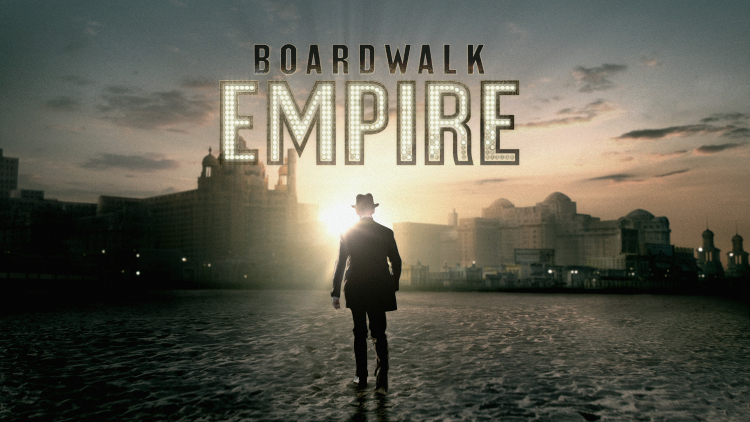
The premiere episode of Boardwalk Empire’s first season was originally broadcast by HBO on 19th September 2010. The episode was directed by Martin Scorsese, and is perhaps the most expensive TV show ever produced.
Boardwalk Empire (the title of the premiere episode and the series) is a historical crime drama set in Atlantic City, New Jersey, during the introduction of prohibition. At that time, Atlantic City was noted for its casinos and organised crime — a reputation that would later be inherited by Las Vegas, as portrayed in Scorsese’s film Casino. Thus, Scorsese is in familiar territory, having directed gangster films such as GoodFellas and The Departed.
In fact, the episode contains potentially self-referential plot points, such as a casino owner dealing with an unwanted customer (as in Casino) and a gangster’s well-educated crew-member being an FBI informant (as in The Departed). A brief montage at a police training centre looks remarkably similar to the FBI training sequence in The Departed. There is even a moment of arguable self-parody, with a boxing match between two dwarves (surely evoking Scorsese’s masterpiece Raging Bull).
In the past decade, HBO has led a renaissance of creativity in American television drama, a welcome contrast to the prevalence of trashy ‘reality TV’. Boadwalk Empire is the latest in a long list of acclaimed HBO shows, including The Sopranos (inspired by GoodFellas), The Wire, Oz, Deadwood, Sex and the City, Curb Your Enthusiasm, and Six Feet Under. Being an HBO production, the series is not subject to the restrictions imposed on network television, thus it contains the strong language and flashes of extreme violence associated with Scorsese’s films. Another of his directorial trademarks, the freeze-frame (as in GoodFellas), is also present.
Scorsese has previously directed documentaries for television, such as A Personal Journey Through American Movies, though Boardwalk Empire is his first TV drama. Alfred Hitchcock also ventured into television drama, with Alfred Hitchcock Presents; similarly, Hitchcock and Scorsese have also both added prestige to 3D cinema: Hitchcock with Dial M for Murder, and Scorsese with Hugo.
Boardwalk Empire (the title of the premiere episode and the series) is a historical crime drama set in Atlantic City, New Jersey, during the introduction of prohibition. At that time, Atlantic City was noted for its casinos and organised crime — a reputation that would later be inherited by Las Vegas, as portrayed in Scorsese’s film Casino. Thus, Scorsese is in familiar territory, having directed gangster films such as GoodFellas and The Departed.
In fact, the episode contains potentially self-referential plot points, such as a casino owner dealing with an unwanted customer (as in Casino) and a gangster’s well-educated crew-member being an FBI informant (as in The Departed). A brief montage at a police training centre looks remarkably similar to the FBI training sequence in The Departed. There is even a moment of arguable self-parody, with a boxing match between two dwarves (surely evoking Scorsese’s masterpiece Raging Bull).
In the past decade, HBO has led a renaissance of creativity in American television drama, a welcome contrast to the prevalence of trashy ‘reality TV’. Boadwalk Empire is the latest in a long list of acclaimed HBO shows, including The Sopranos (inspired by GoodFellas), The Wire, Oz, Deadwood, Sex and the City, Curb Your Enthusiasm, and Six Feet Under. Being an HBO production, the series is not subject to the restrictions imposed on network television, thus it contains the strong language and flashes of extreme violence associated with Scorsese’s films. Another of his directorial trademarks, the freeze-frame (as in GoodFellas), is also present.
Scorsese has previously directed documentaries for television, such as A Personal Journey Through American Movies, though Boardwalk Empire is his first TV drama. Alfred Hitchcock also ventured into television drama, with Alfred Hitchcock Presents; similarly, Hitchcock and Scorsese have also both added prestige to 3D cinema: Hitchcock with Dial M for Murder, and Scorsese with Hugo.