


31 July 2007
Love & Money
30 July 2007
"VOTE NO"

A 'yes' majority would lead to the adoption of the new constitution, though what would happen in the eventuality of a 'no' vote has not been made clear. There have been hints that, if the new constitution were rejected, the 1997 version would be reinstated, but Sonthi Boonyaratglin refuses to confirm exactly which previous constitution would be resurrected if the new one were rejected.
A 'yes' vote is also being promoted by the Constitution Drafting Assembly as a vote for a quick election. However, Sonthi promised to hold elections this year anyway, regardless of the referendum result. While the CDA is distributing propaganda, "VOTE NO" campaign posters (with illustrations by Pracha Suveeranont) have been seized and taxi drivers are being fined ฿1,000 for displaying anti-constitution stickers.
The proposed new constitution includes an amnesty for the coup leaders. This alone is reason enough to reject it.
28 July 2007
Eternal Sunshine Of The Spotless Mind

Much of the film takes place inside Joel's head, as he fights to preserve the memory of Clementine before Lacuna can wipe it. The script, by Charlie Kaufman is, in this respect, similar to Kaufman's script for Being John Malkovich, which takes place largely inside Malkovich's head. Memory deletion is a science-fiction concept, though Eternal Sunshine could not really be described as a sci-fi film. The concept was used to disturbing effect at the end of OldBoy, though it was pioneered by novelist Philip K Dick.
Eternal Sunshine Of The Spotless Mind (directed by Michel Gondry) is one of a small group of films (alongside Memento, Fight Club, and others) singled out by David Bordwell for their narrative complexity. It shares with Pulp Fiction a non-linear narrative structure in which the time-frame jumps back-and-forth and key sequences are repeated. (Babel and The Fountain also employ these devices, though less successfully.)
Although Joel and Clementine both delete their memories of each other, they cannot control fate, so they are destined to meet each other again and fall back in love. Kaufman originally intended the film's ending to imply that the characters were locked in a cycle of meeting, separating, erasing, and meeting again. To me, though, it feels more optimistic, because although they recognise each other's faults (listening to Lacuna session tapes, recalling 'the list' in Friends), they are meant to be together.
2007 Bangkok International Film Festival
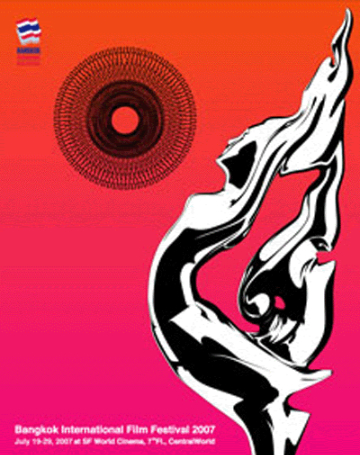
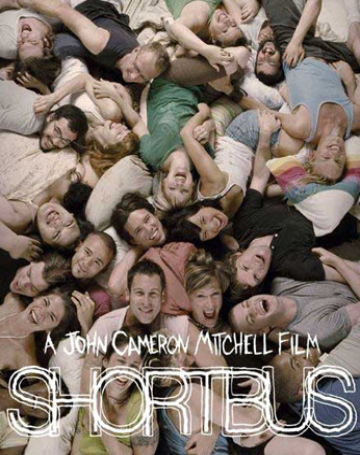
This year’s Bangkok International Film Festival finishes today. (It opened on 19th July at CentralWorld’s SF World cinema.) Today’s screenings include the graphic Shortbus (which would surely be cut if it was shown outside the festival) and Luis Buñuel’s scandalous Un chien andalou (showing as part of a Buñuel’s retrospective).
The festival was originally scheduled for February, and then postponed. The entire management team has been replaced, following extensive criticism of last year’s expensive follies (star guests who left as quickly as they arrived; corporate events that were abandoned after the first day), though it is still organised by the Tourism Authority, which is not an ideal situation. The only serious mistake this year was to withdraw the proposed opening film, Persepolis, after pressure from the Iranian government. The highlight was an uncut screening of Ploy (a cut version of which went on general release in Thailand earlier this year).
The festival was originally scheduled for February, and then postponed. The entire management team has been replaced, following extensive criticism of last year’s expensive follies (star guests who left as quickly as they arrived; corporate events that were abandoned after the first day), though it is still organised by the Tourism Authority, which is not an ideal situation. The only serious mistake this year was to withdraw the proposed opening film, Persepolis, after pressure from the Iranian government. The highlight was an uncut screening of Ploy (a cut version of which went on general release in Thailand earlier this year).
19 July 2007
El Jueves

16 July 2007
Zoolander

There is an extended homage to Kubrick's 2001, with Stiller's dim-witted search for files accompanied by Also Sprach Zarathrustra. Also, the list of cameo appearances is very impressive: David Bowie, Lenny Kravitz, Donald Trump, Claudia Schiffer...
08 July 2007
Live Earth

02 July 2007
Babel

It was Jean-Luc Godard who said that a film should have a beginning, a middle, and an end, though not necessarily in that order. Kubrick demonstrated the concept with The Killing, and Quentin Tarantino copied it from Kubrick with Reservoir Dogs and from Godard with Pulp Fiction. While the narrative fragmentation of Amores Perros was masterful, the technique doesn't quite work in Babel, as it effectively removes any suspense or surprise. When scenes are replayed from different perspectives, the technique is little more than a gimmick (in contrast to Tarantino's use of the technique in Pulp Fiction or Jackie Brown, in which each replay reveals new meanings).
Also, it's hard to feel much sympathy for the majority of Babel's characters. Rinko Kikuchi's mixed-up, deaf-mute Japanese teenager is perhaps the only truly sympathetic character, while the others (a frustrated American tourist, a Mexican maid staggering around the desert in high heels, and two amoral Moroccan children) deserve all they get. The naturalistic Gael Garcia Bernal is wasted in a small role, his character simply disappearing and never returning.
Finally, the exposition is extremely distracting. Characters mention things like virginity, cot-death, and suicide in un-natural ways, filling us in on their back-stories. This happens in many films, but in Babel it seems so frequent and unrealistic as to distance us from the characters and events.
1,000 Films To See Before You Die
From Monday to Friday last week, The Guardian printed an alphabetical list of 1,000 essential films chosen by a "panel of experts". Being 1,000 titles, there aren't a great number of important omissions, though as with many such lists some very recent films (such as Borat and Pan's Labyrinth) are included already, before they've had time to mature. Also, there are a few frankly bizarre choices, like Pumping Iron. But, of course, watching most of these 1,000 films would be time well spent.
