




In her introduction to In Defence of Witches: Why Women Are Still on Trial, Mona Chollet discusses historical and contemporary examples of women self-identifying as witches for feminist rather than occult reasons. These include second-wave feminist publications such as the WITCH Manifesto — which is quoted in the book’s epigraph — and Sorcières (‘witches’) magazine.
Surprisingly, she begins with a relatively unknown figure who has since become famous as a fictional archetype: “The first feminist to disinter the witches’ story and to claim this title for herself was the American Matilda Joslyn Gage, who... inspired the character of Glinda, the good witch in The Wonderful Wizard of Oz, which was written by her son-in-law, L. Frank Baum.” Given the success of the film adaptation of Baum’s book, The Wizard of Oz, Chollet argues that its director, Victor Fleming, “created the first ‘good witch’ in popular culture.”
Surprisingly, she begins with a relatively unknown figure who has since become famous as a fictional archetype: “The first feminist to disinter the witches’ story and to claim this title for herself was the American Matilda Joslyn Gage, who... inspired the character of Glinda, the good witch in The Wonderful Wizard of Oz, which was written by her son-in-law, L. Frank Baum.” Given the success of the film adaptation of Baum’s book, The Wizard of Oz, Chollet argues that its director, Victor Fleming, “created the first ‘good witch’ in popular culture.”
Two other recent books have embraced the word ‘witch’ in both the feminist and occult senses: in Witch, Lisa Lister writes: “Witch... is now being reclaimed”, and in Witches, Sluts, Feminists, Kristen J. Sollée credits Gage as “the first known suffragist to reclaim the word ‘witch’.” Mary Daly, in Gyn/Ecology (1978), sought to reclaim ‘witch’, along with related terms such as ‘spinster’, ‘harpy’, ‘crone’, and ‘hag’, and Chollet devotes a chapter to Shattering the Image of the ‘Old Hag’.
In Defence of Witches was originally published in French as Sorcières: La puissance invaincue des femmes. Its American edition has a slightly longer subtitle (In Defense of Witches: The Legacy of the Witch Hunts and Why Women Are Still on Trial).
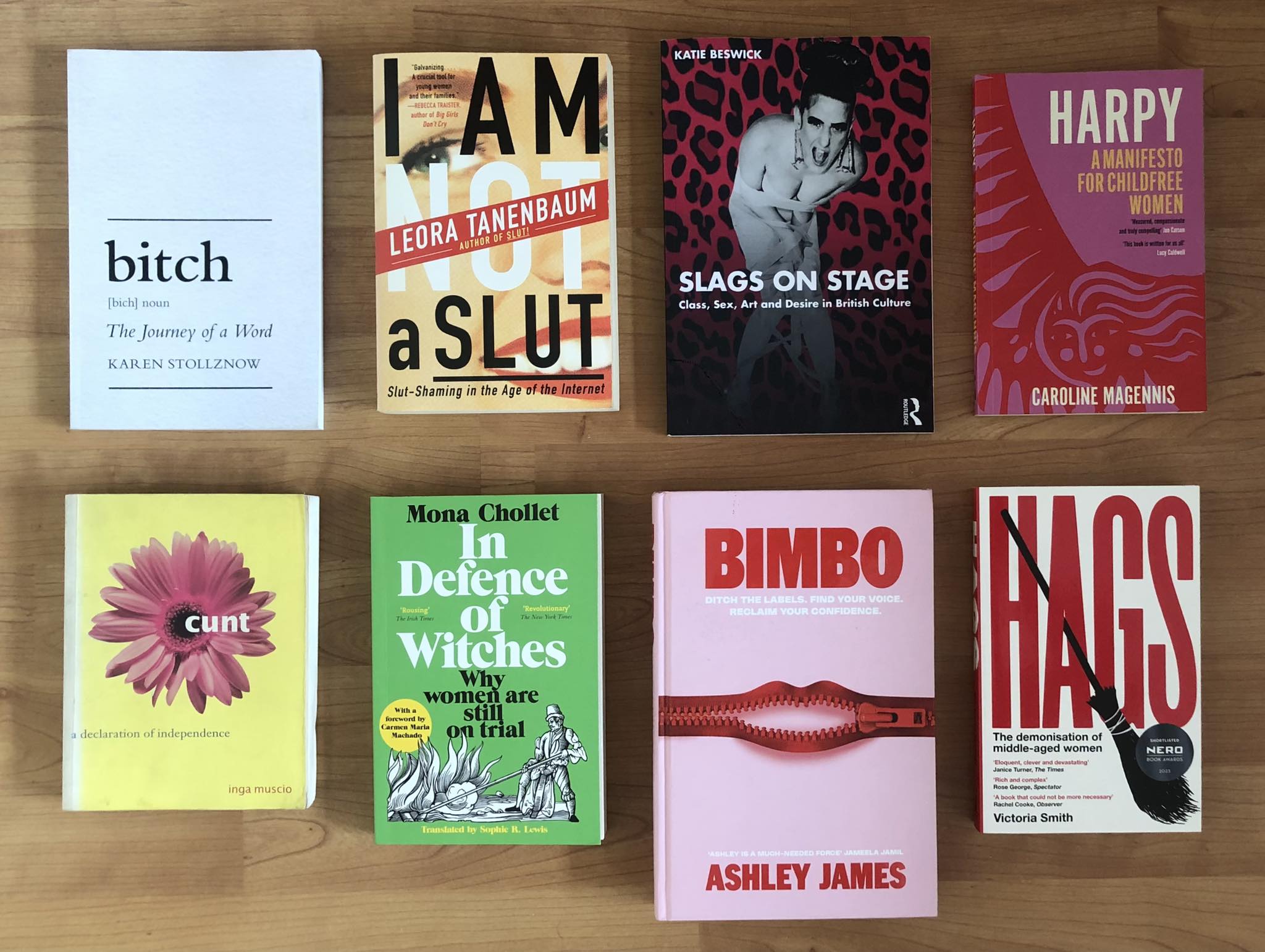
In Defence of Witches is one of a handful of recent feminist books whose titles refer to misogynistic insults. Other examples include Bitch by Karen Stollznow, Harpy by Caroline Magennis, Hags by Victoria Smith, Bimbo by Ashley James, and several books that tackle the word ‘slut’ (I Am Not a Slut, This Is What a Feminist Slut Looks Like, Wordslut, and Sluts).
In Defence of Witches was originally published in French as Sorcières: La puissance invaincue des femmes. Its American edition has a slightly longer subtitle (In Defense of Witches: The Legacy of the Witch Hunts and Why Women Are Still on Trial).
In Defence of Witches is one of a handful of recent feminist books whose titles refer to misogynistic insults. Other examples include Bitch by Karen Stollznow, Harpy by Caroline Magennis, Hags by Victoria Smith, Bimbo by Ashley James, and several books that tackle the word ‘slut’ (I Am Not a Slut, This Is What a Feminist Slut Looks Like, Wordslut, and Sluts).