
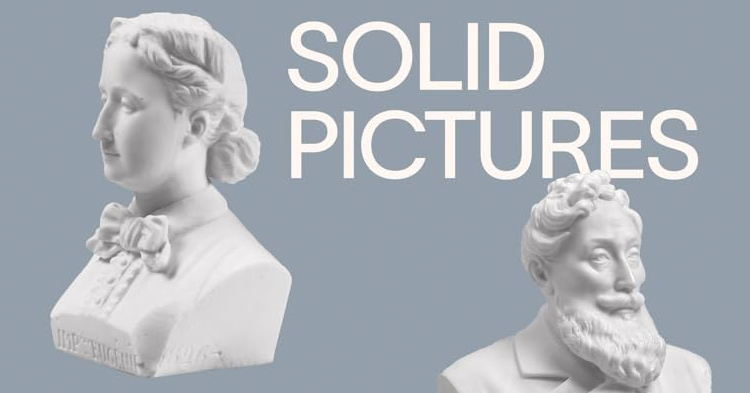
Working in the 1860s, François Willème combined photography and sculpture in a patented process that resembled the camera array used to produce the ‘bullet time’ effect in The Matrix more than a century later. He positioned twenty-four cameras in a circle, all focused on a central point. A person standing on this spot would then be photographed in 360 degrees, and the resulting images were traced with a pantograph to produce silhouettes in wood or clay. These were then combined to create a sculpture that was cast in bronze or plaster, with the entire process taking only a few days.
Willème called his invention ‘photosculpture’, and an exhibition at Stanford University this year has revived interest in this previously overlooked sculpture technique. The exhibition catalogue, Solid Pictures: Photosculpture and the Making of Modern Likeness, edited by Patrick R. Crowley, is the first book on the subject.
Willème called his invention ‘photosculpture’, and an exhibition at Stanford University this year has revived interest in this previously overlooked sculpture technique. The exhibition catalogue, Solid Pictures: Photosculpture and the Making of Modern Likeness, edited by Patrick R. Crowley, is the first book on the subject.
