22 May 2013

Stanley Kubrick At Look Magazine

Stanley Kubrick At Look Magazine
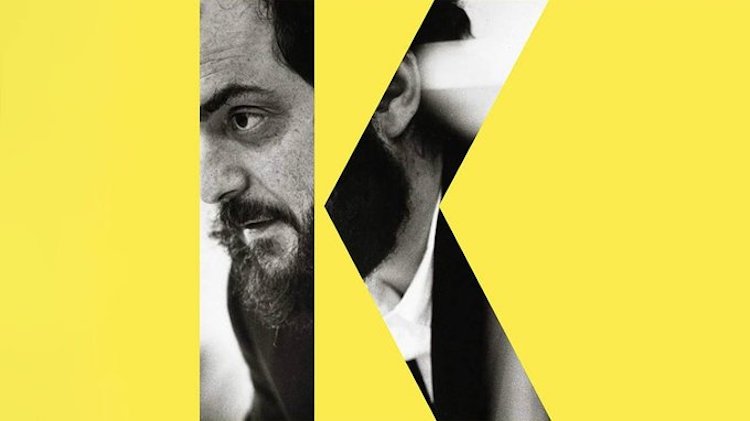
Stanley Kubrick At Look Magazine: Authorship & Genre In Photojournalism & Film, by Philippe Mather, is the first full-length analysis of Kubrick's photojournalistic work. Mather provides valuable background on the practices and conventions of Look and other post-war magazines, contextualising Kubrick's photo-stories before analysing them aesthetically.

Kubrick worked for Look after he finished high school, from 1945 to 1950, and hundreds of his photographs were published. (I have compiled a comprehensive list.) Some of his photo-stories have been reprinted in Ladro Di Sguardi, Art By Film Directors, Only In New York, and Stanley Kubrick: Fotografo.

Few writers have studied Kubrick's photojournalism in depth. Rainer Crone has published four books on the subject: Still Moving Pictures, Drama & Shadows, Fotografie 1945-1950, and Visioni & Finzioni 1945-1950. However, Crone focuses exclusively on the artistic qualities of the photographs, rather than on their actual production. Also, Crone recycles the same selection of images in each of his books, and (as noted by Mather) he misidentifies several photos.
Mather has examined back-issues of Look and other contemporaneous books and magazines by Look's writers, and this research allows him to make detailed studies of Kubrick's photographs in their original contexts. He has also included a useful appendix cataloguing the prints archived by the Library of Congress and the Museum of the City of New York.
16 May 2013

La Fete 2013

La Fete 2013
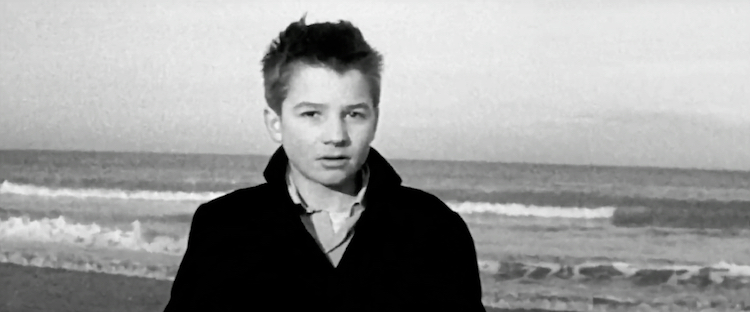
La Jetee
This year's La Fete arts festival opens at various venues around Bangkok tomorrow, and runs until 22nd June. It follows the Clap! French Film Festival, held earlier this year. (Cinema has always been one of the strongest elements of La Fete: open-air film screenings were also held in 2012 and 2011.)

Chris Marker's short film La Jetee will be screened at Viva & Aviv, a cafe at the River City mall, on 8th June, with a new soundtrack performed live by Bangkok DJs Wrong Disco. La Jetee, comprised almost entirely of still images, was described by its director as a "photo-roman". It remains one of the most original works of avant-garde cinema, and was the inspiration for Terry Gilliam's film Twelve Monkeys.

2 May 2013

30 Greatest Films

Casablanca
  • A Trip To The Moon (Georges Melies, 1902)
  • The Cabinet Of Dr Caligari (Robert Wiene, 1919)
  • Battleship Potemkin (Sergei Eisenstein, 1925)
  • Man With A Movie Camera (Dziga Vertov, 1929)
  • Citizen Kane (Orson Welles, 1941)
  • Casablanca (Michael Curtiz, 1942)
  • Double Indemnity (Billy Wilder, 1944)
  • Bicycle Thieves (Vittorio de Sica, 1948)
  • Rashomon (Akira Kurosawa, 1950)
  • Singin' In The Rain (Gene Kelly, 1952)
  • Seven Samurai (Akira Kurosawa, 1954)
  • On The Waterfront (Elia Kazan, 1954)
  • The Searchers (John Ford, 1956)
  • Vertigo (Alfred Hitchcock, 1958)
  • Touch Of Evil (Orson Welles, 1958)
  • Some Like It Hot (Billy Wilder, 1959)
  • Breathless (Jean-Luc Godard, 1960)
  • Psycho (Alfred Hitchcock, 1960)
  • Dr Strangelove (Stanley Kubrick, 1964)
  • The Good, The Bad, & The Ugly (Sergio Leone, 1966)
  • Dont Look Back (DA Pennebaker, 1967)
  • 2001: A Space Odyssey (Stanley Kubrick, 1968)
  • Chinatown (Roman Polanski, 1974)
  • Jaws (Steven Spielberg, 1975)
  • Taxi Driver (Martin Scorsese, 1976)
  • Annie Hall (Woody Allen, 1977)
  • Apocalypse Now (Francis Coppola, 1979)
  • Raging Bull (Martin Scorsese, 1980)
  • Pulp Fiction (Quentin Tarantino, 1994)
  • Spirited Away (Hayao Miyazaki, 2001)
Listed chronologically. Selected from a database of 500 films. See also: 100 Classic Films and 10 Essential Films.

1 May 2013

The Performance Art

The Performance Art
The Performance Art
The Performance Art
The Performance Art, an exhibition by Mongkol Plienbangchang, opened at BACC on 20th April. It will close on 29th May.

The exhibition includes a sculpture from 2006, titled Crashing Horizon, which consists of a dead bird in a glass case, next to another case containing a plastic butterfly. Another sculpture features a skull on top of a rock.

A Study Of Buddhist Philosophy
& The Creativity In Contemporary Art

A Study Of Buddhist Philosophy & The Creativity In Contemporary Art
Vichaya Mukdamanee
Ai Weiwei
A Study Of Buddhist Philosophy & The Creativity In Contemporary Art, an exhibition of artists inspired by the Buddhist concept of 'dharma', opened at BACC on 28th February. It will close on 5th May.

The exhibition includes an installation by Vichaya Mukdamanee, who has filmed himself dropping a series of ceramic urns. Vichaya's video was presumably inspired by Ai Weiwei's famous performance in which he dropped a priceless Han vase.

Encounter Thailand

Exclusive Interview With Apichatpong Weerasethakul
I have interviewed director Apichatpong Weerasethakul for this month's issue of Encounter Thailand magazine (on pages 36-39). He discusses his entire career: his films Tropical Malady, Blissfully Yours, Syndromes & A Century, Uncle Boonmee, and Mekong Hotel; his Primitive project and other short films; and the Free Thai Cinema Movement.

I edited the February, March, and April issues of the magazine. My previous articles were published in October, November, and December last year.

PDF

25 April 2013

The Art Of Controversy

The Art Of Controversy
Victor S Navasky's book The Art Of Controversy: Political Cartoons & Their Enduring Power provides a potted history of the political cartoon, with chapters discussing the works of individual cartoonists from the past three centuries. Leonard Freedman's The Offensive Art covers similar ground, though Navasky provides a wider historical perspective.

Navasky begins with the caricaturists William Hogarth and James Gillray (also discussed in the Rude Britannia exhibition catalogue, which, unlike Navasky, reproduces Gillray's iconic cartoon of Napoleon and William Pitt). Navasky also profiles artists such as Pablo Picasso, Francisco Goya, John Heartfield, and George Grosz, who are not primarily cartoonists yet have produced satirical works.

Several of the world's most controversial cartoons are included. Honore Daumier was jailed for lese majeste after his portrait of Louis Philippe as Gargantua was published in La Caricature. During World War II, a Philip Zec illustration angered Winston Churchill so much that he attempted to close down the Daily Mirror. A photomontage on the cover of the News Statesman, by Steve Platt, depicting John Major with his alleged mistress, resulted in a lawsuit from Major. In South Africa, Zapiro was sued by Jacob Zuma after his cartoon in the Sunday Times depicted the President preparing to literally rape the justice system.

Navasky does not reprint the infamous Jyllands-Posten Mohammed cartoons. He does, however, include the ingenious Plantu cartoon commenting on the controversy in Le Monde, and Doug Marlette's cartoon, What Would Mohammed Drive?, for Newsday. (Marlette's cartoon was published in 2002, before Jyllands-Posten's caricatures, not in 2009 as Navasky claims.) The cover of Navasky's book - a bomb censored by a diagonal stripe - is similar to the cover of Stern, commenting on the Mohammed cartoons, from 9th February 2006.

23 April 2013

Encounter Thailand

Thailand's Ivory Trade
Elephants In The Movies
This month's issue of Encounter Thailand, the magazine I edit, includes two of my articles articles about Thai elephants. Thailand's Ivory Trade (on pages 2-5) analyses the illegal ivory market. Elephants In The Movies (on pages 33-34) discusses the representation of Thai elephants in cinema.

I also edited the February and March issues. My previous articles were published in October, November, and December last year.

PDF PDF

21 April 2013

100 Classic Films

Casablanca
A list of 100 classic films, arranged chronologically. Selected from a database of 500 films, and including 10 Essential Films.

PDF

15 April 2013

Jaws: Memories From Martha's Vineyard

Jaws: Memories From Martha's Vineyard
Jaws: Memories From Martha's Vineyard, by Matt Taylor, features over a thousand photographs taken during the filming of Jaws. The book also includes examples of Jaws memorabilia collected by Jim Beller. Its expanded second edition has sixteen pages of additional material. Director Steven Spielberg wrote the foreword, indicating his approval of the project, though he was not interviewed for the book.

There have been several documentaries about Jaws, including The Making Of Jaws, In The Teeth Of Jaws, Jaws: The Inside Story, and The Shark Is Still Working. Taylor's book is not a comprehensive guide to the making of the film, as it focuses only on photographs and anecdotes provided by local residents, though it provides a valuable collection of previously unpublished images documenting the production of Jaws.

10 April 2013

2001: The Lost Science

2001: The Lost Science
Adam K Johnson's book 2001: The Lost Science - The Science & Technology Of The Most Important & Influential Film Ever Made is a guide to the various model spaceships from Stanley Kubrick's film 2001: A Space Odyssey. Kubrick's 2001 is a masterpiece, and it's my favourite film, though even I wouldn't go so far as to call it "The Most Important & Influential Film Ever Made", as Johnson's subtitle does.

The book contains blueprints, photographs, and correspondence from the Fred Ordway archive, and a documentary on an accompanying DVD. Ordway was Kubrick's scientific advisor on the film, and his archive includes a handful of previously unpublished photographs of Kubrick, though the bulk of the book consists of detailed drawings and photographs of the model spaceships featured in the film. These are of limited interested to Kubrick fans, though there is a thriving community of model-builders who are presumably the book's target market.

Piers Bizony's book 2001: Filming The Future also contained a chapter on the models, in addition to more general behind-the-scenes information about the making of the film. Jerome Agel's The Making Of Kubrick's 2001, now out of print, was an authorised account of the film's production. Anthony Frewin's Are We Alone? also features production materials from the film, as do Alison Castle's The Stanley Kubrick Archives and the Kubrick exhibition catalogue.

28 March 2013

Lincoln

Lincoln
Lincoln, directed by Steven Spielberg, portrays Abraham Lincoln's campaign, in the last few months of his life, to pass the thirteenth amendment to the US constitution. The amendment, which outlawed slavery, was passed shortly after the end of the American Civil War, in 1865.

Lincoln is played, definitively, by Daniel Day-Lewis. Spielberg worked again with his regular collaborators, composer John Williams (whose score is, thankfully, used relatively sparingly), editor Michael Kahn, cinematographer Janusz Kaminski, and producer Kathleen Kennedy.

This is Spielberg's second film dealing with slavery, the first being Amistad, in which former president John Quincy Adams defended rebellious slaves in court. Lincoln is also essentially a courtroom drama, with the court replaced by the House of Representatives. As in Amistad, the emphasis is on legal arguments by politicians rather than the lives of the slaves themselves.

The script was written by playwright Tony Kushner, and the film feels more stage-bound than Spielberg's previous work. Characters speak in long, declamatory monologues, using arcane polysyllabic vocabulary. The cinematography - backlit hot windows, underlit interiors, smoky exteriors - and even the creaking floorboards also suggest a theatrical atmosphere.

Lincoln was not the only slave-related film released last year: Quentin Tarantino's Django Unchained is the antithesis of Lincoln. Lincoln is a self-consciously worthy period drama, the type of 'prestige film' released by studios eager for Oscars. Django, on the other hand, is a revisionist exploitation film, with gleeful provocation in place of earnest historical realism.

14 March 2013

Amour

Amour
Amour, directed by Michael Haneke, takes place almost entirely within the Paris apartment of retired couple Georges and Anne. (The central characters in most of Haneke's films - Amour, Cache, The Seventh Continent, Benny's Video, Code Unknown, Time Of The Wolf, and Funny Games - are called Georges and Anne, or slight variations of those names.)

In the opening sequence, police break open the door and find Anne's body laid out on her deathbed. The film then shows us the last few weeks of Anne's life, after she suffers a series of debilitating strokes. The practical and emotional realities of coping with terminal illness are slowly revealed, as Georges cares for Anne while her condition inevitably deteriorates.

Georges and Anne are an intellectual, cultured couple, unlike the superficial bourgeois characters Haneke often depicts. They are the opposites of the faux-intellectual couple from Cache, for example: they read books, rather than using them as decorative status symbols. Amour is a profound and tender film, not Haneke's more familiar 'epater les bourgeois' approach (seen most directly in Funny Games and its American remake).

We first see Georges and Anne in long-shot, in the audience for a piano concert. As in the ambiguous final sequence of Cache, we have to search the frame looking for the protagonists. The rest of the film is a chamber piece, as Georges and Anne deal with the final stages of their long marriage. They are occasionally visited by their daughter, played by Isabelle Huppert, though visits from her and other outsiders feel like intrusions. Huppert also starred in Time Of The Wolf and The Piano Teacher; in Amour, Anne is a retired piano teacher.

The two leading actors, each more than eighty years old, give brave and moving performances. Jean-Louis Trintignant dominates the film, though Emmanuelle Riva (who starred in the New Wave classic Hiroshima Mon Amour) is arguably even more impressive. Her physical vulnerability and emotional intensity are profound.

Amour won the Palme d'Or at Cannes last year (three years after another Haneke film, The White Ribbon). It was screened at the Clap! French Film Festival, and as part of the Bioscope Theatre season.

10 March 2013

500 Must-See Films

500 Must-See Movies
Last Saturday and Sunday, The Daily Telegraph and The Sunday Telegraph published a two-part supplement titled 500 Must-See Films. Their 500 films include top-twenty lists chosen by the newspapers' film critics (Robbie Collin, David Gritten, Jenny McCartney, and Tim Robey) and categorised into genres (musical, comedy, western, British cinema, thriller, horror, biopic, animation, Noir, silent cinema, war, crime, directorial debut, children's non-animation, action, films about film, tearjerkers, sequels, science-fiction, and documentaries).

The critics' lists mostly contain foreign-language classics that don't fit into the main genre categories. There are actually only 499 films listed, as Out Of The Past mistakenly appears twice. The list is much more credible than The Sunday Telegraph's previous attempt, 100 Best Films. Contributor David Gritten was responsible for the 2008 Halliwell's Film Guide and the final nail in Halliwell's coffin, The Movies That Matter.

PDF

5 March 2013

The Art Of Pop-Up

The Art Of Pop-Up
The Art Of Pop-Up: The Magical World Of Three-Dimensional Books, by Jean-Charles Trebbi, includes a survey of contemporary pop-up books and a concise history of the format. (Pop-up books are now produced for young children, though the earliest examples were interactive infographics.)

There are hundreds of photographs, including numerous fascinating historical examples, though an obvious drawback is that the illustrations are all 2D: ironically, no actual pop-ups are included. The book was originally published in French, as L'Art Du Pop-Up & Du Livre Anime.

1 March 2013

Encounter Thailand

Destination Thailand
This month's issue of Encounter Thailand, the magazine I edit, includes my feature Destination Thailand (on pages 30-32). The article is a review of the recent Chinese comedy Lost In Thailand.

I also edited the February issue. My previous articles were published in October, November, and December last year.

PDF

Supernatural

Supernatural
Thunska Pansittivorakul's latest film, Supernatural, explores themes familiar from his earlier work, though stylistically it marks a significant departure and progression. It's his most ambitious film and his most artistically mature work to date.

Thunska's previous films were either documentaries (This Area Is Under Quarantine, The Terrorists) or semi-documentaries (Reincarnate), and Supernatural is his first entirely fictional narrative. Also, his previous naturalistic, hand-held camerawork is superseded by Supernatural's meticulous compositions and stylised lighting.

Supernatural is a science-fiction film (another first for Thunska, who has not previously worked within a conventional genre), imagining Thailand's development over the next century. The film is divided into chapters, each taking place at fifty-year intervals: one chapter, 2060, was screened in isolation last October, just a few days after it was filmed.

Thailand's future is depicted as glossy and sterile, with human interaction replaced by communication with online avatars. (The title, Supernatural, refers to futuristic virtual-reality software.) This is a dystopian future, inspired by George Orwell's 1984, with a totalitarian state ruled by "the Leader".

Like all futuristic sci-fi, Supernatural is also a comment on the present: Thunska's critique of unquestioning obedience to "the Leader" is a brave political statement, though the lese majeste law makes a public screening in Thailand unlikely. (The film will not be submitted for classification in Thailand, and will be distributed overseas instead. This Area Is Under Quarantine was previously refused classification.)

As in The Terrorists, Supernatural directly criticises some of Thailand's past military leaders. The characters in Supernatural are all gay, though the film (also like The Terrorists) is more political than sexual. There is one brief sex scene, though it's more subtle than Thunska's earlier films.

With a considerably higher budget and a longer schedule than previously available, Thunska has produced a visually stunning film. Almost every scene is beautifully lit and framed, though a sequence featuring a backdrop of multi-coloured spotlights is particularly effective.

Formal compositions, attempted in brief sequences in Reincarnate, are sustained throughout Supernatural. Reincarnate's metaphysical ending is also expanded in Supernatural, as Reincarnate was adapted from an early draft of the Supernatural script. The final sequence, set in a desert, evokes the conclusion of The Tree Of Life.

[Disclosure: I saw Supernatural at a private screening, during the final stages of post-production. Some minor editing changes have been made since then.]

28 February 2013

Death: Photography 1994-2011

Death: Photography 1994-2011
Death: Photography 1994-2011 is a collection of images by Japanese photographer Tsurisaki Kiyotaka. Since 1994, Kiyotaka has specialised exclusively in photographing corpses, and the book contains photos of accident victims, crime scenes, mortuaries, and funerals.

Most of the images were taken in South America, which has a long cultural association with death, from the traditional Dia de Muertos festival to the exploitative 'prensa roja' tabloids. The book begins, however, with a series of grisly photographs from Thailand, mostly depicting fatal car crashes.

Kiyotaka's photographs are remarkable largely for their shocking subjects rather than for their artistic merit. The single exception - Kiyotaka's only manipulated image - is a double-exposure depicting a foetus being removed from its mother's body in Colombia. Aside from this self-consciously artistic composition, most of the photographs resemble those in the book Death Scenes.

Other photographers have also produced works examining the taboo surrounding death, notably Andres Serrano's aestheticised Morgue images and Joel-Peter Witkin's tableaux of dismembered bodies. Kiyotaka's work is perhaps most similar to Sally Mann's recent series What Remains. (Serrano and other death photographers were profiled in a Channel 4 documentary, Vile Bodies: The Dead, in 1998.)

22 February 2013

Bioscope Theatre

Bioscope Theatre
Amour
Bioscope magazine will present a preview screening of Michael Haneke's Amour next Tuesday. The film will be shown at Paragon Cineplex, Bangkok, as part of the Bioscope Theatre project. Tickets are free for Bioscope members, though they must be reserved in advance. Amour was shown previously at the Clap! French Film Festival.

9 February 2013

Clap! French Film Festival 2013

Clap! French Film Festival 2013
Clap! Cine-Picnic
The Artist
Amour
The Clap! French Film Festival opens in Bangkok next Wednesday. Most screenings will be at SFX Emporium, though there'll be a Valentine's Day outdoor showing of The Artist at Museum Siam. (A Trip To The Moon and Monrak Transistor were screened there in previous years.) The closing film, on 20th February at Emporium, will be Michael Haneke's Amour.

5 February 2013

Woody Allen

Django Unchained
TCDC in Bangkok is currently screening a mini season of Woody Allen films. His masterpieces Annie Hall and Manhattan, and his recent commercial success Midnight In Paris, will be shown on alternate days for the whole of this month.

4 February 2013

Forever Young

Forever Young
Fashion photographer Leslie Kee was arrested in Japan today, and has been charged with distributing pornography. His new book Forever Young: Uncensored Edition contains, as the title suggests, uncensored images of male nudity.

The book had been on sale during Kee's current exhibition, which opened on Saturday at the Hiromi Yoshii gallery in Tokyo. Under Japanese law, genital images are illegal, and they are routinely pixelised to avoid obscenity charges.

PDF

Encounter Thailand

Filming The Tsunami
Play It Again, Siam
Since the start of this year, I have been editor of Encounter Thailand magazine. My previous articles were published last year, in October, November, and December.

I've written two features for this month's issue. Play It Again, Siam (on pages 38-40) discusses Thai movie remakes. Filming The Tsunami (on pages 42-44) reviews the recent film The Impossible and compares it to previous movies about the 2004 tsunami.

[Note: the tsunami article omits the films Vinyan and Hi-So. The remakes article omits the Telugu Shutter remake, Photo; it was published before the release of Bangkok Traffic Love Story: Redux.]

PDF PDF

24 January 2013

Django Unchained

Django Unchained
Django Unchained, the new film by Quentin Tarantino, is a revisionist Spaghetti western revenge fantasy set in America's antebellum south. Its central character, played by Jamie Foxx, was appropriated from the Spaghetti western Django; the title is a combination of Django and Herculese Unchained, another 1960s Italian exploitation film. As usual, Tarantino has assembled an impressive cast, which this time includes Christoph Waltz, Leonard DiCaprio, and Samuel L Jackson.

Tarantino's first film without editor Sally Menkes (who died in 2010), Django Unchained is his longest film to date, a western on an epic scale. It's also his most classically linear narrative. There are landscapes worthy of John Ford; in fact, the search for Django's captured wife parallels the quest for Natalie in Ford's The Searchers.

Quick zooms and close-ups on eyes show the influence of Sergio Leone, and there are numerous references to Leone's westerns, including music from Ennio Morricone. Django emerges from the smoke after a dynamite explosion like Clint Eastwood in A Fistful Of Dollars, and the insult "son of a..." is interrupted before its final word in a reference to The Good, The Bad, & The Ugly.

The film is also self-referential, of course: there's a tense countdown from ten to one, as in Pulp Fiction, and the "tasty beverage" from Pulp Fiction and Death Proof is slightly modified to "tasty refreshment". Tarantino has an indulgent cameo, with an awful Australian accent. (His cameo in Sukiyaki Western Django, also inspired by Spaghetti westerns and Django, was even worse.)

Samuel L Jackson, who plays the old house slave Stephen, has appeared in most of Tarantino's previous films: Pulp Fiction, Jackie Brown, Kill Bill II, and Inglourious Basterds. It's that last film that Django Unchained most resembles: both are revenge fantasies (as are Kill Bill and Death Proof), both contain Spaghetti western elements, and both present revisionist interpretations of major historical atrocities, combining dramatic licence with ironic exploitation.

Django is a slave freed by Christoph Waltz's bounty hunter, Schultz. Waltz (who also starred in Carnage) played a 'Jew hunter' in Inglourious Basterds, and his characters in both films are eloquent, charming polyglots: Schultz speaks English and German, with a few lines of French. Leonardo DiCaprio (Inception/Shutter Island/The Departed/The Aviator) is also excellent in his first bad-guy role, surprisingly menacing as Candie the plantation owner. The plantation, Candyland, is a counterpoint to the romanticised Tara in Gone With The Wind; Tarantino even uses scrolling text in the same style as that Civil War classic.

The performances, direction, and widescreen cinematography are outstanding, though the plot doesn't really stand up to scrutiny. Django and Schultz "get into character" (another line from Pulp Fiction) and pose as mandingo dealers to trick Candy into selling them Django's wife, one of Candyland's slaves. (Her name is von Shaft, a reference to Blaxploitation hero John Shaft.) Their scheme increases the film's tension, and produces some terrific set-pieces, though ultimately the elaborate deception was un-necessary: they would have achieved the same result by simply telling Candy the truth from the outset.

Django Unchained is shockingly violent: slaves are tortured and torn apart by dogs, as justification for the bloody revenge of the final massacre. The film has also been criticised for its language: the word 'nigger' is used more than 100 times. (Tarantino also used it, with less frequency, in Pulp Fiction and Jackie Brown.) Tarantino claims historical accuracy; rather than making him a racist, his usage follows Lenny Bruce's approach to the word - neutralisation by repetition - rather than the ostrich-like strategy of his critics.

Incidentally, Django Unchained was filmed in 35mm. Tarantino - along with Christopher Nolan (who filmed The Dark Knight Rises in 70mm IMAX) and Paul Thomas Anderson (who filmed The Master in 70mm) - is one of the few contemporary directors who remain committed to celluloid filming and exhibition.

The Wonderful, Horrible Life
Of Leni Riefenstahl

THe Wonderful, Horrible Life Of Leni Riefenstahl
Ray Muller's three-hour documentary The Wonderful, Horrible Life Of Leni Riefenstahl profiles the director of the Nazi propaganda film Triumph Of The Will. Muller addresses the persistent accusations of Nazism made against Riefenstahl, though he also explores her entire life's work.

Riefenstahl's film career began when she starred in The Holy Mountain, by Arnold Fanck. This silent film, set on a mountainside, was one of several 'Bergfilme' ('mountain films'), a genre created by Fanck. Riefenstahl became a star, though her image was adventurous and athletic, in contrast to Marlene Dietrich's predatory sexuality. In a more significant contrast between the two icons, Dietrich emigrated to Hollywood after Hitler's rise to power, though Riefenstahl remained in Germany and directed Triumph Of The Will, a documentary film of Hitler's 1934 Nuremberg rally.

Triumph Of The Will is a masterpiece of editing and visual composition. Like The Birth Of A Nation, however, it's a masterpiece with an unredeemable reputation: it was commissioned by Hitler, and used as propaganda by the Nazi Party. Riefenstahl herself visited Hitler regularly, until as late as 1944, and sent him a congratulatory telegram after his invasion of Paris. In Muller's documentary, she revisits the rally venue, and admits that she regrets making the film, though she doesn't accept any responsibility for the political power of her work.

Olympia, Riefenstahl's documentary of the 1936 Berlin Olympics, provoked accusations of an obsessively Fascist aesthetic. Her documentary, released in two parts, celebrates the beauty of the athletic body. She would face similar accusations when she photographed the Nuba tribe in Sudan. Tellingly, in Muller's documentary, she explains that she was attracted to the Nuba as a subject because of the muscularity of the tribespeople.

Riefenstahl, who was ninety when the documentary was filmed (and 101 when she died), was also an expert diver, and for Muller's film she posed underwater with a giant stingray. Muller's title - The Wonderful, Horrible Life - captures the contradictions in Riefenstahl's work: a skilled documentarian and photographer, who was permanently associated with a brutal dictator.

In the final sequence, Muller gives her a last opportunity to apologise for her political associations. The documentary ends with her characteristically assertive answer: "I was never anti-semitic and I never joined the Nazi Party... So where does my guilt lie?".

Hitchcock

Hitchcock
Hitchcock, directed by Sacha Gervasi, was one of two films made last year about Alfred Hitchcock. (Toby Jones starred in the other Hitchcock biopic, The Girl.) Hitchcock dramatises the filming of Psycho, whereas The Girl covered the making of The Birds and Marnie.

Hitchcock ends with a shot of a bird on the director's shoulder, effectively setting up The Girl as a sequel. Hitchcock is generally a much more sympathetic portrayal of the 'master of suspense' than The Girl: Anthony Hopkins plays him as a director fighting for artistic integrity and (in a sub-plot presumably invented by the script-writer) jealous of his wife Alma's interest in another man.

Whereas Toby Jones in The Girl was noticeably shorter than Alfred Hitchcock, Anthony Hopkins has a more suitable stature. In contrast, Jones gave an uncanny vocal impersonation, whereas Hopkins sometimes slips back into his own accent. In one sequence, when he's narrating the script while Marion Crane is driving, Hopkins goes into Hannibal Lecter mode, as if he were psychoanalysing Clarice Starling.

Helen Mirren, playing Alma Hitchcock, is an excellent actress (especially in The Queen), though she is far too tall for this role. (Imelda Staunton, in The Girl, had a remarkable physical resemblance to the real Mrs Hitchcock.) James D'Arcy, playing Anthony Perkins, gives a practically perfect performance, almost indistinguishable from Perkins himself.

Hitchcock was based on Stephen Rebello's comprehensive book Alfred Hitchcock & The Making Of Psycho. (Other books about Psycho include The Moment Of Psycho and Psycho In The Shower.) The production of Psycho is dramatised reasonably accurately, though - presumably for copyright reasons - Psycho's dialogue is always paraphrased.

To add dramatic tension, several nightmarish fantasy sequences show the director becoming obsessed with the serial killer Ed Gein. These are not necessary, and they undermine the film's credibility, though they're fortunately quite brief.

Hitchcock is one of several fictionalised films about the making of real films, including My Week With Marilyn, Gods & Monsters, Ed Wood, RKO281, and Shadow Of The Vampire. Laurent Bouzereau's documentary The Making Of Psycho goes into more depth about Psycho's production, but Hitchcock is extremely entertaining and great fun. It demonstrates one of the director's famous maxims: films should be slices of cake, not slices of life.

15 January 2013

Pop Culture Exhibition

Pop Culture Exhibition
Pop Culture Exhibition, a celebration of Pop Art, opened in The Ideaopolis, part of the newly renovated Siam Center mall in Bangkok last Friday. It will close on 3rd March. A handful of artworks by Warhol and Roy Lichtenstein are included, notably Warhol's screenprints of Marilyn and Mao.

This small, kitsch exhibition focuses on the icons (or cliches) of American Pop, including an oversized replica of a Campbell's soup can; the exhibition itself is held inside a two-story Brillo box replica. British Pop pioneers, such as Richard Hamilton, Eduardo Paolozzi, and Peter Blake, are not represented (though Hamilton and Blake are at least name-checked).

10 January 2013

2013

2013
Apichatpong Weerasethakul has released a new short film online, titled 2013. The film, less than a minute long, features solarised, double-exposed footage of a ghostly man walking in a forest. Apichatpong's previous online short films are Cactus River, Ashes, For Alexis, Phantoms Of Nabua, Mobile Men, and Prosperity For 2008.

8 January 2013

The Sun

A High Court judge in the UK has granted an injunction preventing The Sun from publishing potentially embarrassing photographs of Ned Rocknroll. The photos were taken by James Pope at a party in July 2010, and posted on Pope's Facebook page.

The Sun downloaded them at the beginning of the year, and planned to print them on 4th January. Rocknroll sought an injunction before their publication, which was granted yesterday.

1 January 2013

La Vie De Mahomet

La Vie De Mahomet
Tomorrow, Charlie Hebdo will publish La Vie De Mahomet: Les Debuts d'Un Prophet, a comic-book biography of Mohammed by Stephane Charbonnier and Zineb el Rhazoui. This will be the fourth time that the newspaper has printed provocative images of Mohammed: its first Mohammed cover appeared in 2006, followed by a Charia Hebdo edition 'guest-edited' by Mohammed in 2011, and a naked Mohammed caricature last September (criticising the protests against Innocence Of Muslims).

Mohammed cartoons first caused controversy when a dozen of them were published by Jyllands-Posten in 2005. Since then, many other newspapers and magazines have also printed Mohammed caricatures: Weekendavisen, France Soir, The Guardian, Le Monde, Liberation, Het Nieuwsblad, The Daily Tar Heel, Akron Beacon Journal, The Strand, Nana, Gorodskiye Vesti, Misselijke Grappen, HP/De Tijd, Dagbladet, Skanepartiet, Adresseavisen, Uke-Adressa, and Harper's. The International Herald Tribune published Mohammed cartoons in both 2006 and 2012.

Equally provocative drawings of Mohammed as a dog were exhibited in 2007. The short film Fitna also includes a Mohammed cartoon, and there was an Everybody Draw Mohammed Day! event in 2010.

PDF